



Introduction: A Continent at the Crossroads
Europe has always been a continent of crossroads—of languages brushing against one another across mountain ranges, of faiths converging in cathedral squares, of cuisines simmering in shared marketplaces. Cultural diversity is not merely an ornament in Europe; it is the very grammar of its civilization. Yet in a globalized twenty-first century—defined by hyper-connectivity, algorithmic uniformity, mass migration, and the gravitational pull of global economic systems—one must ask: Can Europe truly maintain its cultural diversity? Or are its distinct traditions destined to blur into a smooth, globally standardized monoculture, like a tea steeped too long in boiling water?
The question is neither academic nor abstract. It is present in daily life: in the languages we choose to teach our children, in what dominates our screens, in the resilience of local festivals, in the survival of minority traditions, in whether small cafés can hold their own against multinational chains. Europe’s cultural diversity—historically messy, sometimes conflict-ridden, and always evolving—is now negotiating with powerful forces that expand horizons even as they flatten differences.
This essay explores that negotiation. Through the lenses of history, economics, linguistics, politics, technology, and identity, we examine how Europe’s cultural mosaic interacts with globalization. And perhaps more importantly, we ask: What would it take for Europe not just to safeguard its diversity, but to allow it to flourish?
1. Europe’s Cultural Diversity: A Brief but Illuminating Portrait
To understand the challenge of preservation, we must appreciate the terrain stakeholders are trying to preserve.
1.1. A Historical Layer Cake
Europe’s diversity is the outcome of centuries of migrations, empires, wars, linguistic evolutions, and cross-cultural borrowings. Celts, Romans, Germanic tribes, Vikings, Slavs, Moors, Byzantines—all these peoples etched their stories into European soil.
This layered history created:
- Plural legal traditions (civil law, common law, Nordic hybrids).
- Distinct architectural languages (from Gothic to Bauhaus).
- Culinary microcultures that can vary dramatically within 30 kilometers.
- Linguistic families spanning Indo-European branches and several minority tongues outside it.
Europe is a mosaic—not a single picture, but thousands of tiles producing coherence through coexistence.
1.2. The Cultural Compact After 1945
Post-war Europe formalized cultural protections not merely to preserve beauty or identity, but to prevent nationalist excesses. Language rights, regional autonomy models, heritage laws, and supranational frameworks all worked to stabilize diversity as a peace-building tool. For decades, this strategy succeeded.
Yet globalization was not part of the architects’ original calculus.
Europe now faces pressures unimaginable to those who drafted the first cultural conventions.
2. Globalization: A Double-Edged Force
Globalization is often portrayed as Europe’s cultural antagonist. But the relationship is more nuanced.
2.1. The Positive Edge
Globalization has accelerated the exchange of ideas, art, literature, technology, and culinary approaches. European cultures do not merely endure this flow; they also contribute to it. Italian fashion, French cinema, Finnish design, Dutch architecture, Spanish gastronomy, Greek philosophy—all gain new audiences through global networks.
Moreover, globalization:
- Provides economic incentives for preserving heritage through tourism and cultural industries.
- Strengthens cultural diplomacy as a soft-power asset.
- Encourages pluralism by making societies more accustomed to difference.
In many cases, it revitalizes traditions that might otherwise have faded in isolation.
2.2. The Negative Edge
But globalization also centralizes power—culturally and economically. The dominance of a few global languages, the consolidation of global media conglomerates, and the algorithmic homogenization of entertainment all shape consumption patterns in ways that often overshadow local expressions.
Thus:
- Small languages become threatened.
- Traditional art forms risk becoming museum pieces.
- Local industries face competition from multinational corporations.
Globalization does not conquer diversity directly—it erodes it subtly, through convenience, profitability, and algorithmic bias.
The question is therefore not whether globalization harms or enriches Europe, but how Europeans choose to navigate its currents.
3. Linguistic Diversity: Europe’s Most Fragile Treasure
Europe is home to over 200 languages, depending on how one counts dialects and minority tongues. Globalization has an unmistakable linguistic hierarchy, with English at its apex. English is now the lingua franca of business, academia, tourism, science, entertainment, and increasingly—online life.
3.1. English as a Necessity, Not a Villain
Most Europeans recognize the utility of English; it facilitates mobility, collaboration, and economic opportunity. It also reduces linguistic barriers within Europe itself.
However, the problem arises not from adopting English, but from adopting only English.
3.2. Minority Languages in the Crosshairs
Linguists warn of a coming “silent spring” for small European languages: a slow, quiet extinction where speakers shift to larger languages for work, school, and digital life.
Languages at risk include:
- Basque (Euskara)
- Breton
- Welsh (recovering but still vulnerable)
- Sardinian
- Friulian
- Sorbian
- Scottish Gaelic
Globalization increases the volume of foreign media; if local languages are not integrated into the digital ecosystem—apps, streaming services, social media—they lose intergenerational transmission.
3.3. Can Europe Reverse Language Decline?
Potential strategies include:
- Digitizing local languages into modern platforms
- State-funded creative industries in minority tongues
- Multilingual education models that treat bilingualism as a norm
- AI-assisted language preservation tools
If Europe successfully deploys these strategies, linguistic diversity might not only survive, but enjoy a renaissance.
4. Cultural Industries: Thriving or Threatened?
Film, literature, music, fashion, and gaming are central to Europe’s cultural expression. Globalization affects these industries in complex ways.
4.1. The Streaming Paradox
Streaming platforms give European artists global exposure. Scandinavian noir, Spanish thrillers, French comedies, and German historical dramas all gained international followings.
Yet the same platforms reward content that caters to the broadest possible audience. Algorithms often promote international hits at the expense of local productions.
Thus, we face a paradox:
Global platforms elevate European content globally—but can homogenize domestic consumption.
4.2. Literature: A Quiet Resistance
Unlike film or television, literature remains more resistant to homogenization. Translations circulate widely, but reading habits still strongly correlate with national canons and educational systems. However, the dominance of English-language bestsellers exerts quiet pressure on smaller literary markets.
4.3. Music: The Battle of Genres
European folk music traditions face stiff competition from global genres like pop, hip-hop, and EDM. Yet globalization also fuels hybrid genres—fado-electronica, Balkan brass-pop, French electro-chanson—suggesting that diversity is less about preservation and more about reinvention.
5. Economics: The Invisible Hand That Shapes Culture
Cultural survival is often framed in emotional or moral terms, but economics is the engine.
5.1. When Local Industries Become Souvenirs
Global markets tend to reward scale, efficiency, and global marketing budgets. Traditional crafts, local food traditions, and small-scale creative industries rarely compete on those terms.
Thus, many regional cultures survive economically through:
- Tourism
- Heritage branding
- Government subsidies
This raises concerns about commodification: when culture becomes a product rather than a lived experience.
5.2. Can Cultural Diversity Be Economically Competitive?
Yes—if Europe invests strategically. Potential levers include:
- Intellectual property protection for traditional designs
- Small-business grants for heritage industries
- Geographical indication systems (like Champagne or Parmigiano Reggiano)
- Digital platforms for micro-producers
Economic vitality is the most reliable defense against cultural erosion.
6. Migration and Multiculturalism: A New Layer of Diversity
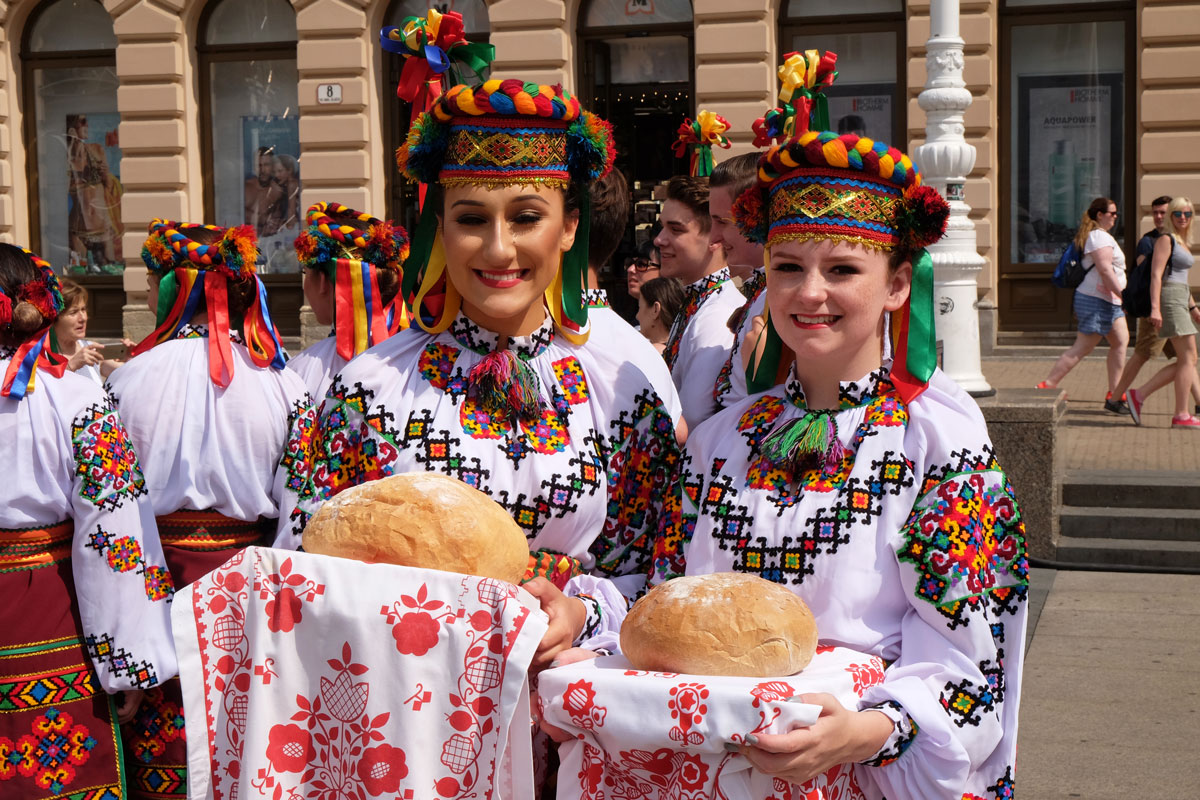
Europe is now home to communities from the Middle East, North Africa, Sub-Saharan Africa, South Asia, and East Asia. The continent no longer contains only European cultural diversity, but global diversity within its borders.
6.1. Does New Diversity Threaten Old Diversity?
Some argue that integrating new cultures strains national cohesion, making it harder to preserve traditional identities. In reality, the pressure comes not from migration itself but from inadequate integration models.
Poorly managed multiculturalism leads to parallel societies. Well-designed integration, however, enhances the cultural ecosystem—creating new hybrids, inspiring innovative cuisine, arts, and music, and increasing demographic vitality in aging societies.
6.2. Migration as a Cultural Catalyst
European culture has always evolved through contact. Islamic architecture influenced Renaissance design. Ottoman cuisine shaped Balkans gastronomy. Jewish intellectual traditions enriched Central European life.
The new wave of migration continues that pattern.
7. Technology and Algorithms: The New Cultural Gatekeepers
Perhaps the most underestimated threat to cultural diversity is technological, not political.
7.1. Algorithmic Monoculture
Recommendation algorithms on social media and streaming platforms often amplify what is already popular. This creates “cultural feedback loops” that advantage majority languages, mainstream genres, and global hits.
Small languages and niche cultural products struggle to appear in feeds.
7.2. Digital Accessibility as the Key Battleground
If minority cultures cannot fully participate in digital life—through interfaces, subtitles, keyboards, or content creation tools—they risk being deleted from the future.
Europe must therefore champion:
- Multilingual AI models
- Open-source language preservation tools
- Requirements for platforms to support linguistic diversity
Algorithms should reflect Europe’s pluralism, not replace it.
8. Identity: The Heart of the Matter
When Europeans worry about cultural loss, they are often really worrying about identity—continuity, belonging, and meaning.
8.1. Cultural Confidence vs. Cultural Anxiety
Cultures either flourish when they feel confident or shrink when anxious. Globalization, paradoxically, can increase both:
- It inspires confidence by offering new audiences and creative possibilities.
- It fuels anxiety by threatening traditions with irrelevance.
8.2. Is European Identity Compatible with Cultural Diversity?
Interestingly, Europe as a political project depends on cultural diversity. The EU motto—“United in Diversity”—is not just rhetoric. It recognizes that European unity only works if diversity is protected, not erased.
A uniform culture would undermine the European project itself.
9. The Future: What Would It Take to Preserve Europe’s Diversity?
Preservation is not passive. It requires action, innovation, and political will.
9.1. Multilingual Education as the Norm
Education systems should not treat minority languages as hobbies but as assets. Literacy in two or three languages—local, national, and global—should become standard.
9.2. Digital Sovereignty for Cultural Data
Europe must ensure:
- Minority languages are represented in digital datasets.
- AI tools handle European pluralism.
- Cultural algorithms are transparent and accountable.
9.3. A Cultural Economy That Rewards Smallness
Diversity thrives in ecosystems where small cultural producers can flourish without competing directly with multinational giants.
Solutions include:
- Fair taxation of global platforms
- Quotas for European content
- Funding for hyperlocal creative projects
- New financial models for independent publishers and musicians
9.4. Urban Planning for Cultural Vitality
Cities can either sterilize cultural life or enrich it. Vibrant neighborhoods depend on:
- Affordable housing for artists
- Public spaces for performance
- Local markets
- Cultural institutions that reflect community diversity
9.5. An Attitude Shift: Diversity as Innovation
Europe must stop viewing tradition and modernization as opposites. The future belongs to hybrid creativity—where old and new coexist, remix, and reinvent one another.
10. Conclusion: Yes—If Europe Wants It Badly Enough
Europe can maintain its cultural diversity in a globalized world, but only on one condition:
It must choose to.
Globalization is not a wave washing away the ancient fresco of Europe. It is a river—sometimes calm, sometimes turbulent—flowing through the continent. Cultures can drown in it, or they can channel its power to carve new landscapes.
Diversity will not survive through nostalgia, isolationism, or rigid preservation. It will survive through adaptability, creativity, and resilience. Through policies that treat culture as a living system, not a relic. Through young Europeans who speak more than one language, eat more than one cuisine, and dance to more than one rhythm.
Europe’s mosaic is not fading—it is rearranging. The question is whether Europeans will guide the rearrangement, or watch it unfold unplanned.
The answer is not in the hands of globalization.
It is in Europe’s own.