

Introduction: A Crisis That Never Quite Leaves the Room
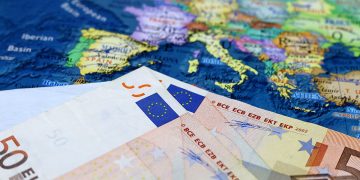
Europe’s financial crisis is like a houseguest who arrived in 2008 and, despite everyone’s polite hints, never fully left. It has changed outfits, moved from couch to spare bedroom, and occasionally seemed ready to depart—only to settle back in again with fresh grievances and new luggage.
Predictably, whenever the question of whether Europe’s financial crisis will ever be fully resolved arises, a tidy “yes” or “no” simply refuses to do the job. Europe is too large, too interconnected, too politically layered, and too economically diverse to offer a straightforward answer. What we can do, however, is peel apart the layers of how the crisis started, how it evolved, why it lingers, and what stands between Europe and a genuinely stable financial future.
By following this path, we get closer to answering an uneasy but essential question:
Is Europe navigating toward long-term stability—or merely perfecting the art of perpetual crisis management?
This article explores that question through history, economics, politics, and the psychology of a continent repeatedly shaken but still refusing to break.
1. The Crisis That Redefined Europe
Before we can debate whether Europe will resolve the crisis for good, we must revisit how it unfolded. Europe’s crisis was not a single event but a chain reaction:
1.1. The Global Financial Spark
The 2008 global financial crisis blew open structural weaknesses inside the eurozone. U.S. mortgage markets were the spark, but Europe provided its own tinder:
- Under-regulated banks
- Overextended governments
- A monetary union without fiscal unity
- Political reluctance to expose structural flaws
The eurozone had always been a monetary marriage built on trust more than full integration. The 2008 shock tested that trust—and found it thin.
1.2. Sovereign Debt Unmasked
Countries like Greece, Portugal, Ireland, Spain, and Italy were suddenly exposed. Some had debt burdens impossible to sustain; others had fragile banking sectors; most had both. Yields ballooned. Rescue packages emerged, some timely, some hesitant, all politically explosive.
1.3. The Austerity Era
Europe prescribed austerity as the cure. This included:
- Cutting government spending
- Raising taxes
- Slashing public sector wages
- Reducing pensions
- Reforming labor markets
Supporters argued austerity restored discipline; critics argued it suffocated recovery. Both were partly right. Austerity stabilized balance sheets but created deep scars: unemployment, social unrest, political radicalization, and long-term mistrust toward EU institutions.
1.4. ECB to the Rescue
The European Central Bank (ECB) became the unexpected superhero. Mario Draghi’s legendary words—“Whatever it takes”—marked a turning point. Quantitative easing, banking union reforms, and liquidity programs kept the eurozone intact.
Yet, the ECB’s power also highlighted an uncomfortable reality: Europe’s most decisive interventions often bypassed elected institutions.
2. The Crisis Never Really Ended—It Just Changed Shape
Europe’s financial turmoil never had one ending because it never had one beginning. Instead, it morphed:
2.1. Phase Two: Banking Crisis
Even after sovereign debt pressures subsided, banking fragility remained. Non-performing loans piled up in southern Europe; cross-border banking exposures created systemic risk; regulatory reforms struggled to keep pace with market realities.
2.2. Phase Three: Populism and Politics
Economic pain gave political extremes oxygen. Parties on both the far-left and far-right gained strength by attacking austerity, globalization, immigration, and the euro itself. Economic crisis turned into political crisis.
2.3. Phase Four: Brexit
Brexit was not exactly a financial crisis—but it emerged from the same soil: discontent, distrust, and a sense of economic exclusion. The UK’s departure added new layers of political and financial complexity to the European landscape.
2.4. Phase Five: Pandemic Shock
COVID-19 triggered a historic recession—but surprisingly, it also produced deeper financial unity. The EU launched the €750 billion NextGenerationEU plan, a step toward joint debt issuance—an unimaginable concept a decade earlier.
2.5. Phase Six: Energy Crisis & Inflation
Russia’s invasion of Ukraine in 2022 triggered an energy crisis, spiking inflation and complicating monetary policy. Once again, the crisis changed face rather than disappearing.
Europe continues to live in post-crisis crisis.
3. Why Europe Struggles to “Fully” Resolve Financial Instability
Resolving Europe’s crisis is not a matter of solving a single problem. It requires reconciling contradictions built into the architecture of the EU and the euro.
3.1. A Monetary Union Without a Fiscal Union
This is Europe’s original design flaw.
The eurozone shares:
- One currency
- One central bank
But does not share: - Unified tax policy
- Unified budget
- Unified fiscal authority
- Full banking union
This is like sharing a credit card without agreeing who pays the bill.
3.2. Diverging Economies
Northern Europe tends to have:
- higher productivity
- export-driven growth
- stable public finances
Southern Europe often carries:
- slower productivity
- weaker labor markets
- higher public debt
The euro gives them the same monetary conditions—even when they need different ones.
3.3. Political Fragmentation
Europe has 27 member states, each with different priorities.
Fiscal solidarity requires consensus, but consensus requires political sacrifice—and national politics often punish compromise.

3.4. Demographic Decline
A quietly dangerous trend:
- Aging populations
- Shrinking workforces
- Rising pension obligations
These pressures slow growth and increase fiscal strain.
3.5. Overreliance on the ECB
The ECB can stabilize markets, but it cannot solve structural problems. Monetary policy has limits. Eventually, deeper reform must arrive through democratic processes—which are slower and harder.
4. The Foundations of Long-Term Resolution
If Europe truly wants its crisis to end, it must strengthen several pillars:
4.1. Completing Fiscal Union
This includes:
- common eurozone budget
- shared borrowing instruments
- harmonized tax standards
- financial safety nets
NextGenerationEU was a first step but remains temporary. A permanent fiscal framework is needed.
4.2. Completing Banking Union
A genuinely unified banking system requires:
- joint deposit insurance
- deeper supervision
- mechanisms for restructuring failing banks
Political resistance—especially from countries fearing liability for others—is still a major barrier.
4.3. Structural Reforms
Southern economies need:
- more flexible labor markets
- improved tax collection
- more competitive business environments
- stronger digital and manufacturing capacity
Northern economies need:
- stronger domestic investment
- less reliance on export surpluses
- more fiscal coordination
4.4. Demographic Strategy
Europe must address low birth rates, integrate migrants effectively, and modernize pension systems. Without population renewal, long-term financial stability remains elusive.
4.5. Deepening Energy Independence
The energy crisis revealed vulnerabilities. Greater independence—via renewables, nuclear strategy, and diversified supply—reduces future financial shocks.
4.6. Strengthening EU Governance
The EU requires more agile decision-making. The current consensus model is increasingly unsustainable in a world where crises demand rapid responses.
5. The Euro: Fragile or Future-Proof?
Despite its history of turmoil, the euro has become one of the world’s most stable major currencies. Paradoxically, every crisis that threatened it ended up strengthening it.
5.1. Why the Euro Survived
- The political cost of breakup outweighed the pain of integration.
- Financial markets believed the ECB would defend the currency.
- Citizens continued to support the euro, even when criticizing EU policies.
5.2. Why the Euro Remains Vulnerable
- Divergent national economies
- Incomplete fiscal architecture
- Uneven debt burdens
- Political backlash in crisis-hit nations
The euro is strong not because its house is flawless—but because its tenants are too invested to leave.
6. Country Spotlights: Lessons from Europe’s Most Turbulent Economies
6.1. Greece: The Symbol of Crisis
Greece experienced economic collapse, social upheaval, and years of austerity. It remains heavily indebted but has shown strong recovery signs in recent years. Still, Greece’s crisis taught Europe that:
- Fake accounting and political denial create catastrophe
- Rescue packages require credible reform
- Austerity without growth is unsustainable
6.2. Italy: The Perpetual Pressure Point
Italy is Europe’s sleeping dragon—large, influential, but chronically slow-growing. Its public debt is huge, and political instability is common. Italy is too big to fail, and managing it may determine Europe’s future stability.
6.3. Spain and Portugal: Quiet Comebacks
Spain and Portugal implemented painful reforms but emerged with renewed competitiveness and stronger export sectors. Their recoveries show that crisis can drive modernization—if reforms are strategic rather than merely punitive.
6.4. Germany: The Reluctant Hegemon
Germany played the role of discipline enforcer during the crisis but later faced criticism for rigidity. The energy shock and industrial challenges have recently exposed Germany’s vulnerabilities, proving that even Europe’s strongest economy cannot remain immune.
7. Can Europe Ever Be Truly “Crisis-Free”?
To answer the original question, we must distinguish between crisis elimination and crisis management.
7.1. The Myth of Full Resolution
Europe will never be free from financial crises in the absolute sense. No major economy is.
But Europe’s vulnerabilities are heightened by:
- its multi-country structure
- slow political consensus
- economic divergence
An entirely crisis-free future is unrealistic.
7.2. The Hope of Sustainable Stability
What Europe can achieve is a stability durable enough that crises become:
- shorter
- less damaging
- less existential
In other words: Europe may never end the crisis cycle—but it can make crises more manageable and less destructive.
8. The Outlook: Reasons for Optimism and Caution
8.1. Reasons for Optimism
- The EU is more united today than during the 2010s crisis.
- Joint borrowing mechanisms have begun to take root.
- The ECB remains a powerful stabilizing force.
- Southern economies have reformed and diversified.
- Europe is accelerating investment in green and digital transformation.
8.2. Reasons for Caution
- Debt levels are rising again.
- Inflation and interest rates create new stresses.
- China-U.S. tensions may disrupt global trade.
- Political polarization threatens EU cohesion.
- Demographics are not in Europe’s favor.
The balance of risk and potential remains delicate.
9. The Final Question: Will the Crisis Ever Be Fully Resolved?
Now we return to the original question—Will Europe’s financial crisis ever be fully resolved?
The short answer:
Probably not in the sense of a final, permanent resolution.
The longer, more meaningful answer:
Europe’s crisis will likely never “end”—but it can evolve into something far less dangerous.
The crisis is best understood not as a one-time event but as a structural tension embedded in the eurozone’s design. As long as Europe continues to integrate politically and economically, the crisis may gradually shrink into the background—an ever-present but manageable risk, like a chronic condition that can be treated even if not cured.
Europe is moving toward deeper unity not because it is easy, but because every crisis has proven the cost of disunity is even higher.
10. Conclusion: Crisis as a Teacher, Not a Destiny
Europe’s financial crisis has shaped a generation of leaders, policymakers, citizens, and institutions. Even though it may never be fully resolved, it has pushed Europe toward reforms it once considered unthinkable. Each wave of turbulence has strengthened Europe’s awareness of its vulnerabilities and reminded it of its shared destiny.
In that sense, the crisis is not just a problem—it is part of Europe’s evolution.
The future will not be crisis-free. But it can be crisis-resilient, crisis-ready, and crisis-aware. And for a continent defined by centuries of conflict, transformation, and reinvention, that may be the closest thing to full resolution that reality allows.