










Asia has become synonymous with speed—speed of development, speed of adaptation, speed of innovation, and speed of consumer adoption. Over the past three decades, Asian economies have quietly (and sometimes not so quietly) transformed from manufacturing-driven engines into global centers of technological dynamism. What was once a region primarily associated with export-led industrialization is now the home of AI giants, semiconductor titans, space programs, super-app empires, world-class fintech solutions, and the most tech-leaning consumers on the planet.
But the question remains, and it deserves a full exploration: Why are Asian economies becoming increasingly tech-savvy?
The answer is not singular. Instead, it is woven from economic pressures, demographic realities, cultural mindsets, government strategies, geopolitical incentives, consumer behaviors, and corporate structures unique to the region. These factors reinforce each other, creating a sort of “innovation flywheel” that continues to accelerate.
This article breaks down those driving forces in detail, offering a panoramic view of the region’s technological rise—illuminating the underlying mechanisms, the social and economic transitions, and the emerging patterns that will define Asia’s place in the global technological order.
1. Demographics That Reward Innovation Instead of Punish It
Demographics shape destiny, and in Asia’s case, they have shaped a tech-leaning future.
1.1 Youthful consumer bases
While some East Asian economies like Japan and South Korea face aging populations, much of Asia—particularly South and Southeast Asia—consists of young, vibrant, digitally curious citizens. India, Indonesia, Vietnam, and the Philippines are all nations where a majority of the population is under 35 years old. These are people who grew up online, who adopted mobile-first lifestyles long before Western markets understood the concept, and who see digital solutions as natural extensions of daily life.
A young population does not merely adopt new technologies—it demands them.
It shapes markets in real time, compelling companies to innovate or fade.
1.2 Urbanization at breakneck speed
Asia is home to some of the world’s fastest-growing megacities. Urbanization fuels connectivity, forces infrastructure upgrades, and accelerates the need for digital governance, digital payments, and smart city technologies.
When populations move into dense cities, demand for efficiency skyrockets. Governments and businesses respond by digitizing public services, delivery systems, transit networks, and communication platforms.
1.3 Education systems feeding technical talent
Asia is now the world’s largest producer of STEM graduates.
China and India alone produce millions of engineers each year. South Korea’s education system is one of the most specialized in technical training. Singapore’s universities rank among the world’s best in computer science and engineering.
The region’s educational focus acts as a talent engine that continually replenishes its tech industries.
2. Government Strategies That Prioritize Digital Futures
If demographic structures supply the demand and talent, government policy supplies the direction and infrastructure.
Across Asia, governments tend to take a proactive stance on technology adoption, often implementing top-down transformation strategies that accelerate the diffusion of innovation.
2.1 Long-term national technology roadmaps
Countries like China, Japan, South Korea, and Singapore publish clear, multi-decade national tech strategies covering fields such as AI, robotics, semiconductors, quantum computing, 5G and 6G communications, and digital trade.
This level of planning creates stability and investor confidence—and it ensures that technological modernization isn’t a passing fad but a state-endorsed trajectory.
2.2 Heavy investment in digital infrastructure
Asia has some of the world’s fastest and most affordable mobile internet connections. This is not accidental—it results from aggressive infrastructure investment, high competition among telecom players, and regulatory environments that encourage rapid deployment of new technologies.
Strong digital infrastructure functions like fertile soil: good seeds grow fast.
2.3 E-government and digitized public services
Many Asian governments adopt technology not only to spur the private sector but also to increase the efficiency of public administration.
Examples include:
- national digital identity systems
- electronic tax filing
- unified payment platforms
- online licensing and permits
- health data integration
- smart transportation systems
The more tech-enabled public life becomes, the easier it is for private innovation to scale.
3. Consumer Behaviors That Turn Markets into Innovation Labs
In many Asian economies, consumers are not passive—they are highly adaptive, hungry for novelty, and extremely responsive to digital convenience.
3.1 Mobile-first, not desktop-first
Unlike Western countries where tech adoption originally centered on personal computers, Asian consumers leapfrogged directly into a mobile-first digital environment.
This gave rise to:
- super-app ecosystems
- mobile payment dominance
- mobile-first entertainment
- rapid e-commerce growth
These behaviors pushed companies to optimize for speed, simplicity, and integration, creating digital ecosystems far more comprehensive than those in the West.
3.2 Trust in digital payments
From Alipay and WeChat Pay to Paytm and GCash, Asia is home to some of the world’s fastest-growing digital payment platforms.
The convenience of QR codes, digital wallets, and instant transfers has made cashless transactions a norm.
The ripple effects are profound: once individuals are comfortable paying digitally, they are also more likely to embrace online services of every kind—from telemedicine to e-learning to digital banking.
3.3 Social commerce and digital influence
Asia’s consumers are deeply social in their purchasing behaviors. Platforms like TikTok (originally Douyin), Shopee Live, and Taobao Live have turned shopping into entertainment.
This culture of interactive commerce encourages continual product experimentation and rapid feedback loops—perfect conditions for tech innovation.
4. Corporate Structures That Thrive on Speed and Scale
Asian business ecosystems differ from Western ones in several distinctive ways, and these differences help accelerate technological adoption.
4.1 Conglomerates that can coordinate large-scale shifts
South Korea’s chaebols, Japan’s keiretsu, India’s conglomerates, and China’s tech giants possess vast internal ecosystems. When such firms invest in new technologies, they can push them rapidly across multiple sectors—from retail to energy to logistics to finance.
These corporate “superclusters” allow for synchronized innovation at an enormous scale.
4.2 Fierce competition that compels iteration
Asian markets are competitive to a degree rarely seen elsewhere.
For example:
- Chinese tech firms engage in rapid-cycle product iteration measured in weeks, not months.
- Indian startups adopt flexible pricing to capture cost-sensitive customers.
- Southeast Asian e-commerce platforms battle fiercely for delivery speed and promotional power.
Hypercompetition forces companies to innovate continuously or risk disappearing.
4.3 Manufacturing ecosystems that support hardware innovation
Asia remains the world’s primary center for electronics manufacturing. This gives the region unmatched advantages in:
- smartphone production
- semiconductor refinement
- robotics development
- IoT hardware assembly
- electric vehicle components
When manufacturing and innovation coexist, hardware-centric technologies can evolve at double speed.
5. Cultural Mindsets That Encourage Technological Adaptation
Culture shapes how societies engage with technology, and Asian cultures tend to possess several traits that encourage tech-savviness.
5.1 Pragmatism over ideology
Asian consumers, governments, and businesses often adopt new technologies based on practical benefits rather than philosophical debates. If a technology saves time or improves quality of life, it is usually embraced quickly.
5.2 High tolerance for experimentation
Across Asia, trial-and-error approaches are common, whether in startup culture, consumer adoption, or government pilots. This cultural flexibility shortens the innovation cycle and minimizes the stigma of failure.
5.3 Respect for technical expertise
Societies that emphasize technical proficiency naturally create environments where engineers, scientists, and technology professionals are valued.
5.4 Community-driven digital behavior
Many Asian cultures are collectivist in nature. Technologies that encourage social participation—group chats, super-app ecosystems, online communities—integrate seamlessly into everyday life.
6. Geopolitical Catalysts That Accelerate Technological Ambitions
Geopolitics plays a surprisingly large role in Asia’s technological acceleration.
6.1 Pressure to achieve technological self-sufficiency
From semiconductor independence to AI leadership, many Asian economies face geopolitical pressures that incentivize rapid technological development.
Pursuing technological sovereignty drives:
- local innovation
- supply chain development
- investment in strategic technologies
- a reduction in dependency on foreign suppliers
6.2 The global shift toward multipolar influence
Asia’s growing economic importance gives it leverage to shape the future of global technological standards—whether in telecommunications, artificial intelligence, or digital finance.
This desire to set rather than follow standards motivates governments and companies to push technological boundaries.
6.3 Regional cooperation and competition
Cooperation mechanisms like ASEAN, RCEP, and various Asia-forward partnerships provide collaborative pathways for technological exchange, while competition among major Asian economies drives innovation intensity.
When neighbors innovate rapidly, everyone else accelerates to avoid falling behind.
7. The Rise of Super-Apps and Integrated Digital Ecosystems
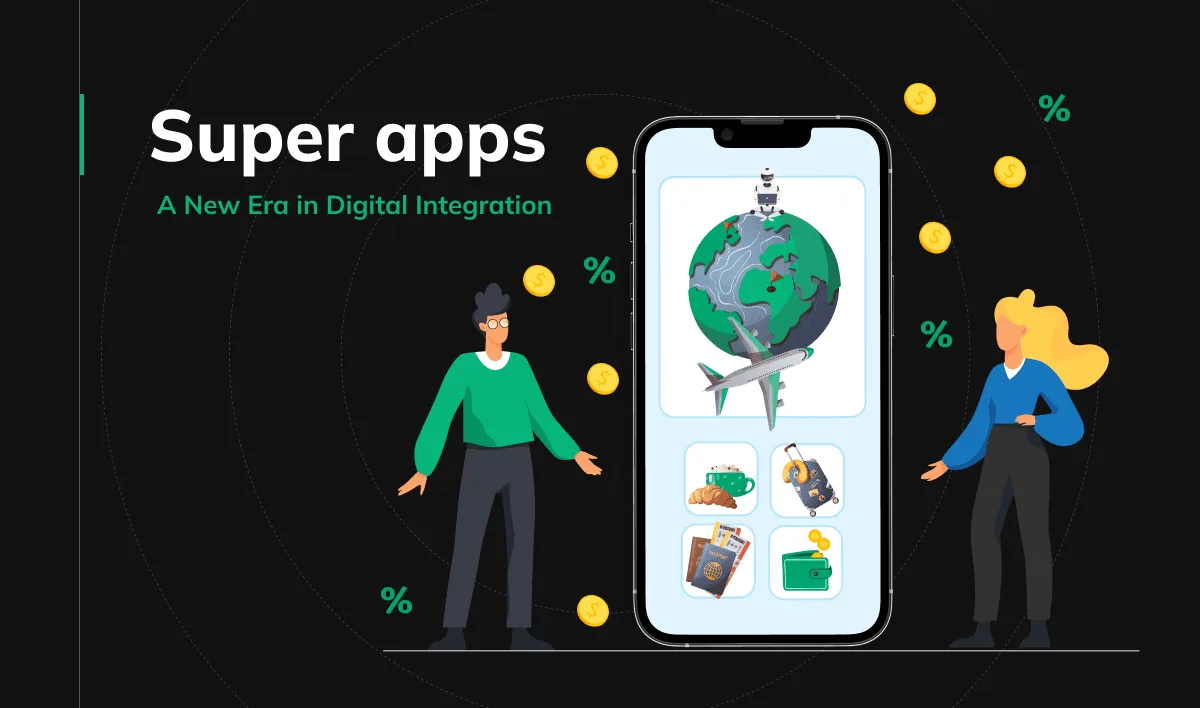
One phenomenon almost unique to Asia is the rise of the super-app—a digital platform that offers dozens of services within a single interface.
In contrast, Western markets still primarily rely on single-function apps.
7.1 Why super-apps flourish in Asia
The success of super-apps in Asia comes from:
- mobile-first consumer behavior
- trust in digital payments
- dense urban populations
- commercial environments that reward integration
- the convenience expectations of young consumers
Asia’s super-apps often combine:
- messaging
- payments
- shopping
- food delivery
- ride-hailing
- bookings
- entertainment
- financial services
This all-in-one ecosystem naturally trains consumers to embrace complex digital behaviors.
7.2 Network effects and scaling advantages
Once users depend on a super-app, they are more likely to adopt new services introduced within it. This creates seamless pathways for technological diffusion.

8. Fintech and the Reinvention of Financial Services
Asia’s fintech revolution has had global repercussions.
8.1 Mobile wallets reach billions
Digital payments in Asia are so widespread that many consumers rarely carry cash. Real-time payment systems, ultra-low transaction fees, and interoperability between platforms make digital finance effortless.
8.2 Banking the unbanked
In regions where traditional banking penetration was historically low, fintech filled the gap. Mobile money services allowed millions of households to enter the financial system.
8.3 Asia as a testing ground for financial innovation
Innovations such as micro-loans, digital insurance, QR-banking, and embedded finance scaled dramatically in Asia due to its combination of technological infrastructure and demographic openness.
Fintech companies operate in environments that reward:
- rapid user acquisition
- flexible product design
- aggressive pricing
- gamified customer engagement
9. Manufacturing 2.0: Automation, Robotics, and the Future of Industry
Asia is still the world’s manufacturing powerhouse, but what is changing is the degree of automation and intelligence embedded in production.
9.1 Robotics adoption in East Asia
South Korea, Japan, and China are among the highest adopters of industrial robots globally.
9.2 Smart factories and IoT integration
Manufacturers across Asia use sensors, AI analytics, and robotic systems to improve efficiency and reduce defects.
9.3 The evolution of supply chains
Digitized logistics, predictive maintenance, and real-time tracking have transformed supply chain management across the region.
These advancements create a feedback loop where manufacturing excellence supports further technological innovation.
10. The AI Sprint: Why Asia Is Racing to the Front
Artificial intelligence is perhaps the most influential technology shaping Asia’s future trajectory.
10.1 Data abundance
Asia’s enormous populations and hyperactive mobile usage produce massive datasets, creating perfect conditions for training AI systems.
10.2 Government support and regulation
Asian governments tend to be open to AI experimentation, providing supportive environments for:
- autonomous systems
- AI healthcare diagnostics
- smart city management
- public security systems
- language models tailored to local languages
10.3 Corporate enthusiasm
From AI-driven retail to automated customer service, companies across the region adopt AI to boost efficiency, reduce costs, and enhance user experience.
10.4 Research ecosystems and talent pools
Asian universities, institutes, and startups contribute substantially to global AI research, drawing from large STEM talent pipelines.
11. Education and Upskilling: Preparing the Workforce for Tech-Centric Futures
Technology adoption is only sustainable if the workforce is capable of using and advancing it.
11.1 Lifelong learning as a norm
Countries like Singapore, South Korea, and Japan invest heavily in upskilling programs that ensure workers remain competitive.
11.2 Private-sector-led training
Tech companies in Asia often collaborate with universities and government agencies to create training pipelines that feed talent directly into industry.
11.3 Acceptance of hybrid and digital learning
Online education platforms flourish in Asia due to high digital penetration and cultural emphasis on academic advancement.
12. Entrepreneurship and Startup Ecosystem Explosions
Asia’s startup landscape has become one of the most dynamic in the world.
12.1 Young founders and large addressable markets
A combination of young populations and massive digital markets creates fertile ground for startups.
12.2 Abundant venture capital
Venture capital firms increasingly view Asian markets as high-growth opportunities.
This investment fuels innovation in:
- AI
- healthcare tech
- e-commerce
- mobility
- green tech
12.3 Cross-border expansion patterns
Companies often scale quickly beyond their home markets, leveraging similarities across Asia’s cultural and economic landscapes.
13. A Digital Culture That Moves Faster Than the World
Asia’s tech-savviness is not solely an economic or technological phenomenon—it is also cultural.
13.1 Constant online presence
Consumers in Asia spend more time on mobile devices than almost any other region.
13.2 Digital entertainment ecosystems
Industries like K-pop, anime, mobile gaming, and streaming have pushed digital creativity to global levels of influence.
13.3 Socially-driven consumption
Influencer cultures dominate purchasing decisions, and these trends encourage rapid adoption of digital tools and platforms.
14. The Feedback Loop That Creates Ever-Faster Innovation
All of these forces—demographic dynamism, government strategy, corporate structure, cultural mindset, and technological investment—feed into each other.
- Young consumers demand digital convenience.
- Businesses innovate rapidly to meet that demand.
- Governments build infrastructure to support growing digital economies.
- Tech companies invest in research and expansion.
- More innovation occurs.
- Consumer expectations rise.
- And the cycle repeats.
Asia’s rise as a tech-savvy region is therefore self-reinforcing.
15. The Future: Where Asia’s Technological Trajectory Is Heading
15.1 AI localization and multilingual models
With diverse languages and cultures, Asia will lead in customized AI ecosystems.
15.2 Semiconductor independence
East Asian economies will push aggressively to strengthen chip design and manufacturing capacity.
15.3 Green technology and smart energy
Asia will become a testing ground for clean energy innovation, electric vehicles, and smart grid systems.
15.4 Deep integration of digital identities
National digital identity systems will form the backbone of public services, payments, and healthcare.
15.5 Super-regional supply chain connectivity
Expect stronger links between South Asia, East Asia, and Southeast Asia—digitally, financially, and logistically.
Conclusion
Asian economies are becoming increasingly tech-savvy not through a single catalyst, but through a powerful constellation of interlocking forces. Demographics provide the demand. Governments provide direction. Companies provide innovation. Culture provides momentum. Geopolitics provides urgency.
Together, they form one of the most dynamic technological transformations in modern history.
The world is not witnessing a temporary surge in Asian tech—they are witnessing the new structural reality of global innovation.
Asia isn’t just catching up.
It is defining the future.