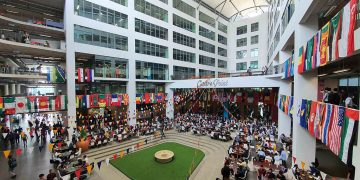










Introduction: A Region Rising Into Global Academic Spotlight
In the last two decades, the Asia Pacific region—stretching from the bustling metropolises of East Asia to the sun-splashed archipelagos of Oceania—has swiftly transformed from a “future promise” to a present-day magnet for global education seekers. International students are no longer looking only toward Western destinations such as the United States, Canada, or Western Europe when charting the path for their academic and professional journeys. Increasingly, their eyes—and applications—are turning eastward and southward.
But why? What makes the Asia Pacific not just an alternative, but for many, the preferred choice?
The answer lies in a dynamic intersection of economic vitality, generous education reforms, rapidly rising university rankings, cultural richness, technological innovation, affordability, and the region’s remarkable openness to global talent. The Asia Pacific has not merely caught up with traditional education hubs—it has redefined the global landscape in ways that appeal especially to the ambitions and expectations of today’s internationally mobile students.
What follows is a detailed exploration—professionally oriented yet engaging—of precisely what makes this region an academic powerhouse and why millions of students now consider it the epicenter of their educational dreams.
1. A Growing Epicenter of Global Economic Power
1.1 Asia Pacific as an Engine of Future Opportunities
When international students evaluate study destinations, they rarely look at academics alone. They weigh economic potential, growth trajectories, job markets, and long-term prospects. In this regard, the Asia Pacific is unrivaled.
The region accounts for a substantial portion of global GDP growth, bolstered by leading economies such as China, Japan, South Korea, Singapore, Australia, and emerging powerhouses like Vietnam, Indonesia, Malaysia, and the Philippines. This vibrant economic environment creates an ecosystem where education and industry thrive in synergy.
1.2 Economic Expansion as a Talent Magnet
Students are drawn to regions where the economy isn’t stagnant. They want to be where innovation is happening, where talent is needed, and where industries—from artificial intelligence to green energy—are receiving massive investment.
The Asia Pacific’s economic momentum offers:
- Booming job markets in technology, finance, engineering, logistics, healthcare, and design
- Innovation hubs fueled by government funding and private-sector collaboration
- Start-up scenes that are highly receptive to young international talent
- A steady increase in multinational companies establishing regional headquarters or R&D centers
For international students, this means opportunity—both during studies and beyond.
2. World-Class Universities and Rapidly Rising Prestige
2.1 The Academic Rise of Asian Institutions
Just a decade or two ago, only a handful of Asia-Pacific universities were globally recognized compared to Western giants. Today, the shift is dramatic. Universities from Singapore, Mainland China, Hong Kong, Japan, South Korea, Australia, and New Zealand appear prominently in global rankings.
These institutions excel in:
- STEM fields (engineering, computer science, biotechnology, materials science)
- Business and economics
- Environmental science and sustainability research
- Design, architecture, and creative industries
- Regional studies, linguistics, and international relations
2.2 Research Strength and Innovation Ecosystems
Asia Pacific universities partner closely with industry, generating impressive research output and innovative breakthroughs. Many adopt interdisciplinary models encouraging students to move fluidly between theory, practical research, and real-world application.
What draws students?
- State-of-the-art laboratories
- Research funding opportunities
- Internship pipelines that lead directly to employment
- Faculty who are both globally trained and regionally connected
The rapid ascent of Asia-Pacific academia signals something bigger: the region is not just following global standards—it’s helping to shape them.
3. Affordability Without Compromising Quality
3.1 The Cost Advantage
While the cost of studying in Western destinations continues to rise—tuition fees, student housing, living expenses—the Asia Pacific often offers:
- Lower tuition rates
- Reduced cost of living
- Better value for money
Countries such as Malaysia, Taiwan, Vietnam, Thailand, and the Philippines offer world-class programs at a fraction of Western costs. Even in higher-cost economies like Singapore, Japan, and South Korea, numerous scholarships, grants, and subsidized education pathways make study accessible.
3.2 Scholarships: A Growing Incentive
Governments and universities across the region invest aggressively in attracting international talent through:
- Full and partial tuition scholarships
- Stipend-based research fellowships
- Government-sponsored awards
- Merit-based international student grants
- Corporate-sponsored academic partnerships
These incentives reduce financial barriers and significantly widen access to top-tier education.
4. Cultural Richness and Global Learning Through Diversity
4.1 The Allure of Cultural Immersion
Asia Pacific is one of the most culturally diverse regions on Earth. From the ancient civilizations of East Asia to the multicultural urban landscapes of Oceania, the region offers an immersive cultural experience that enriches students’ global awareness.
Students who come here often cite:
- Deep traditions and unique cultural identities
- Bilingual or multilingual environments
- Festivals, arts, and culinary diversity
- Historical sites integrated into modern cities
Learning in such places is inherently transformative—not just academically but personally.

4.2 Globalization in the Classroom
Universities in the Asia Pacific embrace a global outlook:
- Courses taught in English
- International faculty
- Multicultural student bodies
- Exchange agreements with top universities worldwide
Students receive both global exposure and local insight—a combination uniquely suited for 21st-century leaders.
5. Unmatched Technological Innovation and Digital Advancement
5.1 A Region Leading the Digital Revolution
Asia Pacific is home to some of the world’s most technologically advanced nations. Japan and South Korea have long been global leaders in robotics, electronics, and digital infrastructure. Meanwhile, Singapore positions itself as a smart-city pioneer, and China drives massive advancements in AI, fintech, and e-commerce.
For students, this tech-forward environment offers:
- Access to cutting-edge tools and research facilities
- Programs directly aligned with industry needs
- Hands-on learning via labs, incubators, and innovation centers
- Exposure to technologies shaping the world’s future
5.2 Start-Up Ecosystems and Entrepreneurial Opportunities
From Seoul’s start-up districts to Singapore’s innovation hubs, from Shenzhen’s tech manufacturing clusters to Melbourne’s digital enterprises, Asia Pacific is a playground for aspiring entrepreneurs.
Students benefit from:
- Accelerators and incubators linked to universities
- Cross-border collaboration opportunities
- Strong government support for innovation
- A culture that embraces experimentation and risk-taking
This makes the region ideal for those dreaming of founding a future unicorn.
6. Strategic Geographic Positioning and Global Connectivity
6.1 The Bridge Between Continents
Asia Pacific’s geography gives it unparalleled strategic advantage:
- It sits at the crossroads of global trade routes.
- It connects East and West.
- Its airports serve as major international hubs.
This connectivity is not just logistical—it’s also cultural, economic, and academic.
6.2 An Ideal Base for Regional Career Opportunities
International students find that studying in Asia Pacific opens doors to:
- Opportunities in both Western and Eastern markets
- Cross-border employment and regional HQ placements
- Internships across multiple countries
Mobility and career flexibility are significant draws for ambitious students seeking multinational pathways.
7. English-Taught Programs and Language Opportunities
7.1 A Surge in English-Medium Instruction
Many Asia Pacific universities now offer full-degree programs entirely in English, making the region accessible even for students unfamiliar with local languages. Fields such as business, engineering, IT, hospitality, and international relations are especially well represented.
7.2 Learning Local Languages as an Added Asset
Students who wish to develop additional language skills—Mandarin, Japanese, Korean, Malay, Thai, or Vietnamese—find abundant opportunities for immersive learning.
These language skills dramatically enhance employability, especially within multinational corporations operating across Asia.
8. Safe, Student-Friendly Cities and Livable Environments
8.1 High Standards of Safety and Comfort

Many Asia Pacific countries rank high for safety, urban cleanliness, and public infrastructure. Students often choose cities like Singapore, Tokyo, Seoul, Taipei, Auckland, and Melbourne for their:
- Efficient transportation systems
- Safe neighborhoods
- High-quality healthcare
- Clean, well-planned urban environments
8.2 Vibrant Student Life
The region offers:
- Cafés, art spaces, and cultural districts
- Affordable street food and world-class dining
- Music festivals, creative markets, and nightlife
- Strong international student support networks
For young people embarking on studies abroad, this balance of security and enjoyment is invaluable.
9. A Gateway to Emerging Industries and Future Careers
9.1 High-Growth Sectors Students Want In On
Asia Pacific is where many future-defining industries are scaling rapidly:
- Artificial intelligence and robotics
- Green energy and sustainability technologies
- Digital finance and blockchain ecosystems
- Biotech, pharmaceuticals, and medical innovation
- Creative industries and media production
- Advanced manufacturing and smart logistics
Students who study in the region are positioned at the forefront of global progress.
9.2 Internship and Job Availability
Because of economic growth, international companies, and strong regional networks, students benefit from robust internship pipelines tailored to academic programs.
The region offers practical training that seamlessly transitions into full-time employment.
10. Government Policies That Welcome International Students
10.1 National Strategies Focused on Global Talent
Many Asia Pacific governments explicitly design immigration and education policies to attract talent. These include:
- Post-study work visas
- Clear pathways to residency
- Permissions for part-time work during study
- Simplified visa procedures
- Strong protection and support for international students
10.2 A Long-Term Vision for Education and Workforce Development
Education ministries and national development boards in the region view international students as assets—not temporary visitors. They invest in campuses, innovation parks, and long-term opportunities for graduates to remain, work, and contribute to national growth.
This welcoming stance is a major differentiator.
11. Diverse Study Destinations for Different Personalities and Goals
What makes the Asia Pacific uniquely attractive is that it is not homogeneous. Every country has distinct cultural flavors, living environments, academic strengths, and professional pathways. Students can find a destination that aligns precisely with their personality and goals.
11.1 East Asia: High-Tech, High-Prestige, Fast-Paced
- China: AI, business, engineering, international trade
- Japan: robotics, design, automotive engineering, cultural arts
- South Korea: ICT, pop culture, biotech, gaming
11.2 Southeast Asia: Affordable, Warm, Culturally Rich
- Singapore: global business, fintech, engineering
- Malaysia & Thailand: hospitality, medicine, emerging sciences
- Vietnam & the Philippines: technology, business, English-taught programs
11.3 Australia & New Zealand: Western Education in the Pacific Context
- Known for hospitality, environmental sciences, medicine, and business
- Safe environments, outdoor lifestyles, and strong post-study work options
The region’s broad spectrum of choices enhances its global allure.
12. An Education That Goes Beyond Academics
Students don’t come to Asia Pacific solely for classroom learning—they come for personal growth, networks, cultural knowledge, and transformational experiences.
12.1 Cross-Cultural Competence
Learning in multicultural environments builds adaptability, communication skills, and a global mindset.
12.2 Personal Development
Students gain independence, confidence, and resilience through navigating life abroad.
12.3 International Networks
Peers often represent dozens of countries, building lifelong connections across continents.
12.4 Experiential Learning
From tech internships to community projects, from cultural festivals to travel opportunities, Asia Pacific offers education that transcends textbooks.
This holistic development is increasingly valued in global job markets.
Conclusion: Why the Asia Pacific Stands Out
The attractiveness of the Asia Pacific to international students is no accident. It is the result of:
- Strong, forward-looking governments
- Rapidly growing economies
- World-class universities with rising prestige
- Globally relevant degree programs
- Multicultural environments and vibrant student life
- Cost advantages and generous scholarships
- Openness to international talent
- Technological and industrial leadership
The region is dynamic, ambitious, and future-oriented—qualities that resonate with the global youth looking to build meaningful, successful careers in an interconnected world.
In short, the Asia Pacific is more than a study destination.
It is a launchpad for the next generation of global leaders.