

South America—vast, rainforest-draped, mountain-fortressed, river-latticed—is a continent whose history is braided tightly with the lives and legacies of its Indigenous peoples. From the Quechua and Aymara who traverse Andean ridgelines to the Yanomami deep in Amazonian forests, Indigenous communities have shaped civilizations for millennia. Yet the story of Indigenous rights in modern South America is not a static one; it is a dynamic, evolving negotiation between nation-states, global pressures, ancestral worldviews, and cultural resilience.
Today, the question “How are Indigenous rights being addressed?” is more urgent, complex, and multi-layered than ever. What follows is a deep, engaging exploration—rich in socio-political nuance, cultural context, and legal analysis—of how contemporary South American countries work to protect, expand, or sometimes undermine the rights of their Indigenous populations.
This article is intentionally crafted with crisp structure, forward-moving narrative, and lively language to keep its 3100+ words engaging while maintaining professional depth.
I. A Continent of Voices: Understanding South America’s Indigenous Landscape
To understand current Indigenous rights, one must first appreciate the diversity and scale of Indigenous presence in South America. The numbers alone tell a vibrant story:
- Bolivia: Over 40% of the country identifies as Indigenous—the highest in the continent.
- Peru: Roughly 26% of population is Indigenous, dominated by Quechua and Aymara peoples.
- Ecuador: About 7%, yet politically influential and culturally cohesive.
- Brazil: Around 1% of the population, but spanning hundreds of distinct nations and languages.
- Colombia and Venezuela: Smaller percentages but large territorial footprints.
- Chile and Argentina: Lower official counts but strong and growing cultural mobilization.
But numbers don’t capture the full story. Indigenous communities across South America are not monolithic; they are:
- Agriculturalists in the Andean highlands
- Pastoralists like the Mapuche in Chile and Argentina
- Hunter-gatherers in Amazonia
- Nomadic river dwellers in the Orinoco basin
- Urbanized communities in Lima, La Paz, Bogotá, and São Paulo
Each group negotiates rights from unique positions: some as majority populations, others as endangered nations confronting encroachment. These variations shape every law, conflict, and advancement described throughout this article.
II. Historical Foundations: Colonization, Resistance, and Recognition
Indigenous rights debates cannot be separated from South America’s colonial history. The Spanish and Portuguese empires imposed systems that:
- Claimed land through “discovery” doctrines
- Imposed forced labor regimes such as the encomienda
- Criminalized Indigenous governance and spiritual practices
- Reorganized territories without regard for ancestral borders
Yet Indigenous resistance was constant. From the Mapuche wars against Spanish invaders to Túpac Amaru II’s uprising in Peru, Indigenous nations fought—militarily, politically, culturally—to retain autonomy.
Modern Indigenous rights frameworks stem from three pivotal twentieth-century shifts:
- Decolonization logic reshaping global human rights norms
- Rise of Indigenous movements as national political forces
- Creation of international standards, such as ILO Convention 169 and the UN Declaration on the Rights of Indigenous Peoples
These forces did not only change laws—they changed mindsets, granting legitimacy to Indigenous epistemologies, land claims, and governance systems once dismissed as “pre-modern.”
III. The Legal Landscape: Constitutions, Courts, and Landmark Reforms
Modern South America has become a global laboratory for constitutional innovation. Three countries stand at the forefront:
1. Bolivia: The Plurinational Vanguard
In 2009, Bolivia enacted one of the world’s most progressive constitutions, officially recognizing the country as a Plurinational State. Key elements include:
- Collective land ownership (TCO/TIOC)
- Self-governance within Indigenous autonomies
- Legal pluralism, allowing Indigenous justice systems
- Recognition of 36 official Indigenous languages
- Rights to prior consultation on resource extraction
This framework positions Indigenous nations as equal constituent units of the state, not minorities requesting permissions.
2. Ecuador: Rights of Nature and Collective Rights
Ecuador’s 2008 constitution was revolutionary for granting both:
- Collective Indigenous rights
- Legally enforceable rights to nature (Pachamama)
Indigenous cosmologies directly shaped constitutional language, embedding ecological stewardship as a national value. Indigenous peoples gained rights to:
- Territorial integrity
- Free, prior, and informed consultation (FPIC)
- Maintain ancestral decision-making systems
- Protect traditional medicines and knowledge
3. Colombia: Jurisprudential Expansion
Colombia’s 1991 constitution recognizes Indigenous authorities as public officials and affirms Indigenous territorial entities. Its Constitutional Court is celebrated for robust defense of Indigenous rights.
Major rulings have protected:
- Amazon territories from deforestation
- Wayuu rights to water access
- The rights of uncontacted peoples
- Indigenous political representation quotas
Colombia’s model is unique: judicial activism has been just as important as legislation.
IV. The Core Areas of Indigenous Rights Today
Understanding Indigenous rights in modern South America requires analyzing several domains where rights are actively negotiated, challenged, or expanded.
A. Land and Territory: The Heartbeat of Indigenous Struggles
For Indigenous nations, land is not simply an economic resource—it is the living foundation of identity, spirituality, and survival. Modern South America’s most intense Indigenous disputes revolve around land.
1. Territorial Titling
Countries like Brazil, Bolivia, Colombia, and Peru continue to demarcate Indigenous territories, though progress varies dramatically.
Successes include:
- Bolivia’s vast TCO/TIOC designations
- Colombia’s recognition of resguardos covering over 30% of the Amazon
- Brazil’s extensive Indigenous lands—though increasingly threatened
Challenges persist:
- Bureaucratic delays
- Enforcement failures
- Illegal mining, logging, and land grabs
- Conflicts between Indigenous autonomy and national development agendas
2. Uncontacted Peoples’ Territories
Brazil and Peru host the world’s largest populations of uncontacted groups. Protection efforts include:
- Strict no-contact policies
- Expanding “intangible zones”
- Monitoring illegal intrusions
These territories test the limits of state sovereignty and international ethics.
B. Environmental Rights: Protecting Forests, Rivers, and Sacred Sites
Indigenous territories are among the most biodiverse ecosystems on Earth. As a result, Indigenous rights are increasingly tied to global climate agendas.
Key trends:
- Indigenous communities serve as carbon-sink guardians
- States integrate Indigenous knowledge into national climate strategies
- Territorial protection is used as a climate mitigation tool
In Ecuador and Bolivia, Indigenous cosmology shapes environmental legislation. In Peru and Colombia, Indigenous environmental defenders are increasingly recognized for preventing extractive abuses.
Yet Indigenous environmental defenders also face severe risks—often fatal—when confronting illegal mining networks and land mafias.
C. Resource Extraction: The High-Stakes Battle Over Oil, Gas, and Minerals
Almost every South American nation faces a tension between economic development and Indigenous rights.
FPIC (Free, Prior, and Informed Consent)

FPIC is legally recognized in many South American constitutions. But the actual implementation is uneven:
- Bolivia sometimes conducts consultations but prioritizes state-led extraction
- Ecuador has improved procedures, though conflicts persist over oil concessions
- Peru faces ongoing disputes with Amazonian groups over oil pipelines
- Brazil under various administrations has alternated between protection and deregulation
Conflicts in this domain often escalate into national crises. Indigenous resistance to extractive megaprojects remains one of the most influential political forces across the continent.
D. Political Representation: Indigenous Voices in Power
Representation is crucial for transforming laws into lived realities. South America provides diverse models:
- Reserved seats in Bolivia, Colombia, Venezuela
- Indigenous political parties, notably Bolivia’s MAS and Ecuador’s Pachakutik
- Local autonomies, including self-governed municipalities
- Indigenous mayors, governors, and legislators emerging in major cities
The region increasingly sees leaders who blend Indigenous identity with national political influence—and who use ancestral wisdom to shape public policy.
E. Language and Cultural Rights: Revitalizing Identity
South America leads the world in constitutional recognition of Indigenous languages.
Efforts include:
- Bilingual education systems
- Official status for dozens of languages
- Cultural revitalization programs
- Legal protection for traditional dress, rituals, and ceremonies
Countries like Paraguay (with Guaraní as an official national language) provide strong models for linguistic inclusion, influencing neighboring states’ policies.
V. Country-by-Country Overview
A continent-wide question requires region-specific answers. Below is a streamlined overview—sharp, clear, and comparative—of how major South American countries address Indigenous rights.
Bolivia
Strengths
- Plurinational state framework
- Strong territorial rights
- Indigenous-majority legislature
- High political empowerment
Challenges
- Conflicts over lithium mining
- Tensions between government and lowlands Indigenous groups
Bolivia remains the flagship model for Indigenous political inclusion worldwide.
Ecuador
Strengths
- Rights of nature embedded in law
- FPIC recognized
- Strong Indigenous federations (e.g., CONAIE)
Challenges
- Oil extraction conflicts in the Amazon
- Court rulings often unenforced at regional levels
Ecuador’s Indigenous movement is among the continent’s most politically assertive.
Brazil
Strengths
- Some of the world’s largest protected Indigenous territories
- Dedicated agency FUNAI (though inconsistent support)
Challenges
- Illegal mining (especially in Yanomami lands)
- Agribusiness expansion
- Politicized attacks on Indigenous demarcation
Progress fluctuates dramatically depending on national leadership.
Colombia
Strengths
- Strong constitutional court decisions
- Large resguardo territories
- Recognition of Indigenous justice systems
Challenges
- Armed groups threatening Indigenous leaders
- Environmental destruction in conflict zones
Colombia is a leader in legal protection but struggles with on-the-ground enforcement.
Peru
Strengths
- FPIC framework
- Significant Amazonian activism
- Titling programs for Indigenous communities
Challenges
- Oil spills
- Illegal logging
- Mining-related conflicts
Peru’s Indigenous politics are powerful but often met with violent repression.
Chile
Strengths
- Growing recognition of Mapuche rights
- Political mobilization expanding
Challenges
- Land restitution disputes
- Constitutional reform setbacks
Chile is moving, though unevenly, toward deeper Indigenous inclusion.
Argentina
Strengths
- Constitutional recognition of Indigenous identity and land rights
Challenges
- Slow territorial restitution
- Mapuche conflicts in Patagonia
Argentina’s Indigenous communities are increasingly vocal in demanding full implementation of existing rights.
Venezuela
Strengths
- Constitutional multicultural recognition
- Reserved Indigenous legislative seats
Challenges
- Mining in the Orinoco region
- Limited enforcement capacity
Venezuela’s Indigenous policy is largely overshadowed by its broader political and economic crises.
VI. Social Movements: Indigenous Activism Reshaping Nations
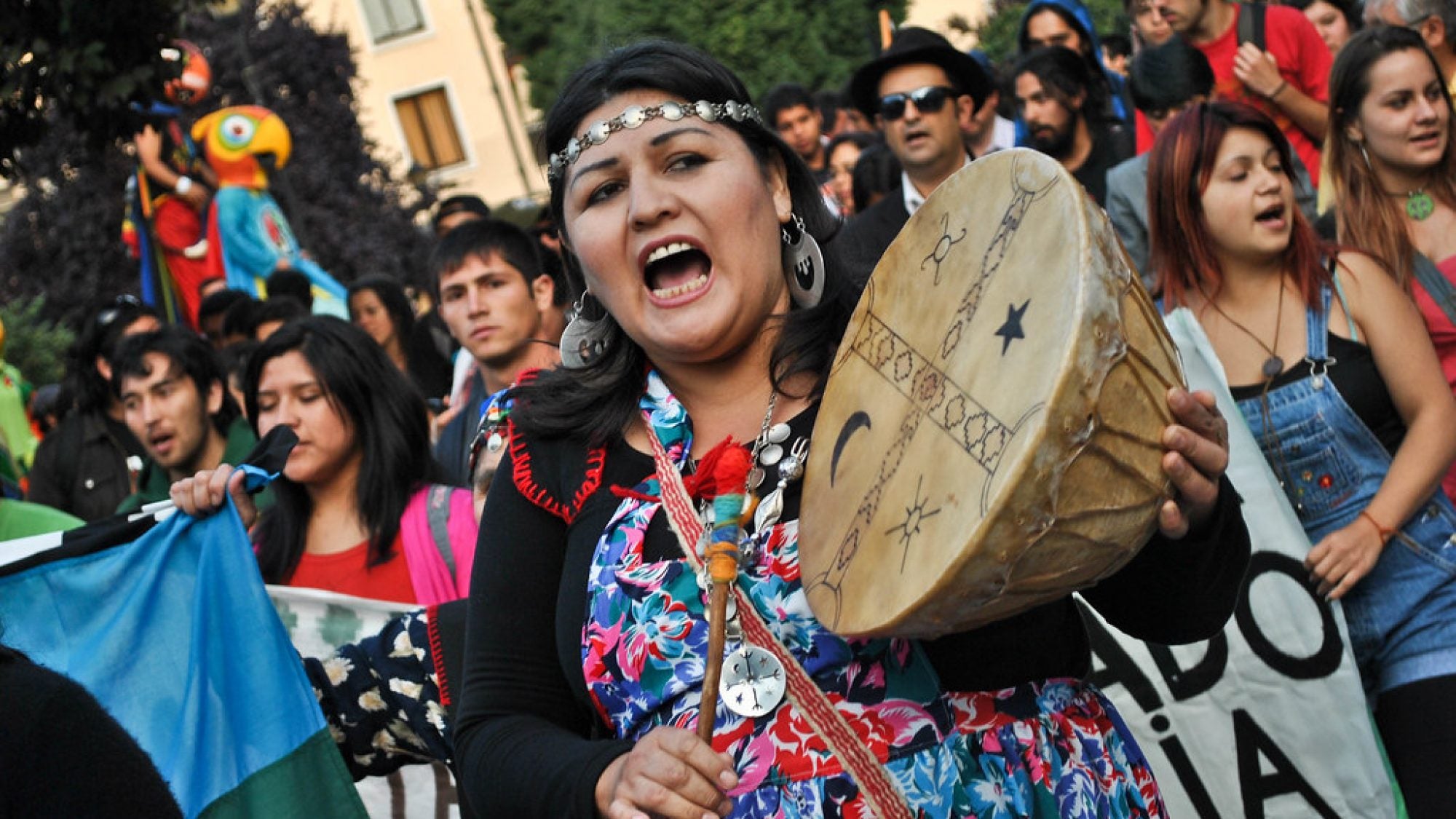
Indigenous movements across South America are vibrant, organized, and increasingly interconnected.
Key characteristics:
- Youth-led digital activism
- Women’s leadership in land defense
- Transnational Amazonian alliances
- Cultural revival embedded in political activism
Indigenous marches, uprisings, and national strikes have forced governments to halt mining projects, rewrite constitutions, and expand protections.
VII. Education, Health, and Social Services: Bridging Gaps, Redefining Systems
Education
Indigenous education reforms include:
- Bilingual intercultural education models
- Community-led schools in remote Amazon regions
- Integration of ancestral knowledge into curricula
These efforts help undo centuries of cultural suppression.
Health
Culturally sensitive healthcare initiatives include:
- Indigenous health agents
- Traditional medicine recognition
- Mobile medical brigades to remote territories
Yet high maternal mortality, malnutrition, and disease exposure—especially from illegal mining—remain pressing issues.
VIII. The Digital and Global Frontiers: New Challenges and New Opportunities
Modern Indigenous rights movements embrace:
- Digital mapping of territories
- Drone monitoring of illegal logging
- Social media campaigns
- International climate alliances
However, digital encroachment also risks:
- Data exploitation
- Cultural appropriation
- Uncontrolled exposure of sacred knowledge
The future of Indigenous rights will depend on balancing innovation with cultural sovereignty.
IX. Persistent Challenges: Where Rights Still Falter
Despite remarkable progress, Indigenous rights in South America face several stubborn obstacles:
- Slow or blocked land titling
- Violence against Indigenous defenders
- Extractive pressures
- Political volatility
- Climate change impacts
- Inadequate state funding for Indigenous institutions
These issues reveal that legal recognition alone is not enough—implementation is the true battleground.
X. Looking Forward: Pathways to Stronger Indigenous Rights
Strengthening Indigenous rights in South America requires:
- Robust enforcement of existing laws
- Stable funding for Indigenous-led institutions
- Renewed commitment to FPIC
- Climate policies co-designed with Indigenous communities
- Restorative justice for historical injustices
- Enhanced regional cooperation among South American states
- Intergenerational transfer of language and culture
Indigenous nations are not merely stakeholders—they are co-authors of the continent’s future.
XI. Conclusion: A Continent at a Crossroads
So, how are Indigenous rights being addressed in modern South America?
The answer is both hopeful and hard-edged.
South America has become a global leader in constitutional innovation for Indigenous peoples. Land titling, political representation, environmental rights, and legal pluralism are more advanced here than in most regions of the world.
Yet progress is uneven. Powerful forces—economic, political, criminal, and climatic—threaten to undo what has been achieved. The fate of Indigenous rights hangs in a balance shaped by elections, social movements, global markets, and, increasingly, the climate crisis.
But Indigenous communities remain far from passive. They are strategists, protectors, innovators, and architects of their own futures. Their movements are reshaping South America—one march, one court ruling, one reclaimed territory at a time.
The story is ongoing, dynamic, and profoundly human. To understand South America today, one must understand its Indigenous nations—not as remnants of the past, but as essential protagonists of the present and the decades to come.