





Introduction: A Canal, a Crossroads, and a Question
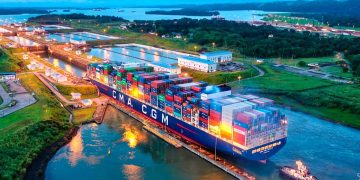
Panama has long lived at the intersection of geography and destiny. Blessed—or burdened, depending on one’s perspective—with a slender waistline connecting two continents and dividing two oceans, the country has built an entire national identity and economic model on its role as an indispensable trade corridor. For over a century, the Panama Canal has been one of the world’s most strategic assets: a water bridge across the planet, redirecting the flow of commerce, military power, and global supply chains.
But today, global trade is undergoing turbulence. Shifting geopolitical alliances, climate pressures, alternative shipping routes, digitalization, nearshoring, and infrastructural competition are changing how goods move across the world. The question is no longer how important the Panama Canal once was, but whether Panama’s broader role as a global trade hub can remain resilient in a reshaped world.
This article takes a deep dive into the forces reshaping global logistics, evaluates Panama’s strengths and vulnerabilities, and explores what the country must do to stay relevant in a rapidly changing economic landscape.
1. A Brief History of Panama’s Rise as a Global Trade Hub
Before GPS, satellite imagery, or containerization, geography shaped trade. Panama’s narrow isthmus made it the ideal shortcut between the Atlantic and Pacific—a fact exploited early by empires, explorers, and merchants.
From gold routes to global shipping
- Indigenous trading routes first used Panama as a natural land bridge.
- Spanish colonization amplified its importance, transporting American silver and gold through the region.
- By the 19th century, global powers recognized the strategic potential of a trans-isthmus passage.
- In 1914, the Panama Canal officially opened, reshaping maritime history forever.
How the canal transformed global logistics
The canal:
- Shortened shipping times by thousands of miles.
- Allowed new routes for global supply chains.
- Spurred the growth of port cities like Colón and Panama City.
- Became essential to U.S. geopolitical and military strategy.
- Anchored Panama’s service-based economy.
For a century, the canal was a monopoly on convenience. But global trade now faces alternatives and threats the canal’s original builders never imagined.
2. Global Shifts Threatening Panama’s Traditional Trade Dominance
Panama’s role isn’t just about the canal. It’s also about ports, logistics zones, financial services, and digital connectivity. But all of these depend on a world where trade flows through Central America. Today, that assumption is being challenged by multiple seismic shifts.
a) Climate Change and Water Scarcity
Perhaps the most urgent and visible threat is climate variability.
The canal relies on freshwater to operate its lock system. Severe droughts in recent years have:
- Reduced the number of daily transits.
- Forced draft limitations on vessels.
- Raised operational uncertainties for shipping companies.
The drought of 2023–2024 was a stark warning: if water scarcity becomes chronic, Panama’s greatest natural advantage becomes its greatest operational weakness.
b) Global Trade Fragmentation
Rising geopolitical tensions—U.S.–China rivalry, protectionist policies, sanctions, and regional trade blocs—are reconfiguring shipping routes.
Fragmentation means:
- Less predictable trade flows.
- More rerouting via alliances or strategic agreements.
- Potential decline in the dominance of East–West maritime trade.
If global trade becomes more regional (e.g., Asia-centric for Asia, Americas-centric for the Americas), Panama’s centrality may decline.
c) Nearshoring and Onshoring Trends
Companies are bringing production closer to home:
- U.S. firms are relocating to Mexico and Central America.
- European firms are investing in Eastern Europe and North Africa.
Nearshoring may reduce demand for long-distance shipping between Asia and America, particularly for certain industries like textiles, electronics, and automotive parts.
d) New Competing Routes
The Panama Canal isn’t alone anymore. Alternatives are emerging:
- Suez Canal – Already a major competitor for Asia–Europe routes.
- Arctic shipping lanes – Becoming seasonally viable as ice melts.
- The overland rail networks in Eurasia – Fast for high-value goods.
- New land corridors in Mexico or Colombia – Though speculative, discussed as strategic alternatives.
- Nicaragua Canal proposals – Dormant but often resurfacing as geopolitical talking points.
No single competitor replaces Panama, but collectively they chip away at its monopoly.
e) Supersized Ships
Global shipping has embraced mega-vessels:
- Ultra Large Container Vessels (ULCVs) exceed Panama Canal’s Neopanamax limits.
- These ships favor alternative routes.
Panama’s canal expansion in 2016 helped, but ship sizes continue to grow faster than infrastructure.
f) Digitalization and the Decline of Traditional Hubs
Cloud-based logistics platforms and autonomous shipping technologies are reducing the need for physical transshipment hubs. Some trade flows may bypass traditional chokepoints entirely.
3. Panama’s Structural Strengths: Why It Still Matters
Despite these challenges, Panama remains a powerhouse in global trade. Its strengths are structural, diversified, and difficult to replicate.
a) Geography That Never Goes Out of Style
No amount of geopolitics, engineering, or climate modeling can erase the fact that Panama is the narrowest point between two massive oceans. Even alternatives struggle to match Panama’s:
- Location
- Stability
- Capacity
- Infrastructure concentration
b) A Diversified Logistics Ecosystem
Panama is not just the canal.
It boasts:
- One of the world’s largest free-trade zones (Colón)
- A global banking and financial services center
- Tocumen International Airport, a major air cargo hub
- A growing digital and telecommunications infrastructure
- High-capacity ports on both oceans
- Regional headquarters for multinational companies
The web of interlinked services creates inertia—companies operate in Panama because everyone else does.
c) A Stable Political and Business Environment
Panama has historically maintained:
- Relative political stability
- A dollarized economy
- An investor-friendly regulatory environment
- Robust public–private partnerships
Compared to neighbors, Panama offers predictability—an invaluable commodity in global trade.

d) Strong Maritime Clusters
Panama:
- Has the world’s largest ship registry.
- Is a hub for maritime legal services.
- Has globally recognized logistics talent.
- Maintains a versatile port network.
These clusters create deep economic gravity.
e) Brand Power
The phrase “Panama Canal” is globally iconic—akin to “Silicon Valley” or “Wall Street.” Brand identity matters, especially in logistics, where reputation can outweigh marginal cost comparisons.
4. The Canal’s Future: Innovate or Fade
Panama’s strategic role hinges on how the canal adapts to new pressures.
a) Solving the Water Problem
Innovative solutions being studied or implemented include:
- Water recycling systems
- Reservoir expansion
- Desalination plants (costly but viable long-term)
- Rerouting freshwater sources
- Automated lock water efficiency technologies
Panama must transform from a rainfall-dependent model to a water-secure one.
b) Upgrading for Larger Vessels
Further expansions, while extremely expensive, remain essential if Panama wants a future-proof canal. Options:
- A third set of locks for ultra-large vessels
- Deeper channels
- Structural reinforcements for heavier shiploads
c) Digitalizing Transit Management
Smart scheduling, AI-driven forecasting, and predictive maintenance could dramatically improve efficiency and predictability—critical for carriers choosing between routes.
5. Beyond the Canal: Panama’s Vision for a Post-Canal Economy
If global shifts reduce reliance on the canal, Panama must evolve from a chokepoint nation into a value-creation hub.
a) Becoming the Singapore of the Americas
Singapore transformed from a maritime gateway into a global:
- Finance hub
- Logistics center
- Innovation ecosystem
- Talent magnet
Panama could replicate elements of this strategy:
- Strengthen education systems to develop local tech and logistics expertise.
- Foster clusters in fintech, digital trade, and logistics science.
- Expand incentives for multinational headquarters.
b) Regional Logistics Intelligence Hub
Panama could use its position to provide:
- Predictive analytics for shipping companies
- AI-driven supply chain visibility platforms
- Digital customs and blockchain-based trade documentation
Whoever controls information in global trade often wins more than whoever controls infrastructure.
c) Air-Sea Multimodal Integration
Tocumen Airport and Panama’s port network could create one of the most seamless multimodal corridors in the Western Hemisphere.
High-value, time-sensitive goods (pharma, electronics, perishables) could flow through Panama with unmatched efficiency.
d) Renewable Energy and Green Shipping
Panama can become a green logistics champion by:
- Investing in LNG bunkering facilities
- Supporting hydrogen fuel corridors
- Offering carbon-neutral transit packages
- Expanding solar and wind energy capacity
As shipping decarbonizes, sustainability becomes a competitive advantage.
e) Data Routing and Digital Infrastructure
Panama’s location makes it a natural nexus for:
- Submarine internet cables
- Regional cloud services
- Digital trade platforms
Becoming a data hub may one day rival being a shipping hub.
6. Geopolitical Positioning: Friend to All, Ally to Strategy
Panama must strategically navigate relationships with:
- The United States (historically dominant partner)
- China (major investor and shipping superpower)
- Latin American neighbors
- European trade partners
- Global logistics corporations
Balancing great powers
Panama benefits from being:
- Politically neutral
- Business-friendly
- Open to diversified partnerships
Its challenge is avoiding the pitfalls of becoming a proxy battleground for U.S.–China competition while still benefiting from both relationships.
7. The Risks Panama Cannot Ignore
Despite its strengths, Panama faces notable risks that could erode its trade relevance.
a) Overdependence on the Canal
The canal accounts for a large share of government revenue. Diversification is urgent.
b) Vulnerability to Climate Shocks
Water shortages could become cyclical. Infrastructure resilience is nonnegotiable.
c) Regional Competition
Mexico’s ports, Colombia’s Atlantic–Pacific corridors, and U.S. rail networks are all improving.
d) Internal Governance Challenges
Transparency, corruption, and institutional bottlenecks can slow modernization.
e) Economic Inequality
A logistics-driven economy can widen social divides. Social stability underpins investor confidence.
8. How Panama Can Strengthen Its Role in a New Global Trade System
1. Build a Water-Secure Canal
Long-term investments in water technologies must be prioritized.
2. Deepen Economic Diversification
Develop sectors such as:
- Fintech
- Renewable energy
- Education and research
- Digital logistics
- Regional headquarters operations
3. Accelerate Green Logistics Initiatives
Offer incentives for:
- Green ships
- Low-emissions transport
- Clean energy infrastructure
4. Enhance Digitalization of Ports and Customs
Implement:
- AI-driven container tracking
- Digital customs clearance
- Blockchain authentication for documents
5. Strengthen Human Capital
Create a skilled workforce in:
- Data science
- Logistics engineering
- Maritime law
- Cybersecurity
- Renewable energy systems
6. Improve Regional Integration
Panama can lead Central America in:
- Harmonized customs
- Energy grids
- Transport corridors
- Digital interoperability standards
7. Promote Innovation Zones
Innovation clusters near ports and airports could drive new economies around:
- Robotics
- Autonomous transport
- Supply chain analytics
9. The Future of Global Trade and Panama’s Place in It
The future will not be dominated by a single canal, a single trade route, or a single logistics model. Instead, it will be defined by:
- Multipolar trade networks
- Climate-conscious shipping
- Digitally optimized logistics
- Regional production chains
- Flexible and resilient supply routes
In this world, Panama cannot rely on historical advantages alone. But its combination of geography, infrastructure, political stability, and global brand gives it a stronger foundation than most nations facing similar challenges.
Will Panama remain relevant?
Absolutely—if it evolves.
Will the canal continue to matter?
Yes—but its dominance will depend on adaptability, innovation, and environmental resilience.
Can Panama’s trade hub role survive global shifts?
Not only survive—but potentially thrive, if the country transforms from a transit corridor into an integrated platform for global commerce, digital connectivity, and green logistics.
Conclusion: From a Pathway to a Platform
Panama’s journey began as a shortcut. Today, it stands at a crossroads—not just of oceans, but of global transitions. The world is changing rapidly, but so can Panama. Its future power will not come from simply being the narrowest point on a map, but from becoming the most innovative, resilient, and adaptive hub in the Western Hemisphere.
Panama has always been a connector of worlds. The next chapter will determine how it connects—and whether the rest of the world continues to pass through its gates.