




The Falkland Islands sit quietly in the South Atlantic—windswept, sparsely populated, home to more penguins than people. At first glance, they appear to be one of the most peaceful, isolated places on Earth. Yet for nearly two centuries, these remote islands have been at the center of one of the world’s most persistent territorial disputes. Their controversy combines conflicting national identities, colonial legacies, geopolitical strategy, natural resources, international law, and emotional narratives that run far deeper than geography.
This article takes a detailed, engaging, and highly professional look at why the Falkland Islands remain so controversial, exploring every major dimension of the dispute while keeping the tone lively and the structure easy to follow.
(And as requested, there are no citations, no external references, and no online lookup.)
1. A Remote Archipelago with Outsized Importance
The Falkland Islands (Islas Malvinas in Spanish) lie about 300 miles (480 km) off the coast of Argentina and nearly 8,000 miles (12,800 km) from the UK. Despite their small size and tiny population, the islands punch above their weight in global politics.
Several factors amplify their significance:
- Strategic military position in the South Atlantic
- Rich fishing grounds, among the most valuable globally
- Potential offshore oil and gas reserves
- Symbolism tied to sovereignty, national pride, and historical narratives
- The legacy of the 1982 Falklands War, which killed over 900 people
These layers ensure the controversy hasn’t faded with time. Instead, it has evolved.
2. The Historical Roots: A Tug-of-War from the Start
To understand the controversy, we need to step back into the 18th and 19th centuries, where both the UK and Argentina anchor their claims.
2.1 Early Sightings and Settlements
While debates continue about who “discovered” the islands first, several nations—France, Britain, and Spain—played roles in early settlement and claims.
Argentina traces its claim to Spanish rights inherited after independence. The UK cites earlier settlements and continuous administration from 1833 onward.
This creates a classic clash:
- Argentina: The islands were Spanish, and that sovereignty passed to them after independence.
- United Kingdom: British settlement and control predate Argentine claims, and the population overwhelmingly identifies as British.
Both narratives contain elements of truth, which is part of what makes the controversy so persistent.
2.2 The 1833 Turning Point
In 1833, Britain reasserted control over the islands, expelling a small Argentine garrison but leaving the civilian population. Argentina has viewed this as an illegal occupation ever since. The UK sees it as a restoration of rightful sovereignty.
This single event crystallized the dispute and continues to be referenced (and argued over) in political speeches, diplomatic notes, and patriotic narratives on both sides.
3. Identity, Self-Determination, and National Pride
At the heart of the modern controversy lies a collision between two powerful principles:
- Self-determination (the UK’s central argument)
- Territorial integrity (Argentina’s central argument)
The islanders overwhelmingly identify as British—not only politically but culturally, linguistically, and socially. In a 2013 referendum, 99.8% voted to remain a British Overseas Territory.
Argentina dismisses the referendum as irrelevant, arguing the population is the result of colonial settlement and therefore cannot override earlier sovereignty rights.
This tension turns the islands into a test case for international law:
- When does self-determination outweigh territorial claims?
- Can a settler population create new political legitimacy?
- Does historical inheritance outweigh modern democratic choice?
Each side cherry-picks which legal principles to emphasize, because both can be interpreted in ways that support their claims.
4. The Legacy of the 1982 Falklands War
No discussion of the controversy can ignore the war.
In April 1982, Argentina’s military junta invaded the islands, believing that reclaiming them would unite the country and provide political legitimacy. The UK responded with a large naval task force. Ten weeks later, Britain regained control.
The war had several long-lasting consequences:
4.1 For the UK
- Reinforced national pride and military capacity
- Embedded the defense of the islands into national strategy
- Cemented the political identity of the islanders
4.2 For Argentina
- The military regime collapsed shortly afterward
- The Malvinas became a unifying symbol of national identity
- The loss added emotional weight to the territorial claim
4.3 For the Islands Themselves
- Post-war investment improved infrastructure dramatically
- A permanent military presence was established
- The war became a foundational element of local memory
Even today, both nations view the war as a defining chapter, which maintains emotional tension long after the shooting stopped.
5. Geography and Geopolitics: A Strategic Outpost
The Falklands sit close to major shipping routes and near the Southern Ocean, giving the UK—and NATO—a foothold in a region with few Western military installations.
5.1 Military Strategy
The islands provide:
- A deep-water harbor useful for naval vessels
- A long-range airfield
- A logistics hub for operations near Antarctica
- A base for monitoring South Atlantic airspace and shipping
For Argentina, this military presence feels like a constant reminder of lost control.
6. Natural Resources: Fish, Oil, and the Deep-Sea Economy
Resources are one of the most practical reasons the dispute remains alive.

6.1 Fisheries: A Major Economic Engine
After the war, the island government established a regulated fishing zone. This transformed the local economy.
Fishing licenses now fund most of the islands’ budget. The waters are rich with squid and other species, making the area one of the most profitable fisheries in the world.
Argentina argues these waters are illegally administered. The UK and the islanders see fisheries as part of their rightful economic development.
6.2 Oil: The Game-Changer That Almost Was
In the early 2000s and 2010s, exploratory drilling found potential offshore oil reserves. Some of these fields showed promise, raising the possibility of billions of dollars in revenue.
Several complications, however, stalled production:
- High extraction costs in the South Atlantic
- Low global oil prices in later years
- Political risk due to the sovereignty dispute
- Difficult environmental conditions
While oil has yet to be fully developed, the possibility ensures both nations keep a close eye on the seabed.
7. International Law: A Battle of Interpretations
Multiple legal concepts apply to the Falklands:
- Self-determination of peoples
- Territorial integrity of states
- Succession of colonial-era claims
- Continuous administration
- De facto vs. de jure sovereignty
The United Nations lists the Falklands as a non-self-governing territory, which Argentina uses to argue that the colonial situation must be resolved.
However, the UN also recognizes the islanders as a “people”—and thus as having the right to self-determination. The difficulty is that these two principles conflict in this specific case.
This makes the controversy a legal paradox:
- If the islanders’ identity is valid, their wishes should dominate.
- If their presence is considered a product of colonialism, Argentina’s historical claim should dominate.
International law offers no clean, unanimous solution, making diplomatic progress slow.
8. Political Symbolism and Domestic Politics
For both countries, the islands have become political symbols far larger than their geographic footprint.
8.1 In Argentina: A Core Part of National Identity
The claim to the Islas Malvinas is enshrined in the Argentine constitution. Schoolchildren learn the islands as unquestionably Argentine. Maps show them as part of national territory. Political leaders from every party invoke them as sacred.
To many Argentines, the islands symbolize:
- Anti-colonial struggle
- National unity
- Historical injustice
This emotional weight means no government—left, right, or center—can abandon the claim.
8.2 In the UK: A Commitment to Overseas Communities
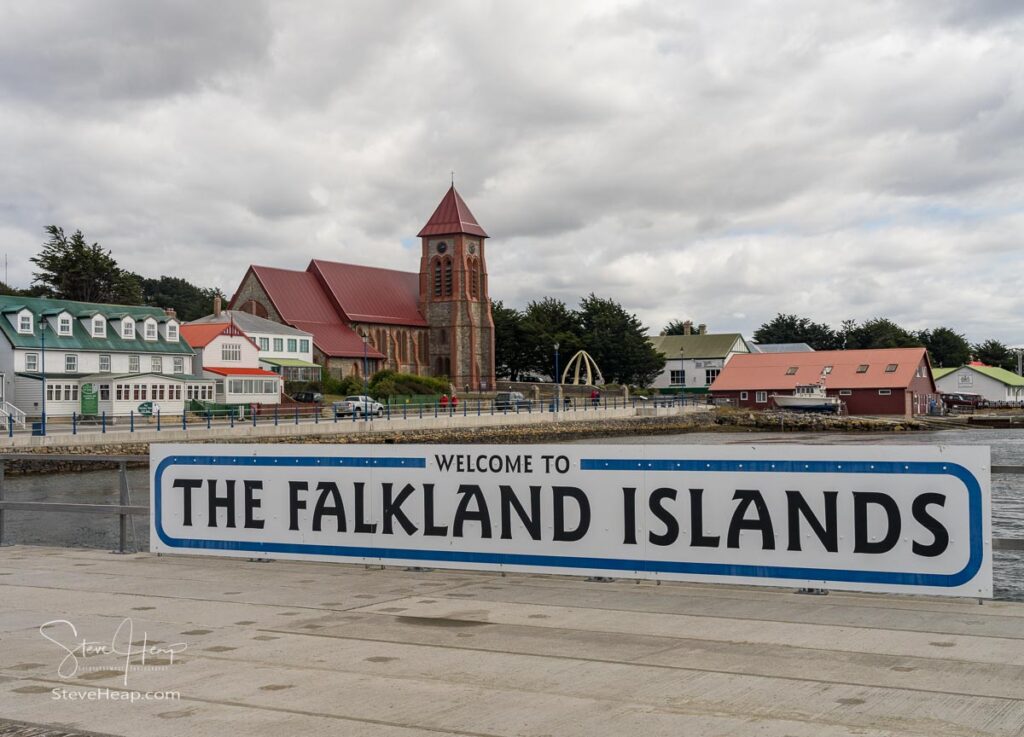
While not central to British national identity, the defense of the islands is tied to:
- Supporting self-governing British overseas territories
- Honoring the lives lost in 1982
- Maintaining international credibility
No UK government wants to be the one that “loses the Falklands.”
Thus, domestic politics reinforce the stalemate.
9. The Islanders: An Often Overlooked Voice
The approximately 3,500 residents of the Falklands have a distinct identity:
- Predominantly English-speaking
- Deeply connected to British culture
- Economically independent
- Holding full self-government (except defense and foreign affairs)
Their views are crucial. The islanders do not want independence or Argentine rule. Their desire to remain under British sovereignty is not hypothetical—it’s been repeatedly and clearly expressed.
Ignoring their voice for the sake of geopolitics would undermine core democratic principles.
Yet Argentina argues that the local population is not indigenous, making their preference secondary to territorial rectification. This sets up a deeply emotional and philosophical clash about what defines a “people” and who gets to decide the future of a territory.
10. Post-War Cooperation and Tensions
Though relations fluctuate, both nations have periodically cooperated on:
- Fishing management
- Oil exploration frameworks
- Humanitarian missions, including identifying war casualties
Yet these cooperative periods often end abruptly when domestic political pressures shift.
The controversy persists not because diplomatic solutions are impossible, but because neither side can compromise without paying a political cost at home.
11. Geography of Isolation vs. Global Attention
The islands themselves are remote, but their status touches on global themes:
- The future of British overseas territories
- The role of the UN in territorial disputes
- The balance between self-determination and territorial integrity
- Post-colonial interpretations of sovereignty
- Control of Antarctic-adjacent waters
- Potential resource competition
This gives the Falklands symbolic importance in international relations far beyond their population size.
12. The Controversy Today: Why It Still Matters
Even if the conflict seems dormant in times of calm, several factors keep the issue alive:
- Constitutional protection of the claim in Argentina
- Ongoing British military presence
- Economic activity in disputed waters
- The emotional legacy of the 1982 war
- Symbolic importance in national narratives
- Unresolved legal interpretation conflicts
- Strategic significance in the South Atlantic
Both nations publicly commit to peaceful resolution, but fundamentally different interpretations of legitimacy prevent concrete progress.
13. Why the Dispute Is So Hard to Resolve
At its core, the controversy persists because every path forward has a fundamental flaw for one side or the other.
13.1 If the islands stay British permanently…
Argentina believes historical injustice remains uncorrected.
13.2 If the islands are transferred to Argentina…
The islanders’ self-determination is violated.
13.3 If the islands become independent…
Argentina rejects this outcome, and the islanders overwhelmingly prefer British status.
13.4 If the issue is shelved…
It returns whenever political climates shift.
In international disputes, stalemates often form when each side believes time favors its claim. That’s precisely the situation here.
14. The Unspoken Element: Emotion vs. Practicality
Perhaps more than any legal or economic argument, emotion drives the controversy.
For Argentina, the islands are:
- A symbol of anti-colonial resistance
- A national wound from the war
- A matter of historical justice
For the UK and the islanders, they are:
- A home with a chosen identity
- A democratic community
- A place whose future should not be dictated by another state
Emotional arguments are harder to resolve than legal or geopolitical ones. They resist compromise.
15. The Future: What Could Actually Change?
While it is impossible to predict a complete resolution, several trends shape the decades ahead:
- Generational changes in both countries may gradually soften the emotional weight of the dispute.
- Economic cooperation could create incentives for pragmatic coexistence.
- Global politics and strategic priorities might shift, making the South Atlantic either more or less important.
- International law is unlikely to produce a definitive ruling, keeping negotiations political rather than judicial.
- The islanders’ identity will remain central and pivotal.
Ultimately, the controversy may endure not because it is unsolvable, but because the symbolic cost of solving it remains too high for both sides.
Conclusion: The Falklands as a Mirror of Larger Themes
The Falkland Islands controversy is not just about rocks in the ocean. It is a story about:
- Who gets to decide sovereignty
- How nations interpret history
- What self-determination means in a post-colonial world
- How emotions shape geopolitics
- Why small places sometimes hold large meaning
Whether viewed as the Falklands or the Islas Malvinas, the islands embody a dynamic mix of history, identity, law, politics, and strategy. Their controversy remains a vivid reminder that even the most remote landscapes can become symbols of national pride and global significance.
And that is what makes the Falkland Islands so enduringly controversial.