





Europe has long been regarded as a beacon of economic stability, thanks to its robust institutions, strong currency, and well-established economic policies. With its wealth of historical experience, the European Union (EU) has often been seen as an example of successful integration and economic cohesion. However, recent challenges, both internal and external, have led some to question whether Europe’s economic stability is, in fact, a myth.
The Pillars of European Economic Stability
To assess the validity of Europe’s economic stability, we must first understand the elements that have historically contributed to it. Several factors underpin Europe’s reputation for stability:
- The European Union (EU) and the Eurozone
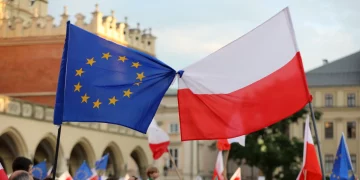
The EU, with its 27 member states, represents a unique political and economic union. Its single market allows for the free movement of goods, services, capital, and people, while its shared currency, the euro, is used by 19 of the member states. The EU has long been viewed as a model of economic integration, where smaller economies benefit from the collective strength of the larger bloc. - Institutional Strength and Governance
The EU is governed by well-established institutions like the European Central Bank (ECB), the European Commission, and the European Parliament. These institutions work together to ensure economic policy coordination, fiscal stability, and monetary policies that align with the broader goals of the Union. The ECB, for instance, plays a crucial role in maintaining price stability by managing inflation through interest rates and quantitative easing. - Economic Resilience and Recovery
Over the past few decades, Europe has demonstrated its ability to recover from significant economic shocks. The 2008 global financial crisis and the subsequent European debt crisis tested the Union’s resilience, but Europe managed to implement austerity measures, banking reforms, and fiscal adjustments to stabilize the economy. The EU has also worked to create mechanisms such as the European Stability Mechanism (ESM) to ensure financial support for troubled member states. - Trade Relationships and Global Integration
Europe’s position as a global trading power has also contributed to its economic stability. The EU is one of the world’s largest trading blocs, with deep economic ties to both advanced and emerging markets. This interconnectedness has helped shield Europe from extreme economic volatility in some respects. The EU’s involvement in global supply chains, research and development, and trade agreements reinforces its economic influence and position in the world.
The Cracks in Europe’s Economic Foundation
Despite these foundational strengths, Europe’s economic stability has been increasingly questioned in recent years. Several factors have emerged that challenge the long-standing perception of Europe as a stable economic powerhouse.

- Diverging Economic Performance Among Member States
One of the central criticisms of the EU is the divergence in economic performance between member states. While countries like Germany and the Netherlands have robust economies with low unemployment rates, others such as Greece, Italy, and Spain continue to struggle with high debt, slow economic growth, and high youth unemployment. The economic disparity within the Eurozone is particularly stark, as countries with weaker economies cannot devalue their currency to make their exports more competitive due to the common euro. This results in a ‘one-size-fits-all’ monetary policy that doesn’t always suit the unique needs of each country. - The Eurozone Debt Crisis
The 2009 Eurozone debt crisis exposed the fragility of Europe’s economic structure. Countries like Greece, Portugal, and Ireland faced massive sovereign debt, requiring bailout packages from the EU and the International Monetary Fund (IMF). The crisis highlighted the vulnerabilities of a common currency without a common fiscal policy. While the EU has taken steps to prevent another crisis through mechanisms like the European Stability Mechanism, the underlying problem of debt sustainability remains unresolved for several countries. The crisis also sparked heated debates about austerity policies, which have left lasting scars on the economies of affected nations. - Brexit: A Wake-Up Call
The United Kingdom’s decision to leave the EU (Brexit) was a stark reminder that Europe’s economic integration is not without its challenges. The referendum in 2016 revealed deep divisions within the UK, and the process of exiting the Union highlighted the complexities of untangling decades of political and economic integration. The uncertainty surrounding Brexit led to economic instability in the UK and strained relations between the UK and EU member states. Although the EU as a whole managed to weather the storm, Brexit raised questions about the long-term cohesion of the Union and whether other countries might follow suit, further destabilizing Europe’s economic future. - Populism and Political Uncertainty
The rise of populism and nationalism across Europe has also raised concerns about the future of economic stability. In countries like Hungary, Poland, Italy, and France, populist movements have challenged the EU’s authority, questioned the principles of European integration, and promoted anti-immigrant rhetoric. This political fragmentation undermines the collective decision-making process within the EU, making it harder to address economic crises effectively. Furthermore, populist governments often pursue economic policies that conflict with the EU’s fiscal and monetary rules, such as increased government spending and tax cuts, which can exacerbate existing financial imbalances. - The Demographic Challenge
Europe’s aging population is another factor that threatens its economic stability. With birth rates falling and life expectancy rising, Europe’s workforce is shrinking, leading to labor shortages in many sectors. This demographic shift places additional pressure on social welfare systems and public finances, as fewer workers are available to support an aging population. In the absence of significant immigration or policies to boost fertility rates, Europe faces a long-term economic challenge that could hinder its growth potential. - The Impact of Globalization and Technological Disruption
While Europe has benefitted from globalization, it has also been vulnerable to its downsides. The rapid pace of technological advancement and the rise of automation threaten traditional industries and jobs, especially in manufacturing sectors. In some regions, deindustrialization has led to economic stagnation and rising inequality. Furthermore, Europe is competing with emerging economies like China and India, which are becoming increasingly powerful players in the global economy. The shift in global economic power raises concerns about Europe’s ability to maintain its economic dominance in the future.

The Myth or Reality?
Is Europe’s economic stability really a myth? The answer is not a simple one. On the one hand, Europe’s foundational institutions, its shared currency, and its economic resilience provide a solid base for stability. The European Union remains one of the world’s largest and most influential economic entities, and it has shown a remarkable capacity for recovery and adaptation in the face of challenges.
On the other hand, the cracks in the system are becoming more apparent. The divergence between rich and poor member states, the lingering effects of the debt crisis, political fragmentation, and demographic challenges all point to underlying weaknesses in Europe’s economic structure. The rise of populism and the uncertainty surrounding Brexit have also cast a shadow over the future of the Union.
In the end, Europe’s economic stability may not be a myth, but it is certainly not guaranteed. The EU must continue to adapt to the changing global landscape, address its internal disparities, and find ways to manage its demographic shifts. Only then can it maintain its economic relevance and stability in the coming decades.