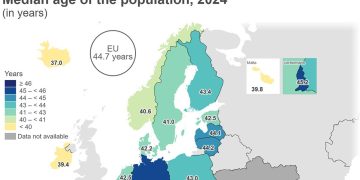







The aging population in Europe is a well-documented phenomenon that has captured the attention of policymakers, economists, and social scientists alike. This demographic shift presents challenges that are as complex as they are profound, touching almost every aspect of European life—from the economy to healthcare, social structures, and beyond. But while the topic may seem academic, the real-world implications of an aging population are far-reaching and urgent.
In this article, we’ll explore the causes of Europe’s aging population, the consequences it entails, and the potential solutions that might help mitigate the crisis that is already on the horizon. In doing so, we will consider how Europe can adapt to this demographic shift in ways that preserve its prosperity and maintain its social fabric.
The Demographic Shift: Understanding Europe’s Aging Population
Before delving into the specifics of the crisis, it’s important to understand the basic demographic trends that have led to Europe’s aging population.
1. Declining Birth Rates
One of the key drivers of Europe’s aging population is the steady decline in birth rates. Across much of Europe, families are having fewer children, and in some cases, the birth rate has fallen below the replacement level of 2.1 children per woman—the number needed to maintain a stable population. In countries like Italy, Spain, and Germany, the birth rate is significantly lower than this threshold.
The reasons behind this demographic trend are multifaceted. Economic pressures, such as high housing costs, job insecurity, and the rising cost of raising children, have deterred many young couples from having large families. Moreover, cultural shifts toward individualism and delayed marriage or childbearing have contributed to the decline in the number of births.
2. Increased Life Expectancy
At the same time, life expectancy in Europe has been steadily rising. Advances in healthcare, improved living standards, and better access to medical technology have led to longer, healthier lives. As a result, the elderly population is growing at an unprecedented rate, while the working-age population is shrinking.
In countries like Sweden, Switzerland, and France, people are living well into their 80s and 90s, contributing to an ever-expanding elderly demographic. This creates a disproportionate balance between those who are retired and those who are working and paying into social security systems.
3. Immigration and Its Limitations
Immigration has been touted as one potential solution to counteract the effects of an aging population. In theory, younger migrants can help replenish the workforce and alleviate pressure on social services. However, while Europe has seen a significant influx of immigrants over the past few decades, immigration alone cannot reverse the trend of an aging population. Moreover, integration challenges, cultural tensions, and political resistance to immigration in certain countries make it a less straightforward solution than some may hope.
The Economic Consequences of an Aging Population
The economic implications of an aging population are perhaps the most pressing concern for European leaders. An older population presents significant challenges to economic productivity, labor markets, and social welfare systems.
1. Shrinking Workforce
The most immediate economic effect of an aging population is the reduction in the workforce. As the proportion of elderly people increases, fewer people are available to work, creating a labor shortage. This is particularly problematic in industries that rely on younger workers, such as technology, healthcare, and manufacturing.
A shrinking labor force can also lead to slower economic growth. Fewer workers mean less innovation, lower productivity, and ultimately, a reduced capacity for economic expansion. This can also lead to wage inflation as companies compete for a smaller pool of workers, further exacerbating economic inequality.
2. Increased Healthcare and Pension Costs
An aging population also places immense strain on public health systems and pension schemes. Older individuals typically require more healthcare, including long-term care for chronic conditions, age-related illnesses, and disabilities. As the elderly population grows, so too does the demand for healthcare services, placing pressure on national budgets.
Pension systems are similarly under strain. Many European countries operate pay-as-you-go pension schemes, where current workers fund the pensions of retired individuals. As the number of retirees grows and the number of workers shrinks, the system becomes increasingly unsustainable. This is a major concern for countries like Italy, Spain, and Greece, where pension liabilities are already high.

3. Economic Inequality
The economic strain caused by an aging population is likely to exacerbate existing inequalities. Younger generations, faced with higher taxes to support pension schemes and social services, may experience greater financial stress. Meanwhile, older individuals, particularly those with higher incomes or more substantial savings, may not feel the same level of pressure.
This divide could also result in social unrest. If younger people perceive that they are shouldering an unfair burden, they may become disillusioned with the political and economic systems in place, leading to potential social conflict.
The Social Implications of an Aging Population
The social ramifications of Europe’s aging population are just as profound as the economic consequences. The rise in the elderly population will fundamentally alter the social fabric of European societies in several key ways.
1. Changing Family Structures
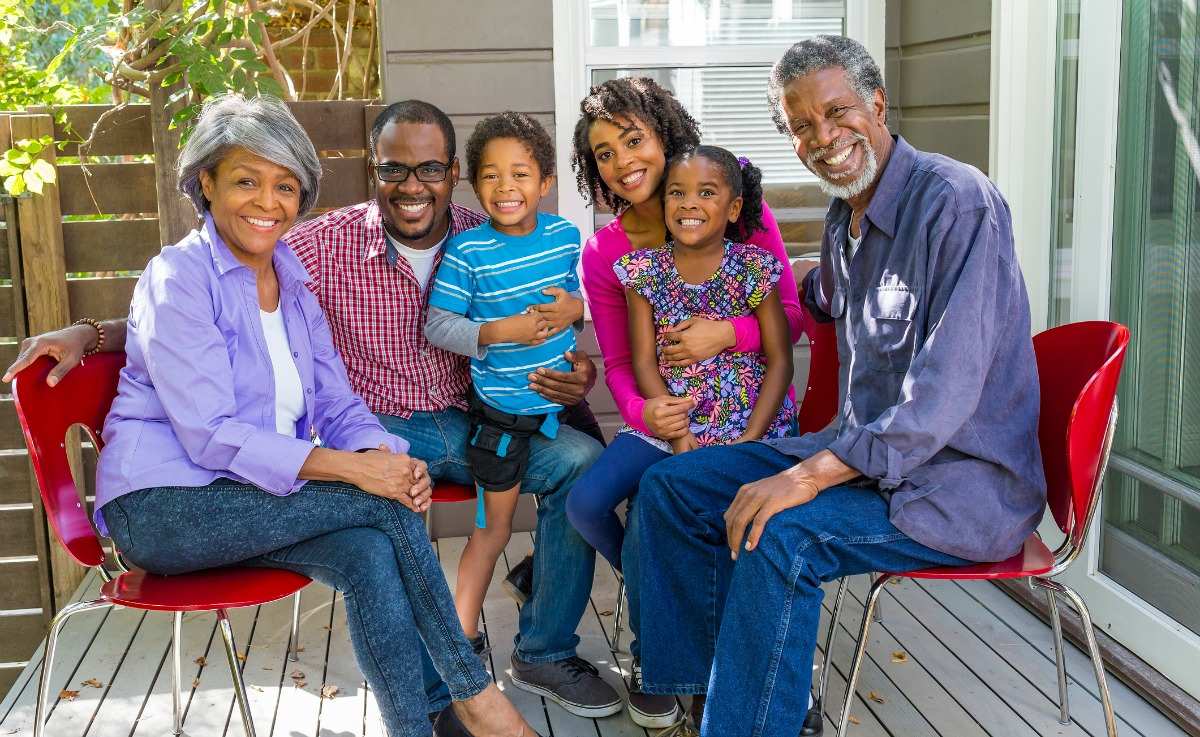
As life expectancy increases, more and more people are living into their 80s, 90s, and even beyond. This has led to the emergence of multigenerational households and changes in family dynamics. Younger generations may find themselves not only raising their children but also caring for aging parents or grandparents.
This shift can put immense emotional, physical, and financial pressure on families, particularly as the demands of elder care are often underestimated. In many cases, the burden falls on women, who disproportionately take on caregiving roles. This can lead to a reduction in workforce participation among women, especially as caregiving responsibilities interfere with their professional lives.
2. Loneliness and Isolation
One of the most pressing social challenges associated with an aging population is the issue of loneliness and social isolation. As people age, they often experience a loss of friends, family members, and social connections. This is especially true for those who live alone or in rural areas where access to social services may be limited.
The emotional and psychological toll of loneliness is significant. Studies have shown that loneliness is linked to an increased risk of mental health problems, including depression, anxiety, and cognitive decline. As the elderly population grows, so too will the need for support networks and services designed to combat social isolation.
3. Intergenerational Tensions
Another potential social consequence of an aging population is the emergence of intergenerational tensions. As younger people bear the economic burden of supporting an aging population through higher taxes and reduced job opportunities, there may be growing resentment toward older generations who are seen as contributing less to the economy.
At the same time, the elderly population may feel neglected or marginalized by a younger, more tech-savvy generation that is increasingly focused on innovation and progress. This could lead to a divide between generations, making it harder for societies to maintain social cohesion.
Policy Responses: Solutions to the Crisis
While Europe’s aging population presents significant challenges, it also presents opportunities for innovation and adaptation. Several policy responses could help mitigate the impact of this demographic shift and ensure that Europe remains a vibrant and prosperous continent in the coming decades.
1. Encouraging Higher Birth Rates
One potential solution to the aging population crisis is to incentivize higher birth rates. Some European countries, such as Sweden and France, have introduced policies designed to support families, such as subsidized childcare, paid parental leave, and financial incentives for having children. These measures have had some success in encouraging families to have more children.
However, the impact of these policies may be limited without addressing the broader economic factors that discourage childbearing, such as housing affordability and job insecurity. To truly reverse the trend of declining birth rates, Europe must create an environment that makes it easier and more affordable for families to have children.
2. Promoting Immigration
Immigration can help replenish the workforce and support economic growth. Europe has already experienced significant immigration flows from regions like Africa, the Middle East, and Eastern Europe. However, immigration alone cannot solve the problem of an aging population.
In addition to increasing immigration, European countries must invest in integration programs to help newcomers assimilate into the workforce and society. This includes language training, access to education and healthcare, and support for small businesses. Without proper integration, immigration could strain social services and increase tensions between migrants and native populations.
3. Supporting Elderly Care
Given the growing demand for elderly care, European governments must invest in healthcare and social services tailored to the needs of the elderly. This includes expanding home-care services, improving long-term care facilities, and developing programs to reduce social isolation.
Technological solutions, such as telemedicine, smart homes, and AI-powered caregiving tools, could also play a crucial role in meeting the needs of an aging population. By leveraging innovation, Europe can ensure that its elderly population receives the care and attention they need without overwhelming the healthcare system.
4. Rethinking Retirement and Work
As the population ages, it’s also important to rethink the traditional model of retirement. In many European countries, the retirement age is still set at 65, but with people living longer, many argue that this is no longer sustainable.
Encouraging older individuals to remain in the workforce longer, either through part-time work or flexible retirement schemes, could help ease the strain on pension systems. At the same time, businesses should adapt their practices to accommodate older workers, such as offering more flexible working conditions and retraining programs.
Conclusion: Europe’s Future in the Balance
Europe’s aging population presents both a crisis and an opportunity. The challenges are immense, from economic pressures to social changes, but with the right policies and innovations, Europe can navigate this demographic shift successfully. Addressing the crisis will require cooperation across nations, generations, and sectors, as well as a deep commitment to social and economic sustainability.
As Europe looks to the future, it is essential that the continent embraces the reality of an aging population and takes proactive steps to ensure that future generations can thrive in a world that is both prosperous and equitable for all.