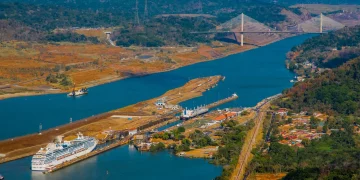










The Panama Canal, a monumental feat of human engineering, has fundamentally reshaped the contours of global trade. Stretching approximately 50 miles across the Isthmus of Panama, this narrow waterway connects the Atlantic and Pacific Oceans, turning what used to be a long, perilous, and expensive journey around South America into a manageable and efficient passage. But its significance goes far beyond geography; it is a testament to human ingenuity, a catalyst for economic globalization, and a strategic lynchpin in the movement of goods around the world.
A Shortcut Through Time
Before the canal existed, ships traveling between the east and west coasts of the Americas—or between Europe and Asia—had no choice but to navigate the treacherous waters of Cape Horn, at the southern tip of South America. This journey added thousands of miles to voyages, consumed immense amounts of time, and exposed crews to unpredictable weather and high risks of shipwreck. The Panama Canal eliminated these obstacles almost overnight. A voyage that once took months could now be completed in weeks, drastically reducing shipping costs and enhancing the speed of global commerce.
From a commercial perspective, the canal has essentially acted as a time machine. By shortening travel distances, it allowed businesses to streamline supply chains, react more quickly to market demands, and optimize inventory management. The benefits of reduced travel time were compounded by savings in fuel and labor costs, creating a ripple effect across industries and continents.
Engineering Marvels and Strategic Design
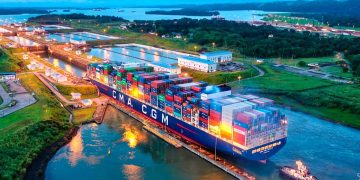
Constructing the Panama Canal was no small feat. Engineers had to contend with dense jungle, disease, mountainous terrain, and unpredictable weather. The project involved a combination of locks and artificial lakes to raise and lower ships to the canal’s level, a method that was revolutionary at the time. The locks function like enormous water elevators, moving massive vessels with precision and safety. Today, the canal continues to evolve, with expansions that accommodate “New Panamax” ships, vessels significantly larger than the original locks could handle.
Strategically, the canal has been more than a marvel of engineering; it has been a geopolitical tool. Control over the canal historically meant influence over global trade routes. Nations could leverage access—or restrictions—to assert economic and political power. During both World Wars, the canal was a critical military asset, ensuring that naval and commercial ships could move swiftly between oceans. Even in peacetime, the canal’s position as a hub of trade has allowed Panama to wield outsized influence relative to its size.
Driving Global Trade and Economic Integration
The Panama Canal’s impact on global trade is enormous. It facilitates the transport of oil, agricultural products, manufactured goods, and raw materials, acting as a critical artery in the flow of commerce. For example, major importers and exporters in Asia, Europe, and the Americas rely on the canal to ensure timely delivery of goods. Containerized shipping, which revolutionized global trade in the latter half of the 20th century, owes part of its efficiency to the existence of the canal.
By enabling faster, more cost-effective shipping, the canal encourages economic integration. Businesses can source components from one continent, manufacture in another, and deliver finished products globally with remarkable efficiency. This connectivity reduces barriers to trade, fosters competition, and stimulates innovation. Countries with access to the canal are better positioned to participate in the global economy, while nations that rely on longer alternative routes face higher costs and slower delivery times.

Regional and Local Impacts
While the canal’s global significance is evident, its regional impact is equally profound. Panama itself has benefited enormously from revenues generated through tolls and trade-related activities. Ports, logistics hubs, and service industries have flourished in the country, creating jobs and stimulating the local economy. The canal has also encouraged infrastructure development, from highways to airports, making Panama a regional trade and logistics powerhouse.
However, the canal’s presence has also brought challenges. Environmental concerns, such as the impact on local waterways and ecosystems, require careful management. Social and economic inequalities sometimes emerge as urban development accelerates around trade hubs. Nevertheless, Panama’s ability to balance these challenges with the canal’s economic benefits has made it a model for leveraging infrastructure to drive national growth.
Innovation and Technological Advancements
The Panama Canal has not remained static. Over the decades, continuous innovations have enhanced its efficiency and capacity. Automation, advanced scheduling systems, and improved vessel design have all contributed to a more reliable and faster passage. The 2016 expansion, which added a new set of locks, allowed the canal to accommodate larger vessels and adapt to evolving shipping trends. This forward-thinking approach ensures that the canal remains competitive in a world of mega-ships and expanding trade volumes.
Moreover, the canal has become a laboratory for sustainable engineering practices. Water management, energy-efficient lock operations, and environmental monitoring reflect a broader trend toward integrating sustainability into large-scale infrastructure projects. In this sense, the Panama Canal not only shapes trade patterns but also influences how global infrastructure projects can be designed for longevity and environmental stewardship.
Global Trade Patterns and Supply Chains
The canal’s role in global trade cannot be overstated. It has shaped maritime routes, influenced shipping costs, and even dictated port development in distant regions. For instance, East Coast ports in the United States expanded and modernized in response to larger ships passing through the canal. Similarly, countries in Asia, South America, and Europe have adapted their shipping and logistics strategies to take full advantage of the canal’s connectivity.

The canal also enhances the resilience of global supply chains. In an era of just-in-time production, where delays can disrupt entire industries, the Panama Canal offers a reliable and predictable pathway. The ability to move goods efficiently reduces inventory pressures, minimizes disruptions, and contributes to more stable pricing in global markets.
Strategic Importance in Geopolitics
Beyond economics, the Panama Canal holds immense geopolitical significance. Its control has been a point of negotiation, diplomacy, and sometimes tension. The United States initially managed the canal, recognizing its importance for both commercial and military purposes. Today, Panama exercises full sovereignty, but the canal remains a focal point for international diplomacy. Trade agreements, security cooperation, and global shipping policies all intersect at this crucial waterway.
Furthermore, the canal influences global energy flows. Oil and liquefied natural gas are transported through the canal, connecting producers with consumers across continents. Any disruption—whether from natural disasters, political instability, or maintenance issues—can ripple across energy markets, demonstrating the canal’s far-reaching influence.
Cultural and Symbolic Significance
The Panama Canal is more than a conduit for commerce; it is a symbol of human ambition, determination, and collaboration. It represents the ability to overcome natural obstacles and achieve transformative goals. Engineers, laborers, and leaders from around the world contributed to its construction, reflecting a convergence of global expertise and effort. Today, the canal continues to inspire admiration, tourism, and international recognition as one of the modern world’s most iconic infrastructure projects.
Future Challenges and Opportunities
Looking ahead, the Panama Canal faces both opportunities and challenges. Climate change, with rising sea levels and changing rainfall patterns, could affect water availability for the locks. Technological advancements, such as autonomous ships, may alter shipping patterns and demand. Geopolitical shifts, including competition from alternative routes like the Suez Canal or Arctic passages, could influence trade flows. Yet, the canal’s history of adaptation suggests it will continue to evolve, maintaining its pivotal role in global commerce.
Investment in infrastructure, environmental stewardship, and innovation will be key. By continuing to modernize operations, expand capacity, and enhance sustainability, the Panama Canal can remain a critical hub for trade and a model for other large-scale projects worldwide.
Conclusion
The Panama Canal has played an indispensable role in global trade, acting as a time-saving shortcut, a catalyst for economic integration, and a strategic geopolitical asset. Its impact spans continents, industries, and societies, demonstrating the profound influence a single piece of infrastructure can have on the world. From enabling faster shipping to shaping global supply chains, the canal remains a cornerstone of modern commerce. As it continues to evolve, it promises to sustain its legacy as one of humanity’s most transformative achievements in engineering, trade, and international cooperation.
In sum, the Panama Canal is more than a waterway; it is a symbol of connection—linking oceans, economies, and people across the globe. Its past achievements, present relevance, and future potential underscore its enduring role in shaping the movement of goods, capital, and ideas in an increasingly interconnected world.