







Water is life—but for millions across Africa, life is a daily struggle to access clean, safe water. Despite being home to some of the world’s largest rivers and lakes, the continent suffers from chronic water scarcity, poor infrastructure, and environmental stress. But amid these challenges, a new wave of African innovation is emerging, offering hope that local ingenuity can transform the water landscape. From smart tech to community-driven solutions, Africa is proving that necessity can truly be the mother of invention.
The Water Crisis in Africa: Scale and Complexity
Understanding Africa’s water crisis requires more than a glance at rainfall charts. Sub-Saharan Africa alone faces a daily struggle as nearly 400 million people lack access to safe drinking water. Seasonal droughts, population growth, urban sprawl, and climate change amplify the problem, while traditional water infrastructure often fails to meet the needs of rapidly expanding cities.
Rural areas are particularly vulnerable. Villages often rely on unprotected wells or distant rivers. The burden of fetching water usually falls on women and children, limiting educational opportunities and economic participation. Even where water exists, contamination from pathogens, industrial runoff, and agricultural chemicals creates a public health hazard.
Urban centers, while seemingly better equipped, face their own challenges. Cities like Lagos, Nairobi, and Kinshasa experience intermittent supply, leaky pipes, and massive water loss. In such conditions, the question isn’t just about water availability—it’s about water security, resilience, and sustainability.
African Innovation: A Ground-Up Revolution
Africa has long been labeled a continent of challenges. Yet, what is often overlooked is its capacity for creative problem-solving. Water scarcity has catalyzed a range of innovations—from low-cost purification systems to high-tech monitoring platforms. African innovators are leveraging local knowledge, digital technology, and sustainable design to reimagine water access.
Smart Water Solutions
Technology is no longer the exclusive domain of Silicon Valley. African startups are pioneering smart water solutions tailored to local contexts. For example, IoT-enabled sensors can detect leaks in water distribution networks, reducing losses that can account for up to 40% of municipal water supply. Mobile apps track rainfall patterns and water levels, empowering farmers to optimize irrigation schedules.
Kenya’s “TotoWater” platform illustrates this trend. Using SMS and mobile data, communities receive real-time updates on water availability and quality. In regions prone to drought, this information allows residents to plan, conserve, and avoid contaminated sources—effectively turning data into life-saving insight.
Affordable Filtration and Purification
Innovation does not always require high-tech electronics. African engineers have developed affordable filtration systems using locally sourced materials. Ceramic filters, solar-powered UV purifiers, and bio-sand systems are gaining traction in remote areas. These devices not only remove bacteria and parasites but are also designed to be maintained without specialized skills, ensuring sustainability.
In rural Ghana, a solar-powered water kiosk system has empowered villages to manage their own water supply. Users pay a nominal fee, and the kiosk provides both clean water and local employment, creating a model that merges health, economics, and innovation.

Rainwater Harvesting: Old Meets New
Rainwater harvesting is an ancient practice revived with modern ingenuity. African innovators are integrating rooftop collection, storage tanks, and low-cost purification into urban and peri-urban communities. In arid regions of Namibia, smart catchment systems capture seasonal rains and distribute water via gravity-fed pipelines, minimizing reliance on expensive municipal systems.
Moreover, these systems are increasingly connected to digital monitoring. Sensors measure tank levels and send alerts when water is low, preventing wastage and ensuring continuous supply. This marriage of traditional methods and technology highlights the creativity needed to tackle complex challenges.
Agriculture and Water Efficiency
Agriculture consumes up to 70% of freshwater in Africa. Smallholder farmers, who dominate the sector, face a constant dilemma: how to maximize yields while conserving water. Innovation here is critical. Drip irrigation, solar-powered pumps, and mobile-based climate advisory services are transforming farming practices.
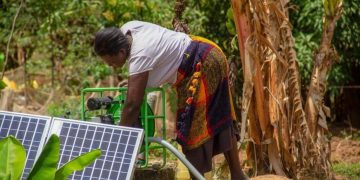
In Ethiopia, solar-powered irrigation pumps now enable farmers to draw water from underground sources without relying on expensive diesel. Combined with soil moisture sensors, these systems optimize water use, increase yields, and reduce environmental degradation. By applying tech to traditional practices, African farmers are creating a new paradigm of sustainable agriculture.
Community-Driven Solutions
Technology alone is insufficient if it ignores local realities. Community-led initiatives have proven highly effective in addressing water scarcity. In Uganda, water committees manage communal wells, ensuring maintenance and equitable distribution. Similarly, in Senegal, local women’s cooperatives operate small-scale water treatment facilities, combining entrepreneurship with public health.
These models show that innovation is not just a matter of gadgets; it’s about governance, social structures, and empowerment. Africa’s water crisis is as much a human challenge as it is a technical one.
Financing and Policy: The Backbone of Innovation

Innovation thrives where funding and supportive policies exist. Unfortunately, Africa’s water sector has long suffered from underinvestment. Yet recent trends are encouraging. Impact investors and development banks are increasingly funding water tech startups, emphasizing solutions that are scalable and sustainable.
Governments are beginning to recognize the role of regulation in fostering innovation. Policies that incentivize private-sector participation, support research, and streamline permits for new technologies create fertile ground for change. In Rwanda, for example, the government partners with startups to deploy smart water meters in cities, reducing leakage and improving revenue collection.
Public-private partnerships also play a critical role. By combining technical expertise, funding, and local knowledge, these collaborations accelerate deployment and ensure that innovations reach those who need them most.
Overcoming Challenges: Sustainability, Scalability, and Social Adoption
While African water innovation is impressive, significant hurdles remain. Many solutions are localized pilots that face challenges in scaling. Cultural acceptance, maintenance capacity, and long-term financing are recurring barriers. A high-tech solution may be elegant, but if the community cannot maintain it, it risks becoming another failed project.
Sustainability is another concern. Renewable energy integration, material sourcing, and environmental impact must be considered. For instance, solar-powered pumps reduce carbon emissions but require battery maintenance and replacement parts. Ceramic filters need proper cleaning and disposal protocols. Successful innovation must address the full lifecycle of a solution.
Finally, inclusivity is critical. Women, children, and marginalized groups are disproportionately affected by water scarcity. Solutions that ignore social equity risk perpetuating inequality. African innovators increasingly recognize this, designing systems that are not only technically efficient but socially just.
Case Studies: African Ingenuity in Action
Several real-world examples illustrate how African innovation is transforming water access:
- Living Water International, Kenya – Community-driven water kiosks powered by solar energy provide clean water to remote villages. Users pay a small fee, which covers maintenance, creating a sustainable, self-reliant system.
- Wecyclers, Nigeria – Though primarily focused on waste management, Wecyclers’ initiatives include collecting greywater for irrigation, reducing freshwater demand in urban farming.
- Drop by Drop, South Africa – Mobile-enabled water monitoring systems provide real-time alerts on contamination and water availability, improving health outcomes in peri-urban areas.
- Green Energy and Water Solutions, Ethiopia – Solar-powered drip irrigation systems increase agricultural productivity while conserving water, demonstrating the synergy between renewable energy and water management.
These examples highlight a common thread: solutions are local, context-sensitive, and often a hybrid of traditional knowledge and modern technology.
The Future: Toward a Water-Resilient Africa
African innovation in water management is still in its early stages, but momentum is building. Emerging trends suggest a future where technology, community engagement, and policy converge to create resilient water systems.
- Digital Twins and AI: Virtual models of cities and water networks can optimize supply, predict shortages, and prevent system failures.
- Decentralized Systems: Smaller, community-managed networks reduce dependency on overstretched municipal infrastructure.
- Circular Water Economy: Wastewater recycling, greywater reuse, and water-for-energy initiatives promote sustainability.
- Climate Adaptation: Solutions that incorporate rainfall variability, drought forecasting, and flood management build resilience against climate shocks.
Ultimately, the water crisis in Africa is not just a problem to solve—it is an opportunity for the continent to lead globally in sustainable, innovative water solutions. By leveraging local ingenuity, digital technology, and inclusive governance, Africa can transform scarcity into abundance, and adversity into invention.
Conclusion
Can African innovation solve the continent’s water crisis? The answer is a cautiously optimistic yes. Challenges remain immense, but the ingenuity, resilience, and creativity of African innovators offer real solutions. From smart water systems to solar-powered irrigation, from community-led initiatives to policy-backed scaling, Africa is demonstrating that solutions do not always come from the outside—they often come from within.
Water is life, and innovation is hope. By continuing to invest in technology, nurture local talent, and embrace community-driven solutions, Africa has the potential not just to survive its water challenges, but to thrive in spite of them. The continent is not waiting for a miracle—it is building one, drop by drop.