









The relationship between religion and politics in the Middle East is deeply intertwined, with religious beliefs, institutions, and traditions significantly shaping the political landscape of the region. From the early days of Islam to modern-day struggles, religion has not only influenced governance but also led to various social and political movements, shaping the identity of many nations. The region’s complex religious and political dynamics have had far-reaching consequences, not just within the Middle East but across the globe. This article delves into the profound impact religion has had on Middle Eastern politics, the political ideologies it has shaped, and the often contentious role it continues to play in the region’s future.
Religion as the Foundation of Political Identity
The Middle East is home to some of the world’s oldest and most influential religions. Islam, in its various forms—Sunni, Shia, and other sects—dominates the region, but other religions such as Christianity, Judaism, and Zoroastrianism have also contributed to the region’s history and cultural fabric. The unique blend of religious beliefs has played a pivotal role in shaping the political ideologies and governance systems of Middle Eastern nations.
Historically, the establishment of Islamic caliphates, such as the Umayyad and Abbasid caliphates, laid the foundation for governance systems where religion and state were inseparable. The political structure of these caliphates was deeply intertwined with Islamic law (Sharia), with rulers often seen as both political leaders and religious figures. This historical legacy still informs many contemporary political systems in the region.
In countries like Saudi Arabia and Iran, Islam not only shapes the legal system but also influences social norms, policies, and diplomatic relations. In Iran, the 1979 Islamic Revolution fundamentally altered the nation’s political structure, creating an Islamic Republic where the supreme leader is both a political and religious authority. Similarly, Saudi Arabia’s political system is deeply grounded in the teachings of Wahhabism, an ultra-conservative interpretation of Islam, which dictates both state governance and social practices.
Sectarianism and its Political Consequences
Sectarianism, or the division of society along religious lines, has been a persistent issue in Middle Eastern politics. While Islam is the dominant religion, the Sunni-Shia divide has led to political and social divisions that continue to shape the region’s geopolitics.
The split between Sunni and Shia Muslims originated in the 7th century following the death of the Prophet Muhammad, and the subsequent dispute over who should lead the Muslim community. This rift has had profound implications for Middle Eastern politics, often fueling conflict and competition for political power. Countries like Iraq, Lebanon, and Syria have experienced significant sectarian violence, where political affiliation and allegiance are often determined by sectarian identity.
The rise of political Islam, exemplified by groups like Hezbollah (Shia), the Muslim Brotherhood (Sunni), and ISIS (Sunni), highlights the central role religion plays in Middle Eastern politics. These groups often frame their political ideologies in religious terms, using religious legitimacy to challenge established regimes or advance their own agendas. For instance, Iran’s support for Shia militias across the region, such as in Iraq and Yemen, is driven by both religious and geopolitical objectives, making sectarian alignment a key factor in the region’s ongoing conflicts.
Religion and Authoritarianism

In many Middle Eastern countries, religion has been co-opted by authoritarian regimes to justify their rule. These regimes often use religion to consolidate power, legitimize their governance, and suppress opposition. Leaders in countries like Egypt, Syria, and Tunisia have historically employed religious rhetoric to appeal to the masses while maintaining tight control over political power.
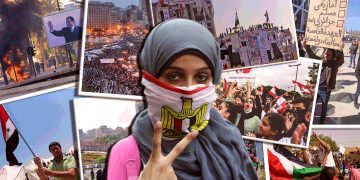
In Egypt, the role of Islam in politics became particularly contentious following the 2011 Arab Spring, when the Muslim Brotherhood briefly came to power with President Mohamed Morsi. However, after Morsi’s ousting by the military in 2013, the military-backed government under President Abdel Fattah el-Sisi utilized religious rhetoric to bolster its legitimacy, despite its increasingly authoritarian nature. The use of religion by both Islamist movements and authoritarian governments in Egypt highlights the complex relationship between religion and politics in shaping political systems.
Similarly, in Syria, the Assad regime has used the country’s secular constitution as a platform to maintain control over a diverse population, while at the same time appealing to the Alawite minority’s religious identity. The ongoing civil war in Syria has also seen the rise of jihadist groups that frame their actions in religious terms, further complicating the role of religion in the country’s political landscape.
Religion and the Rise of Political Islam
In the modern era, the rise of political Islam has been one of the most significant developments in Middle Eastern politics. The 20th century saw the emergence of movements such as the Muslim Brotherhood, founded in Egypt in 1928, which sought to integrate Islamic principles into the political and social life of the nation. Over time, political Islam spread to other parts of the region, becoming a prominent force in countries such as Turkey, Tunisia, and Libya.
The Arab Spring uprisings of 2010-2011, which saw widespread protests across the Middle East, provided an opportunity for political Islam to gain power in several countries. In Egypt, the Muslim Brotherhood’s Mohamed Morsi was elected president following the ousting of longtime ruler Hosni Mubarak. In Tunisia, the Islamist Ennahda party played a key role in the country’s transition to democracy. However, the rise of political Islam was met with resistance, particularly from secular forces and military regimes, which feared the influence of Islamist ideologies.
The failure of political Islam to deliver on its promises in some countries—coupled with the rise of extremist groups like ISIS—has led to a reassessment of its role in the region. The rise of ISIS, in particular, which proclaimed itself a caliphate and sought to establish an Islamic state through violent jihad, has added a dark chapter to the story of political Islam in the Middle East. The brutality of ISIS and its ability to control vast territories in Iraq and Syria showed the darker side of political Islam, one that often leads to radicalization and violence.
Religion and Geopolitics

The Middle East is not only shaped by internal political dynamics but also by external geopolitical forces that are often influenced by religious considerations. The rivalry between Sunni-majority Saudi Arabia and Shia-majority Iran, for instance, has become one of the defining features of the region’s geopolitics. This rivalry has played out in numerous proxy wars across the region, including in Syria, Yemen, and Iraq.
Iran, as the leader of the Shia world, has used its influence to support Shia militias and governments in Iraq and Syria, while Saudi Arabia, as the leader of the Sunni world, has backed Sunni forces in these same conflicts. The sectarian nature of these conflicts has exacerbated tensions and made the Middle East a battleground for competing religious and political ideologies.
Additionally, the Israeli-Palestinian conflict, with its deep religious roots, continues to be a major geopolitical issue. Jerusalem, a city sacred to Jews, Christians, and Muslims, remains a focal point of political and religious contention, affecting regional stability and international diplomacy.
The Role of Religion in Secular States
While many Middle Eastern countries maintain the formal appearance of secularism, religion continues to play a significant role in shaping public life. In countries like Turkey, Lebanon, and Egypt, political leaders often navigate a delicate balance between secularism and religious influence.
Turkey, historically a secular state under Mustafa Kemal Atatürk, has seen a rise in political Islam under the leadership of Recep Tayyip Erdoğan. The Justice and Development Party (AKP), led by Erdoğan, has sought to integrate Islamic values into Turkish politics, challenging the secular legacy of the republic. This shift has sparked debates over the role of religion in governance and the future of secularism in the region.
In Lebanon, the confessional political system, where political positions are allocated based on religious affiliation, highlights the deep entanglement of religion and politics. Despite efforts to maintain a secular constitution, Lebanon’s political landscape remains divided along religious lines, with powerful factions representing the country’s Christian, Sunni, and Shia communities.
The Future of Religion in Middle Eastern Politics
The future of religion in Middle Eastern politics is uncertain, as the region continues to grapple with the challenges of modernization, secularism, and the rise of radical ideologies. Young people across the Middle East are increasingly rejecting traditional forms of religious authority, while others are embracing new forms of political Islam. The growing influence of social media and global networks of communication has also facilitated the spread of new ideas and ideologies, challenging the status quo.
Religious leaders, once seen as the sole arbiters of power, now face competition from secular leaders, civil society movements, and even global powers. At the same time, radical religious movements continue to pose a threat to regional stability, as evidenced by the rise of groups like ISIS and Al-Qaeda.
In conclusion, religion has played a central role in shaping the political dynamics of the Middle East, from the rise of Islamic empires to the contemporary struggles between secularism and political Islam. Whether religion will continue to shape Middle Eastern politics or whether a new political paradigm will emerge is still an open question, but one thing is certain: religion will remain a central force in the region’s political future for years to come.