







Introduction
The Middle East is a region where the past is never truly past. Ancient religions emerged here, empires rose and fell over sacred ground, and communities of diverse faiths lived, coexisted, clashed, and reshaped one another over millennia. Today, the region remains one of the most religiously significant—and religiously complicated—areas on Earth. As the 21st century accelerates its pace with rapid political upheavals, demographic shifts, technological transformations, and global interconnectivity, a central question looms over the region:
What is the future of religious freedom in the Middle East?
This question is not merely political or legal. It is deeply human. It encompasses the hopes of minorities seeking dignity, the aspirations of majorities seeking identity, and the tensions of states trying to balance tradition with modernization. It touches the lives of millions—from the Christian families of Iraq to the Jewish communities of Israel, from the Bahá’í citizens in the Gulf to the Zoroastrians of Iran, from Shi’a and Sunni Muslims navigating sectarian lines to emerging communities like secularists, atheists, and reform-minded believers.
This article surveys the current dynamics of religious freedom in the Middle East and assesses the trends that may shape its future. Designed to be vivid yet academically grounded, it distills a massive, complex subject into an accessible and compelling narrative.
1. The Middle East: A Region of Paradox
The Middle East is simultaneously:
- one of the most religious regions in the world
- one of the most religiously diverse in history
- one of the most restrictive regions for religious liberty today
This paradox is not accidental. It has developed through the interplay of history, identity, governance, and geopolitics.
1.1 The Birthplace of Global Religions
Judaism, Christianity, and Islam all arose here—along with smaller but historically influential religions such as Zoroastrianism, the Druze faith, Yazidism, Mandaeism, and the Bahá’í faith. This region is a tapestry of sacred stories and holy places.
Yet, paradoxically, many communities whose faiths originated here now survive only in tiny numbers.
1.2 A Patchwork of Legal Systems
The Middle East features an array of legal frameworks affecting religious practice:
- Theocratic systems (Iran)
- Monarchies with strong religious institutions (Saudi Arabia, Jordan, Morocco)
- Civil states with religious influences (Lebanon, Iraq)
- Emerging hybrid systems (UAE, Qatar, Bahrain)
- Secular but authoritarian states (Syria pre-war, Egypt in cycles)
- Democratic states with religious considerations (Israel)
Religious freedom varies dramatically across these systems—often even within the same country.
1.3 Religion as Identity
In the Middle East, religion often functions as:
- culture
- ethnicity
- political alignment
- social order
- historical memory
This makes religious freedom not merely a legal category but a complex ecosystem tied to national narratives and societal expectations.
2. Current Landscape of Religious Freedom
The state of religious freedom in the Middle East today is uneven. Some countries are experiencing liberalizing trends, others are witnessing increased repression, and many remain in a state of flux.
Let’s break the region into broad categories.
3. Countries Moving Toward Greater Openness
While challenges remain, certain Middle Eastern states are gradually expanding space for religious expression, particularly for expatriate communities and minority citizens.
3.1 United Arab Emirates (UAE)
The UAE is a rare example of a Gulf country openly prioritizing interfaith diplomacy. Recent years have seen:
- public construction of churches and temples
- official recognition of previously informal religious communities
- the creation of the Abrahamic Family House
- legal reforms reducing religiously rooted punishments
However, personal-status law, religious proselytizing, and citizenship policies still reflect a Muslim-majority frame. Religious freedom is broad but not absolute.
3.2 Bahrain
Bahrain stands out for granting more robust rights to Jewish, Hindu, and Christian communities than most Gulf neighbors. Interfaith dialogue is encouraged, and the country hosts a range of religious institutions. Challenges remain with political expression and sectarian inequality, but compared to regional standards, Bahrain is notably pluralistic.
3.3 Oman
Oman maintains a quiet but consistent tradition of tolerance. It does not advertise itself as an interfaith hub, yet its legal and social frameworks generally protect diverse communities without excessive surveillance or interference.
4. Countries in a State of Stagnation or Controlled Freedom
4.1 Jordan
Jordan’s religious freedom landscape is delicate. Historic Christian communities enjoy state support, and the country often positions itself as a moderate guardian of religious coexistence. But unrecognized religious groups—especially those outside the major Abrahamic faiths—face bureaucratic and social difficulties. Freedom to convert from Islam remains extremely limited.
4.2 Egypt
Egypt presents a complex mix of openness and restriction.
Positive trends:
- Government investment in rebuilding Coptic churches
- Increased visibility of interfaith events
- A growing civil conversation around citizenship equality
Persistent challenges:
- Heightened surveillance of religious minorities
- Difficulty obtaining permits to build or repair churches (though improving)
- Restrictions on Muslim reformists and secular activists
- Informal but often severe social pressure against conversion
Egypt is neither fully repressive nor genuinely open—it lives in a gray zone where progress is often symbolic but slow.
5. Countries with Worsening or Severe Restrictions
5.1 Iran
Iran’s government is formally committed to a religious vision rooted in Shi’a Islam. Certain minorities—Christians, Jews, Zoroastrians—are recognized but constrained. Others, such as Bahá’ís, face systemic discrimination, limited educational access, and property seizures. The state keeps tight control over religious expression and harshly penalizes dissent or conversion.
Future prospects depend heavily on internal political evolution. A reformist shift could open limited freedoms; a conservative retrenchment could deepen repression.
5.2 Saudi Arabia
Saudi Arabia has undergone startling social reforms in recent years—allowing women to drive, curbing the religious police, and encouraging entertainment sectors.
But religious freedom remains among the most restricted in the world. Public non-Muslim worship is effectively forbidden, and conversion from Islam is punishable under religious law (though enforcement varies). Dialogue has increased, but legal structures remain unchanged.
5.3 Syria and Iraq
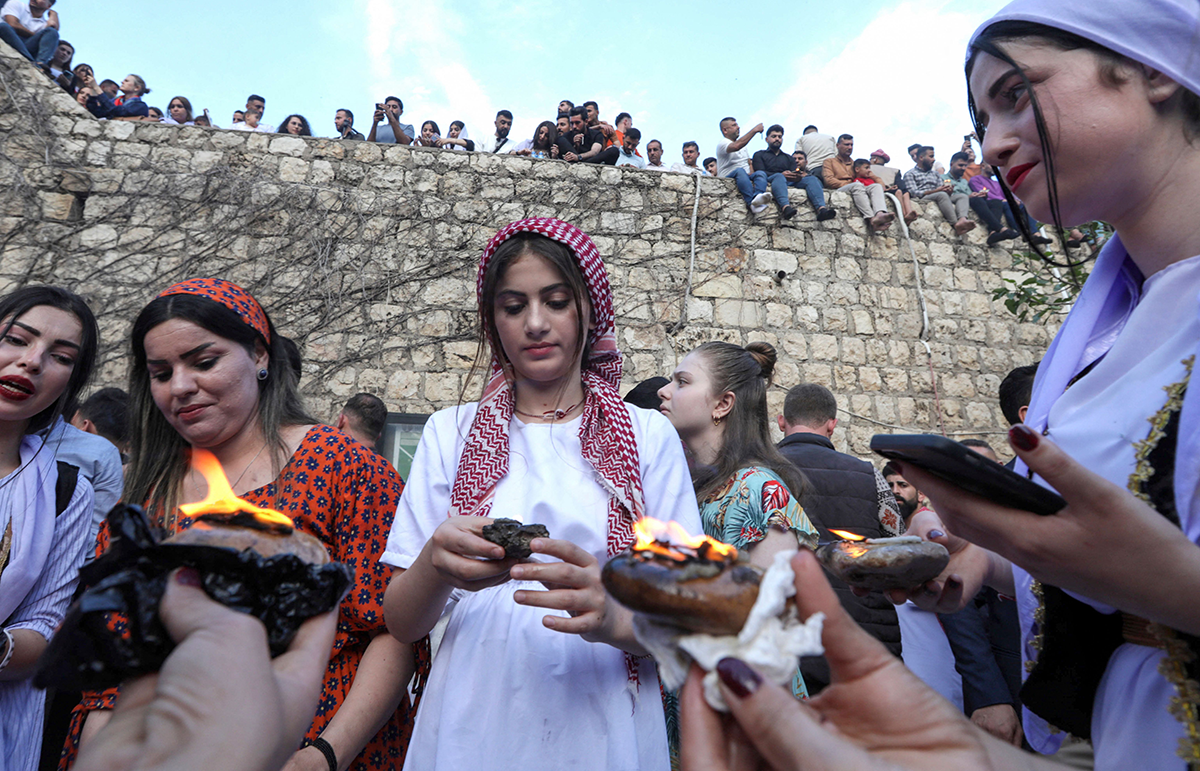
Years of war have fractured religious communities, displaced millions, and erased centuries-old traditions.
Iraq now hosts pockets of religious coexistence—especially in the Kurdistan region—but violence, political fragmentation, and militia influence remain obstacles.
Syria retains formal secularism, but in practice, religious freedom depends greatly on geography. Government-controlled zones, rebel territories, and Kurdish regions all have distinct norms.
5.4 Yemen
Yemen’s civil war has created a humanitarian disaster in which religious minorities have little visibility or protection. The Jewish community has nearly vanished; Bahá’ís face persecution; Islamic sectarian divides fuel violence. Yemen’s future religious landscape depends entirely on its ability to stabilize—which remains uncertain.
6. Israel: A Unique Case
Israel presents a dual reality:
- As a democracy, it protects worship, allows diverse religious institutions, and provides spaces where Jews, Christians, Muslims, Druze, Bahá’ís, and others practice freely.
- As a state with ongoing conflict, it faces contentious debates around personal-status law, sacred sites, and treatment of minority populations. Muslim and Christian communities often report discrimination, and political tensions can ignite religious flashpoints.
Israel’s future religious freedom will be shaped heavily by its broader political trajectory and its ongoing search for balance between Jewish identity and democratic pluralism.
7. Cross-Cutting Trends Shaping the Future
Beyond national borders, several broader developments are reshaping the Middle Eastern religious landscape.
7.1 Generational Change
Across the region, younger generations are:
- more skeptical of traditional authorities
- more exposed to global ideas
- more digitally connected
- more open to diversity—even if they remain religious
Surveys show emerging interest in:
- secularism
- spiritual-but-not-religious identities
- reinterpreted Islam
- greater personal choice in belief
These trends challenge rigid structures and could push societies toward more flexible religious attitudes.
7.2 Migration and Diaspora Communities
Migration reshapes religious life:
- Gulf countries host millions of Christian, Hindu, and Buddhist expatriates
- Iraq’s and Syria’s diasporas influence global policy and awareness
- Yemen and Lebanon see massive outflows of citizens, altering domestic demographics
Diaspora activism, remittances, and transnational networks can support pluralism—or, at times, intensify sectarian narratives.
7.3 Technological Disruption
Technology breaks longstanding monopolies on religious interpretation.
- Online sermons bypass state-approved clerics
- Social media spreads diverse interpretations of faith
- Youth encounter new ideas in seconds
- AI systems generate theological commentary (though often controversial)
- Encrypted apps allow private exploration of taboo beliefs, including atheism and minority religions
Governments struggle to regulate this rapidly expanding digital spiritual marketplace.
7.4 Interfaith Diplomacy
A quiet regional competition is emerging over who will lead interfaith dialogue.
The UAE, Bahrain, Qatar, Jordan, and Morocco present themselves as champions of coexistence, building interfaith centers and hosting global conferences. This trend may encourage gradual opening—even if partly motivated by soft-power ambitions.
7.5 The Decline of Sectarian Politics?
After years of sectarian conflicts—from Iraq to Lebanon to Yemen—many ordinary citizens express exhaustion with sectarian division. Economic hardship and governance failures shift public focus from identity politics to practical needs.
This does not erase sectarianism, but it changes incentives for political elites. A society frustrated with religious division is likely to demand broader inclusion.
8. Barriers to Expanded Religious Freedom
Progress is far from guaranteed. Several entrenched obstacles stand in the way.
8.1 Constitutional and Legal Constraints
Many countries constitutionally:
- define Islam as the state religion
- require laws to be consistent with Sharia
- restrict conversion from Islam
- limit the recognition of non-Abrahamic faiths
- enforce religious courts for marriage and family law
Legal reform is slow, and in many places, politically risky.
8.2 Social Pressure
Even where the law permits religious diversity, society often does not.
Challenges include:
- family pressure around conversion
- honor-based violence
- discrimination in employment
- community surveillance
- social stigma against atheists or nonconformist believers
Changing laws is easier than changing hearts.
8.3 Geopolitical Tensions
The Middle East’s geopolitical rivalries often inflame religious divides:
- Iran vs. Saudi Arabia (Sunni–Shi’a proxy dynamics)
- Israeli–Palestinian conflict (religious-national identity at the core)
- Turkey’s shifting role and Islamic soft power
- Militias exploiting religious identity
Stability is essential for religious freedom—and the region remains volatile.
8.4 Extremism and Post-Extremism Trauma
Groups like ISIS caused catastrophic damage to trust between communities.
Even after militant groups are defeated, wounds remain. Minority communities fear recurrence. Majorities fear infiltration. Governments use security rhetoric to justify restrictions.
The future of religious freedom depends partly on healing this psychological landscape.
9. Positive Signs: Why There Is Hope
Despite the challenges, several compelling reasons for cautious optimism exist.
9.1 Interfaith Institutions Are Growing
The Abrahamic Family House, Qatar’s interfaith initiatives, Morocco’s programs to train religious scholars in moderation, and Bahrain’s outreach all show movement toward structured coexistence.
9.2 Economic Reforms Encourage Openness
Countries seeking global investment, tourism, and talent often increase tolerance by necessity. In the Gulf, this is already happening.
9.3 Youth Are Transforming Religious Culture
Young Middle Easterners engage religion differently. They tend to prefer:
- personal spirituality
- ethical frameworks
- less hierarchical religious authority
This shift may reduce sectarian rigidity.
9.4 Minorities Are Gaining Visibility
Minorities who once remained silent now use digital platforms to tell their stories. Increased visibility leads to increased social recognition.
10. Negative Signs: Why There Is Caution
10.1 The Rise of Digital Surveillance
Governments can use digital tools to track religious dissent or nonconformity.
10.2 State–Religion Interdependence Remains Strong
In many nations, political legitimacy is tied to religious endorsement.
10.3 Personal-Status Laws Remain Entrenched
Marriage, divorce, inheritance, and custody are still tied to religion in many countries. Without reform, religious freedom remains incomplete.
10.4 Authoritarianism Is Resurgent
When states feel threatened, religious expression often becomes a casualty.
11. Projections: What Will the Future Look Like?
Based on current trajectories, we can outline three possible futures.
Scenario 1: Gradual Liberalization (Moderately Likely)
Key features:
- Gulf states continue opening interfaith spaces
- Jordan and Egypt make incremental reforms
- Iraq’s Kurdistan region becomes an interfaith model
- Israel expands certain protections while grappling with identity debates
- Youth culture pushes for pluralism
- Technology softens rigid boundaries
Religious freedom improves unevenly, but the overall trend is positive.
Scenario 2: Fragmentation and Repression (Moderately Possible)
Triggers could include:
- renewed regional conflicts
- economic crises
- hardline political takeovers
- digital crackdowns
- large-scale demographic shocks
Religious minorities would shrink further, and majorities would live under tighter ideological control.
Scenario 3: Dual-Speed Evolution (Highly Likely)
This is the most plausible scenario.
The region splits into two parallel futures:
- High-openness zones (UAE, Qatar, Bahrain, Oman, certain parts of Iraq) become interfaith-friendly hubs.
- High-control zones (Iran, Yemen, parts of Syria) maintain or intensify restrictions.
- Hybrid states (Egypt, Jordan, Israel, Saudi Arabia) oscillate between reform and retrenchment.
Religious freedom grows in some places while stagnating—or declining—in others.
12. Most Likely Outcome: Conditional Progress
The future of religious freedom in the Middle East will likely be:
neither a sweeping transformation nor a total collapse—but a slow, uneven, and complex evolution.
Key driving forces will include:
- youth demographics
- economic modernization
- geopolitical realignments
- the decline of extremist movements
- technology’s relentless influence
- the aspirations of minority communities
- governments’ need for global legitimacy
Religious freedom will not dramatically blossom overnight, but the arc appears to be bending—however subtly—toward greater diversity, dialogue, and dignity.
Conclusion
The Middle East stands at a crossroads. It is a region where faith shapes identity, where history casts long shadows, and where the struggle for religious freedom is both a personal journey and a geopolitical question. The past century has witnessed both tragedy and progress. The next century may bring something new: a mosaic of societies where religion remains vital but no longer dictates the boundaries of belonging.
The future of religious freedom in the Middle East is still being written—by citizens, governments, activists, and the millions of ordinary people whose daily acts of courage and coexistence quietly shape history.
The path ahead will be uneven, but not hopeless.
Slow, but not stagnant.
Contested, but not predetermined.
And in this complexity lies the region’s greatest potential:
a future where many faiths can flourish side by side, not in spite of the Middle East’s history, but because of it.