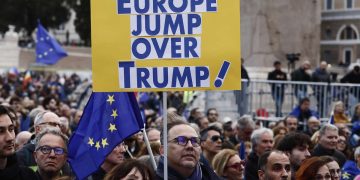








Europe is at a crossroads. Over the past decade, the political landscape across the continent has undergone seismic shifts, challenging long-held assumptions about liberal democracy, economic stability, and social cohesion. At the heart of this transformation lies populism—a political phenomenon that has surged from the fringes to the mainstream, reshaping governance and public discourse. The question confronting policymakers, scholars, and citizens alike is deceptively simple: how will Europe cope with the rise of populism? Yet the answer is anything but straightforward.
Populism, in its essence, is a political approach that pits “the people” against “the elite.” It promises to give voice to those who feel marginalized, neglected, or betrayed by traditional political institutions. While populism exists on both the left and the right, its manifestations in contemporary Europe have been predominantly right-wing, often intertwined with nationalism, anti-immigration sentiment, and skepticism toward supranational institutions like the European Union. However, left-wing populism has also gained traction, particularly in response to economic inequality and austerity policies. This duality complicates Europe’s response: it is not simply a matter of countering one ideology, but rather addressing a broader societal discontent that cuts across political boundaries.
The Roots of Populism in Europe
To understand how Europe might cope with populism, it is crucial to examine the factors fueling its rise. The causes are multifaceted, involving economic, social, and cultural dimensions. Economically, the continent has grappled with slow growth, rising inequality, and the lingering effects of the 2008 financial crisis. Many citizens feel left behind by globalization and technological change, leading to a sense of insecurity that populist leaders are quick to exploit.
Socially, demographic shifts, immigration, and cultural anxieties have intensified tensions. Countries experiencing rapid demographic change often see backlash against perceived threats to national identity. Populist parties exploit these fears by framing immigration not as a complex social phenomenon but as a direct threat to jobs, culture, and security. The rhetoric is simple, emotional, and persuasive, resonating with segments of the population that feel unheard.
Politically, a crisis of trust has created fertile ground for populism. Traditional parties have struggled to demonstrate effectiveness, integrity, and relevance. Corruption scandals, bureaucratic inefficiencies, and perceived detachment from the concerns of ordinary citizens have eroded confidence in established institutions. Populist movements capitalize on this distrust by presenting themselves as outsiders, unbound by the compromises and compromises of conventional politics.
Finally, technological transformation, particularly the rise of social media, has accelerated the spread of populist ideas. Digital platforms amplify emotional appeals, reward sensationalism, and allow populist leaders to bypass traditional media gatekeepers. The result is a political ecosystem where narratives of grievance and victimhood gain disproportionate influence, reshaping public opinion and electoral outcomes.
Manifestations Across Europe
Populism manifests differently across Europe, reflecting national contexts, historical experiences, and institutional structures. In Italy, the Five Star Movement capitalized on anti-establishment sentiment and frustration with economic stagnation, blending direct democracy advocacy with skepticism toward the EU. In Hungary and Poland, populist governments have pursued illiberal policies, curtailing judicial independence, weakening media freedom, and centralizing power under the guise of defending national sovereignty. In France, Marine Le Pen’s National Rally has leveraged anti-immigration sentiment and euroskepticism to challenge the political center. Even in traditionally stable democracies like Germany and the Netherlands, right-wing populist parties have gained footholds, reshaping debates on identity, security, and economic policy.
What unites these movements is a reliance on emotionally charged messaging, a focus on “us vs. them” narratives, and a distrust of transnational governance structures. Yet the policy implications are uneven. Some populist movements pursue radical systemic change, while others aim to capture power within existing democratic frameworks, testing the resilience of institutions rather than dismantling them outright. This variation complicates Europe’s response, as strategies that work in one context may be ineffective—or counterproductive—in another.
Coping Mechanisms: Institutional Responses
Europe’s first line of defense against populism lies in its institutions. Established democratic mechanisms—parliaments, courts, independent media, and supranational bodies like the EU—serve as buffers against radical shifts. By enforcing rule of law, maintaining checks and balances, and safeguarding civil liberties, these institutions can limit the most destabilizing impulses of populist governance.
For instance, the European Union has increasingly deployed legal and financial instruments to hold member states accountable for democratic backsliding. Article 7 of the EU Treaty allows the suspension of certain rights of member states that violate core democratic principles, while conditionality mechanisms link funding to adherence to rule-of-law standards. Similarly, constitutional courts and independent judiciaries in Hungary and Poland have become crucial arenas for contesting executive overreach. These institutional safeguards demonstrate that Europe is not defenseless, but they also reveal limits: enforcement is often slow, politically fraught, and dependent on collective will.

Another institutional strategy involves electoral system design. Proportional representation, coalition-building, and threshold rules influence the ability of populist parties to gain power. While some systems naturally limit the impact of fringe parties, others may inadvertently amplify their influence. For example, low thresholds in certain parliaments enable small populist factions to exert outsized power, shaping policy debates and coalition dynamics. Recognizing these structural factors is key to crafting durable responses.
Coping Mechanisms: Societal and Political Responses
Beyond institutional safeguards, societal and political responses are equally important. Civil society plays a critical role in countering populism by fostering engagement, promoting media literacy, and facilitating dialogue across ideological divides. Grassroots movements, NGOs, and civic organizations can empower citizens to resist simplistic narratives, encouraging informed participation rather than reactive anger.
Political parties themselves must also adapt. Traditional parties that ignore populist grievances risk further erosion of trust. Conversely, parties that integrate constructive elements of populist discourse—such as calls for transparency, economic fairness, and political responsiveness—without embracing xenophobia or authoritarian tendencies, can reclaim relevance. This balancing act requires careful messaging, policy innovation, and genuine responsiveness to citizen concerns.
Education is another vital tool. Populism often thrives on misinformation and fear. By investing in critical thinking, media literacy, and civic education, European societies can equip citizens with the skills to navigate complex political landscapes. This is a long-term strategy, but one with profound potential: a populace that can distinguish between legitimate grievance and manipulative rhetoric is less susceptible to polarizing forces.
Finally, European governments must address the material roots of populism. Economic inequality, regional disparities, and social insecurity are breeding grounds for political upheaval. Policies that promote inclusive growth, social mobility, and equitable access to public services can reduce the allure of populist promises. Populism is not merely an ideological threat; it is often a symptom of deeper structural challenges that require pragmatic solutions.
The Role of the Media
The media plays a dual role in Europe’s coping strategy. On one hand, investigative journalism, independent reporting, and fact-checking serve as bulwarks against disinformation and manipulative narratives. On the other hand, sensationalist coverage and uncritical amplification of populist messaging can exacerbate polarization. Striking the right balance is essential.
Digital platforms complicate this task. Algorithms reward engagement over accuracy, promoting emotionally charged content that can distort public perception. European regulators are increasingly scrutinizing social media companies, demanding transparency, accountability, and measures to combat hate speech and false information. Media literacy campaigns complement regulatory approaches, empowering users to critically evaluate online content rather than passively consuming it.

Importantly, media cannot operate in isolation. Its effectiveness depends on broader societal trust, political transparency, and civic engagement. In countries where media is politicized or fragmented, the task becomes significantly harder, highlighting the interconnected nature of Europe’s coping mechanisms.
The EU’s Strategic Challenges
The European Union occupies a unique position in this debate. As a supranational institution, the EU embodies principles of liberal democracy, economic integration, and cross-border cooperation. Yet its very existence makes it a target for populist critique. Euroskeptic parties exploit narratives of bureaucratic overreach, loss of national sovereignty, and unequal benefits from integration.
To cope with this challenge, the EU must balance enforcement with engagement. Punitive measures alone risk reinforcing populist claims of elitism and victimization. Constructive dialogue, policy flexibility, and initiatives that visibly benefit citizens can undercut anti-EU sentiment. For example, targeted investment in regions suffering economic decline, transparent decision-making processes, and citizen-focused communication strategies can demonstrate the EU’s relevance and responsiveness.
Moreover, the EU faces the dilemma of heterogeneity. Member states vary widely in their political, economic, and social contexts. A one-size-fits-all approach to populism is unlikely to succeed. Tailored strategies, informed by local realities and grounded in European principles, are essential.
Populism and the Future of European Democracy
Populism presents both challenges and opportunities for European democracy. On one hand, it threatens institutional stability, social cohesion, and the liberal democratic order. Illiberal populist governments may erode checks and balances, restrict civil liberties, and undermine transnational cooperation. If unchecked, populism could produce political fragmentation, economic instability, and social polarization.
On the other hand, populism can act as a wake-up call. It exposes structural deficiencies, unmet social needs, and gaps in political representation. Constructive responses can strengthen democracy, enhance responsiveness, and promote inclusivity. In this sense, Europe’s task is not merely to resist populism, but to channel its energy in ways that reinforce democratic resilience.
This requires a multi-dimensional approach: robust institutions, adaptive political parties, informed and engaged citizens, responsive economic policies, and a media ecosystem capable of fostering reasoned debate. The challenge is formidable, but history shows that European societies are capable of remarkable adaptation when confronted with crises.
Comparative Lessons
Examining populism across Europe offers valuable lessons. In Scandinavia, for instance, strong social safety nets and inclusive institutions have mitigated the rise of extreme populist movements. Populist parties exist, but they are often constrained by consensus-oriented political cultures and high levels of social trust. In contrast, countries with weaker institutions, greater economic inequality, or more polarized societies have experienced more disruptive populist surges.
These comparisons suggest that coping with populism is less about ideology and more about context. Structural resilience—economic, social, political, and institutional—is the most reliable buffer against destabilizing forces. Europe’s challenge is to strengthen these foundations while respecting diversity, pluralism, and democratic norms.
Conclusion
Europe’s encounter with populism is neither transient nor superficial. It is a profound test of democratic resilience, social cohesion, and institutional adaptability. Populism thrives on grievance, fear, and disillusionment, but it also offers an opportunity for renewal: to address structural inequalities, rebuild trust, and make democratic governance more responsive.
Coping with populism requires a comprehensive, multi-level strategy. Institutions must enforce the rule of law and maintain checks and balances. Political parties must adapt, engaging with legitimate grievances without succumbing to demagoguery. Civil society must educate and mobilize, fostering critical thinking and civic engagement. The media must balance scrutiny with responsible reporting. Economic and social policies must reduce inequality and insecurity. The EU must combine enforcement with engagement, tailoring strategies to diverse member-state contexts.
Ultimately, the question is not merely how Europe will resist populism, but how it will transform populist energy into constructive democratic renewal. The answer lies in resilience, adaptation, and the courage to confront underlying societal challenges head-on. If Europe succeeds, it will emerge stronger, more inclusive, and better prepared to navigate the uncertainties of the 21st century.
Populism may be disruptive, but it is not insurmountable. With thoughtful strategy, committed leadership, and active citizen participation, Europe can cope—and even thrive—in an era defined by political turbulence. The journey will be challenging, but it is also an opportunity to reaffirm the values, institutions, and social bonds that make European democracy a resilient, living experiment in governance.