










Introduction: A Continent on the Cusp of an Industrial Plot Twist
Every global industrial revolution has its unexpected protagonists. Britain had coal and steam. The United States had steel, oil, and—eventually—Silicon Valley. East Asia mastered manufacturing discipline and efficiency. Now, as the world races into its electric century, a new contender is quietly stepping forward with a unique cocktail of resources, geopolitical leverage, and untapped industrial capacity:
South America.
Stretching from the equatorial tropics to the Antarctic winds, the continent is sitting on a geological treasure chest essential to electrification. Lithium lakes that shimmer like mirrors. Copper belts that carve through mountains. Cobalt reserves, renewable energy abundance, large domestic markets, and governments increasingly eager to diversify their economies.
But can South America turn this geological jackpot into industrial leadership in the electric vehicle (EV) manufacturing world? Could it follow a path similar to China’s—moving from resource supply to component manufacturing and ultimately to full-scale vehicle production?
This is not a simple question. It demands a layered exploration that interweaves geology, geopolitics, supply chains, engineering capacity, environmental dynamics, capital flows, infrastructure, and market strategies.
The answer, intriguingly, is yes—South America could become a global EV powerhouse.
But only if it overcomes a series of structural challenges and executes a precise set of strategic moves.
Let’s embark on a deep, structured journey into whether the EV revolution might have its next manufacturing capital not in Asia, Europe, or North America—but in the Southern Hemisphere.
1. The Geological Trump Card: A Battery Mineral Empire
If electric vehicles are the future, then battery minerals are the new oil. South America—particularly the “Lithium Triangle” formed by Argentina, Bolivia, and Chile—holds a staggering proportion of the global lithium riches. Combined with Peru’s and Chile’s copper dominance, Brazil’s nickel reserves, and Colombia’s emerging cobalt potential, the continent possesses the most essential metals for EV batteries and motors.
Let’s break it down:
1.1 Lithium: The Crown Jewel
South America controls over half of the world’s known lithium reserves. The Lithium Triangle hosts some of the highest-grade brine deposits, which enable relatively cost-efficient extraction compared to hard-rock mining.
- Chile: Once the world’s top lithium producer and still a global heavyweight.
- Argentina: Rapidly expanding operations with investor-friendly policies.
- Bolivia: Holds the world’s largest reserves but struggles with extraction technology and political consistency.
This is like Saudi Arabia waking up one day to discover it also controls half the world’s copper and cobalt.
1.2 Copper: The Nervous System of Electrification
Electric vehicles require roughly 3–5 times more copper than internal combustion cars. South America has this covered.
- Chile is the world’s largest copper producer.
- Peru is the world’s second-largest.
Put together, they form a powerhouse of conductive metal essential to motors, batteries, charging systems, and grid expansion.
1.3 Nickel, Graphite, and Cobalt
- Brazil has abundant nickel and emerging graphite potential.
- Colombia and Brazil both show cobalt promise, often underexplored.
These minerals feed directly into next-generation battery chemistries.
1.4 Renewable Energy Potential: The Clean Power Advantage
From the roaring Patagonian winds to equatorial solar fields, South America can power energy-intensive EV manufacturing with genuinely clean electricity.
Clean energy isn’t just environmentally attractive—it lowers production cost, reduces carbon footprint, and enables green branding.
In short: South America has the raw materials and the green energy to jump-start a continent-sized EV industry.
2. A Giant Market in Its Own Right
A country doesn’t become a manufacturing hub unless it can serve both export and domestic markets. South America offers both.
2.1 The Export Window
With the U.S., EU, and China hungry for EVs—and governments globally pushing electrification—South America could export components, batteries, or fully assembled vehicles.
Supply diversification is becoming a global priority. Nations don’t want China-dependent supply chains anymore. South America offers:
- Geographic proximity to the U.S. market
- Established trade routes to Europe
- Growing diplomatic and trade ties with Asia
2.2 The Domestic Market Opportunity
Brazil alone is the world’s 6th largest automotive market. Add Argentina, Colombia, Chile, and Peru, and the region represents over 500 million people—with accelerating urbanization and shifting environmental policies.
EV adoption in South America is still modest but growing annually across almost all major economies. This gives the continent a unique advantage: a large home market that can sustain early production, just as China did.
3. The Industrial Foundation: An Underestimated Strength
People often underestimate how industrialized South America already is.
- Brazil: Home to massive automotive plants (Volkswagen, GM, Toyota, Stellantis, BYD), aircraft manufacturing (Embraer), steel, petrochemicals, and heavy industry.
- Argentina: Has long-standing auto manufacturing, including Ford, Toyota, Renault, and Peugeot.
- Chile: Strong mining technology ecosystem, machining, and metallurgical expertise.
- Colombia: Logistics hub with growing auto assembly and parts production.
The region isn’t starting from zero. It already has:
- Skilled engineering labor
- Tier-1 auto component suppliers
- Advanced metallurgy expertise
- Research universities
- Industrial free zones and ports
- Massive renewable energy projects
These are critical prerequisites for EV-scale manufacturing.
4. The Big Question: Why Hasn’t South America Already Become an EV Powerhouse?
If the continent’s potential is so extraordinary, why isn’t it already churning out batteries and vehicles at massive scale?
4.1 Policy Instability
No industrial revolution thrives amid unpredictable policy landscapes.
Frequent shifts in taxation, mining rules, and industrial incentives in some countries have historically scared away long-term investors—particularly those needing 10–20 years of stability for factories and battery plants.
4.2 Inconsistent Infrastructure
Some countries suffer from:
- Underdeveloped transportation networks
- Port inefficiencies
- High logistics costs
- Limited charging infrastructure
Industrial success needs smooth logistics.
4.3 Capital Constraints
Large-scale EV manufacturing requires multi-billion-dollar investments. Local venture ecosystems and capital markets are comparatively smaller than those of the U.S., China, or Europe.
4.4 Technical Bottlenecks
Battery production requires highly specialized technical expertise, chemical processing facilities, and stringent quality standards.
South America has the talent—but not yet at scale.

4.5 The China Factor
China currently controls:
- ~75% of battery manufacturing
- ~90% of global battery chemical processing
- The largest EV market
- High-efficiency auto supply chains
This creates a high barrier for late entrants.
Yet, this may also be the perfect moment for South America to step in—precisely because the world wants alternatives.
5. Why Now Is the Optimal Moment for South America
Several global shifts have aligned to make South America’s EV leadership not only possible but strategically compelling.
5.1 Supply Chain Diversification
Governments around the world want fewer single-country dependencies.
South America can position itself as the neutral, democratic, resource-rich alternative.
5.2 Chinese and U.S. Investments Already Rising
- China (especially BYD) is pouring billions into Brazil and Chile.
- The United States views the region as critical to “friend-shoring” its battery supply lines.
The result: capital is flowing faster than ever before.
5.3 Massive Technological Transfer Opportunities
South America is negotiating technology-sharing agreements with:
- Chinese battery manufacturers
- European automakers
- U.S. clean tech firms
- Korean and Japanese electronics giants
This could fast-track its industrial capabilities.
5.4 Environmental Pressure and Domestic EV Policies
Countries like Chile and Brazil are implementing:
- Zero-emission vehicle targets
- Battery material value-add regulations
- Renewable energy incentives
- Cleaner mining initiatives
Governments finally see that exporting raw minerals is the old model.
The future lies in exporting high-value products.
6. The Path to Leadership: A Realistic Roadmap
Can South America become a global EV manufacturing leader? Yes. But not by accident. It needs a coordinated roadmap.
Here’s what such a strategy might look like.
6.1 Step 1 — Move Up the Mineral Value Chain
Instead of exporting raw lithium, copper, and nickel, South America should produce:
- Battery-grade lithium carbonate and hydroxide
- Cathode and anode materials
- Copper foils and wiring for EV motors
- Nickel sulfate for high-density battery chemistries
- Precursor chemicals and cell components
Each step up the value chain multiplies profits and creates high-tech jobs.
Argentina and Chile are already moving in this direction. Bolivia is trying (though slowly). Brazil has promising nickel-based battery material ambitions.
6.2 Step 2 — Build Gigafactories
Gigafactories anchor entire ecosystems. Once a region has a large battery plant, suppliers rapidly cluster around it:
- Separator film producers
- Electrolyte companies
- Precision machinery makers
- Chemical processing firms
- Recycling partners
Brazil could host several massive gigafactories due to:
- Market size
- Renewables capacity
- Industrial base
- Skilled workforce
Chile or Argentina could specialize in high-grade battery materials and high-efficiency cell production.
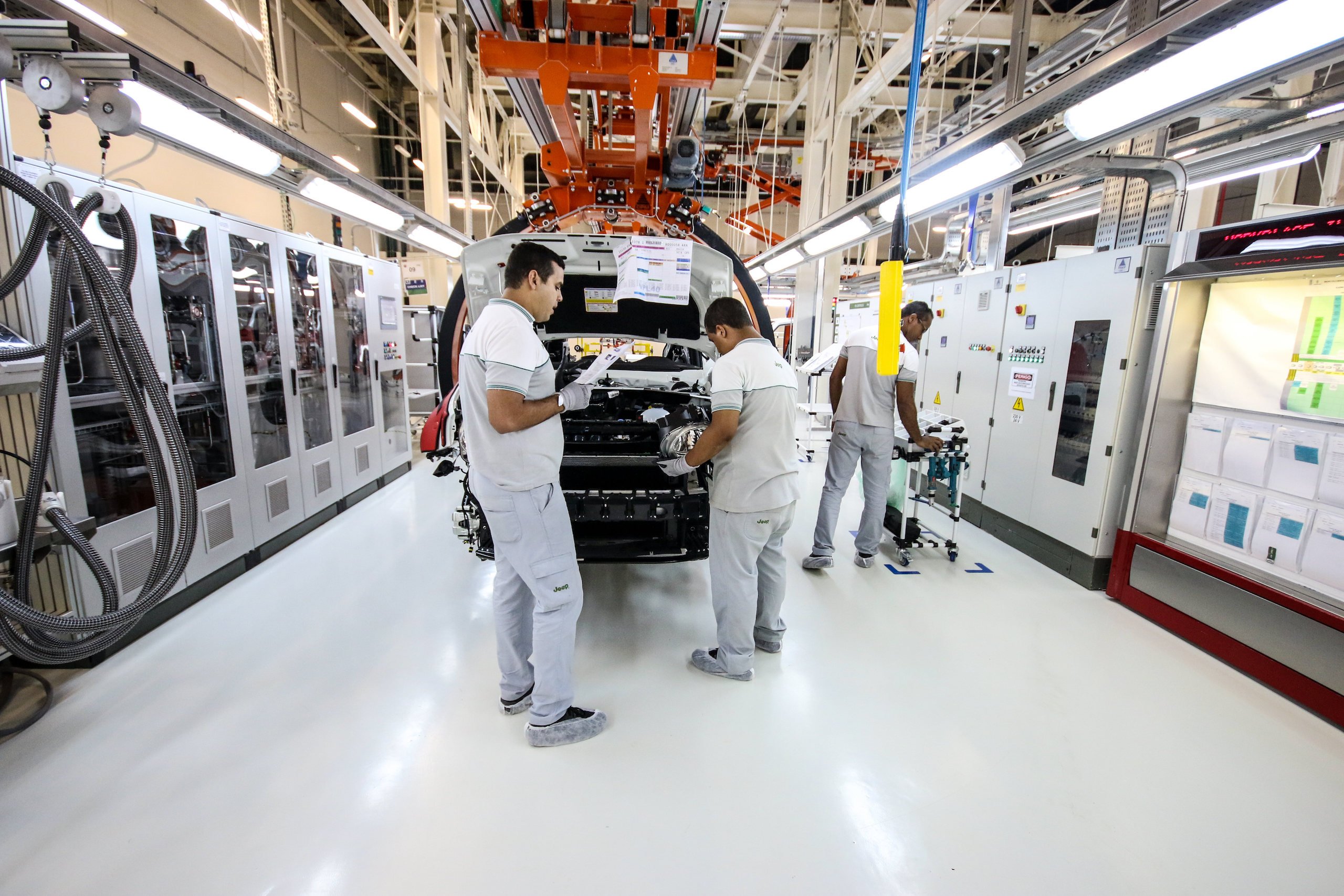
6.3 Step 3 — Assemble EVs Locally for Domestic and Export Markets
Brazil and Argentina already have strong automotive industries. Gradually, these could shift from combustion vehicles to EVs:
- Electric SUVs for domestic markets
- Export-oriented compact EVs
- Electric buses for urban transit
- Electric logistics fleets
- Specialized off-road electric vehicles for mining and agriculture
Electric buses are a particularly promising niche. Latin America has some of the world’s largest bus fleets—and China has already proven that electrifying buses is a powerful manufacturing catalyst.
6.4 Step 4 — Integrate Clean Energy for a Green Industrial Brand
Imagine exporting EVs labeled:
“Powered by Clean South American Energy.”
This branding could be powerful for countries like Chile, Uruguay, and Brazil, which have some of the cleanest energy grids in the world.
Green branding increases export attractiveness and reduces regulatory friction.
6.5 Step 5 — Become a Global Recycling Hub
Battery recycling will become a trillion-dollar industry. Countries that lead in recycling secure:
- Stable mineral supplies
- Lower import needs
- Reduced environmental footprints
Chile, Brazil, or Colombia could become global recycling champions.
6.6 Step 6 — Foster Local Innovation and R&D
South America should invest in:
- Battery chemistry research
- EV software and electronics
- Lightweight vehicle materials
- Smart charging networks
- Grid modernization
This will ensure the region doesn’t only assemble EVs—it innovates them.
7. Who Will Lead? Country-by-Country Potential
Now let’s examine the realistic leaders within South America.
7.1 Brazil — The Most Likely Future EV Titan
Strengths:
- Largest auto market in the Southern Hemisphere
- Strong industrial base
- Abundant clean energy
- Significant nickel resources
- Major foreign investment (BYD, Stellantis, etc.)
- Skilled labor pool
Brazil could become the Detroit + Shenzhen of South America—a true EV hub.
7.2 Chile — The Battery Material Specialist
Strengths:
- Lithium and copper dominance
- Stable regulatory environment
- Clean grid
- Strong mining technology sector
Chile may lead in high-end battery materials and precision mining technologies, feeding regional gigafactories.
7.3 Argentina — The Rising Player with Investor-Friendly Momentum
Strengths:
- Exploding lithium production
- Growing foreign investment
- Established auto sector
- Abundant renewables
Argentina could become the lithium processing center and an EV assembly hub if policies stay stable.
7.4 Bolivia — The Sleeping Giant
Strengths:
- Largest lithium reserves on Earth
Challenges:
- Technical barriers in brine processing
- Policy unpredictability
- Limited industrial base
Bolivia could be the long-term wildcard if it modernizes extraction and stabilizes policy frameworks.
7.5 Colombia — The Logistics Smart Bet
Strengths:
- Strategic location
- Cobalt potential
- Vibrant urban EV adoption
Not a mineral superpower, but a potential logistics and mobility innovation hub.
8. Key Obstacles and How South America Can Overcome Them
8.1 Infrastructure Gaps
Solution:
- Build integrated EV corridors
- Modernize ports
- Expand high-voltage grid lines
- Develop domestic charging networks
8.2 Policy Volatility
Solution:
- Long-term mining and investment policies
- Stable EV incentives
- Regional cooperation agreements
8.3 Skilled Labor Shortages
Solution:
- Technical training programs
- University–industry partnerships
- Apprenticeship models from Europe and Asia
8.4 Capital Limitations
Solution:
- Attract Chinese, U.S., and EU investments
- Encourage sovereign development funds
- Facilitate public–private infrastructure partnerships
8.5 Environmental Risks
Solution:
- Low-impact lithium extraction technologies
- Transparent water management
- Renewable-powered manufacturing
- Recycling-first strategies
If South America can solve these challenges, nothing stops it from becoming an EV powerhouse.
9. A Vision for 2035: What Success Could Look Like
Fast-forward 10–12 years and imagine the following scenario:
- South America hosts 8–12 gigafactories.
- Brazil exports electric SUVs and buses to the U.S., Europe, and Africa.
- Chile is the world’s top supplier of battery-grade lithium and copper components.
- Argentina manufactures high-energy-density batteries and compact EVs.
- Bolivia has finally cracked industrial-scale lithium processing and is exporting cathode materials.
- Colombia runs major EV logistics hubs and smart charging networks.
- Electric buses dominate Latin America’s urban transit fleets.
- South America becomes the world’s largest exporter of green-manganese, lithium derivatives, and nickel-based materials.
- A continent-wide network of renewable-powered battery plants creates millions of skilled jobs.
In this scenario, South America doesn’t merely participate in the EV revolution—it helps lead it.
10. Final Verdict: Can South America Become a Leader in Electric Vehicle Production?
Yes—South America absolutely could become a global EV manufacturing leader.
It has:
- unparalleled mineral wealth
- abundant renewable energy
- robust industrial foundations
- growing domestic markets
- strategic geographic position
- accelerating foreign investment
But potential is not destiny.
Success will require:
- long-term policy stability
- infrastructure modernization
- regional cooperation
- massive investment in technology and human capital
- a deliberate move up the value chain
- sustainability-focused strategies
If South America plays its cards right, it won’t just fuel the world’s electric transition—it will build it.
In doing so, it may spark one of the most surprising industrial success stories of the 21st century.