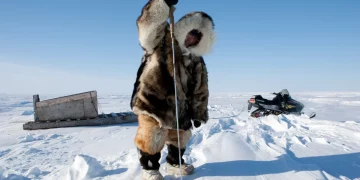










The Arctic is a world apart—a realm of endless snow, icy expanses, and resilient communities. For the Inuit, the people who have thrived in these frozen landscapes for millennia, the Arctic is not just home; it is identity, culture, and survival. Yet, the Arctic is changing at a pace unlike any other. Rising temperatures, melting ice, and shifting ecosystems are reshaping life as they know it. In response, the Inuit are not passive observers—they are innovating, adapting, and redefining resilience in the face of climate change.
This article explores the multifaceted strategies the Inuit are employing to cope with and adapt to environmental transformations in the Arctic. From technological innovation to cultural preservation, these adaptations reveal a remarkable blend of traditional knowledge and modern science.
1. The Arctic in Flux
1.1 Rapid Warming and Ice Melt
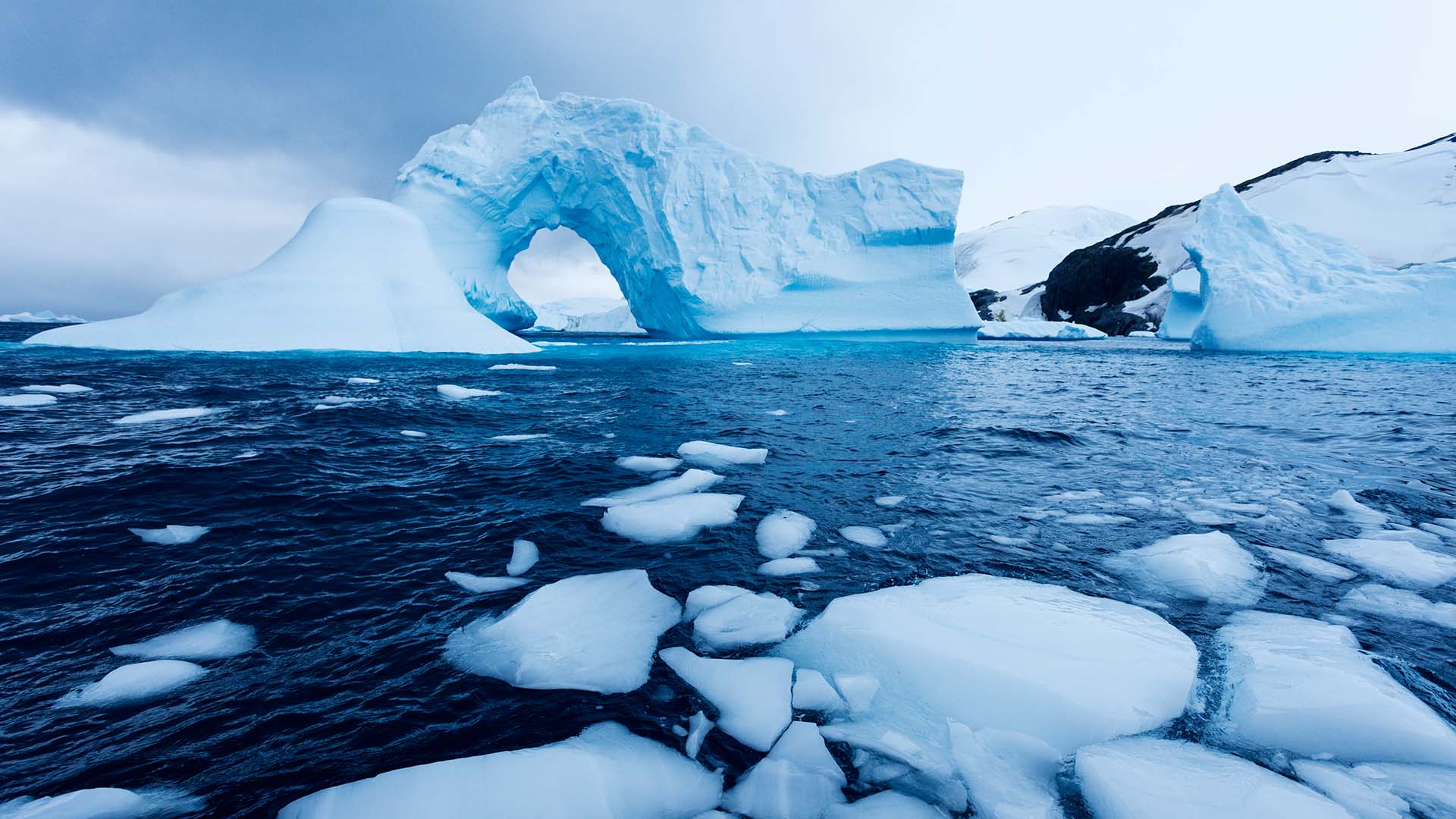
The Arctic is warming roughly twice as fast as the global average. Sea ice, once a stable feature of the northern hemisphere, is now melting earlier in the year and forming later, shortening the hunting and travel seasons. This affects everything from transportation routes to the availability of traditional food sources.
For the Inuit, who rely on sea ice to reach hunting grounds and maintain connections between communities, this is more than a scientific statistic—it is a daily challenge. Hunters must carefully monitor ice conditions, often relying on generations of observation passed down through oral traditions.
1.2 Shifting Wildlife Patterns
Climate change has altered the migration patterns and population dynamics of key Arctic species. Polar bears, seals, caribou, and fish are moving unpredictably, forcing the Inuit to adapt hunting techniques and schedules. For example, caribou may arrive earlier or later than historical norms, and seal populations may relocate to areas with more stable ice.
These shifts require agility, local knowledge, and careful observation to sustain food security and cultural practices.
2. Integrating Traditional Knowledge and Modern Science
2.1 Inuit Qaujimajatuqangit (IQ)
At the heart of Inuit adaptation strategies lies Inuit Qaujimajatuqangit, often translated as “Inuit traditional knowledge.” IQ encompasses centuries of observation about weather patterns, animal behavior, and environmental change. This knowledge allows Inuit communities to predict ice conditions, locate wildlife, and navigate safely—even in rapidly changing environments.
By integrating IQ with modern scientific tools such as satellite imagery, GPS, and climate models, Inuit communities are creating hybrid strategies for survival. For instance, hunters may combine radar data on sea ice with ancestral knowledge of ice thickness patterns to plan safe travel routes.
2.2 Community-Led Research
Across the Arctic, Inuit-led research initiatives are bridging traditional wisdom and contemporary science. Community members collect local data on wildlife, ice conditions, and environmental changes, which is then analyzed alongside broader scientific datasets.
This approach not only strengthens adaptation strategies but also empowers local communities to participate actively in climate policy discussions at national and international levels.
3. Food Security in a Changing Arctic
3.1 Hunting and Fishing Adaptations
Hunting and fishing are central to Inuit culture and nutrition. As climate change alters the availability and location of traditional species, Inuit hunters have developed flexible strategies. These include:
- Diversifying hunting targets: Shifting focus from one primary species to multiple species to reduce risk.
- Timing adjustments: Altering hunting schedules to align with changing migration and breeding patterns.
- Ice safety innovations: Using GPS, ice sonar, and mobile applications to navigate thinner or unstable ice safely.
3.2 Local Food Production
In addition to traditional hunting, Inuit communities are exploring controlled local food production, such as greenhouse cultivation and hydroponics. While the Arctic environment is harsh, small-scale indoor farming allows communities to supplement their diets with fresh vegetables and herbs, reducing dependence on expensive imported foods.
4. Infrastructure and Transportation Resilience
4.1 Adapting Buildings to Thawing Permafrost
Rising temperatures are causing permafrost to thaw, destabilizing roads, homes, and public infrastructure. In response, Inuit engineers and planners are designing buildings with adjustable foundations, thermally insulated structures, and materials suited to variable ground conditions.
Some communities have begun experimenting with modular homes that can be relocated as the ground shifts—a modern twist on nomadic ingenuity.
4.2 Transportation Innovations
Traditional travel on dog sleds or snowmobiles is becoming riskier as ice becomes thinner and less predictable. Inuit communities are adopting hybrid strategies:
- All-terrain vehicles capable of navigating muddy tundra or fractured ice.
- Satellite-based ice monitoring to avoid unsafe routes.
- Community-based communication networks to warn travelers of hazardous conditions.
These innovations maintain mobility and connectivity, vital for both survival and economic activity.
5. Cultural Preservation Amid Change
5.1 Language and Storytelling
Climate change is not only a physical challenge—it threatens cultural heritage. As traditional hunting grounds shift or vanish, the practices, stories, and language tied to them risk being lost. Inuit communities are countering this by documenting oral histories, creating educational programs, and producing multimedia content that celebrates and preserves their heritage.
5.2 Festivals and Community Cohesion
Cultural events like festivals, games, and communal hunts foster resilience by strengthening social bonds. These gatherings also serve as platforms to discuss climate impacts, share adaptation strategies, and pass traditional knowledge to younger generations.
6. Health and Wellbeing

6.1 Nutrition and Lifestyle Changes
Shifts in diet due to changing access to traditional foods affect physical health. Communities are developing initiatives that blend traditional foods with accessible alternatives, aiming to maintain nutritional balance while respecting cultural preferences.
6.2 Mental Health and Climate Anxiety
The psychological impacts of climate change are significant. Inuit communities have implemented programs focusing on mental health, emphasizing community support, cultural identity, and resilience practices to cope with the anxiety of environmental uncertainty.
7. Political Engagement and Advocacy
7.1 Local Governance
Inuit communities are not passive recipients of policy—they actively shape it. Local councils engage in planning for climate-resilient infrastructure, sustainable hunting regulations, and emergency preparedness.
7.2 International Advocacy
Inuit organizations participate in global forums, advocating for Arctic preservation, Indigenous rights, and climate action. By sharing firsthand experiences of climate change, they influence international policies and highlight the urgency of Arctic adaptation.
8. Renewable Energy and Sustainable Practices
8.1 Reducing Dependence on Fossil Fuels
Remote Arctic communities rely heavily on diesel generators, which are costly and polluting. To address this, Inuit communities are investing in renewable energy solutions such as:
- Solar panels optimized for low-angle Arctic sunlight.
- Wind turbines designed for extreme cold and icy conditions.
- Hybrid systems combining traditional and modern energy sources.
8.2 Waste Management and Sustainability
Adapting to climate change also requires sustainable resource management. Inuit communities are improving waste recycling, water management, and energy efficiency, reducing environmental stress and building long-term resilience.
9. Innovation in Education and Youth Engagement
9.1 Climate Education Programs
Educational programs in Arctic communities emphasize climate science, traditional knowledge, and practical survival skills. Youth are taught how to monitor environmental changes, understand wildlife patterns, and engage in community decision-making.
9.2 Technology as a Learning Tool
Digital tools—drones, satellite imaging, GIS mapping—allow students to document environmental changes and develop problem-solving skills that blend science and traditional observation.
10. Building a Model for Global Adaptation
The Inuit response to climate change offers lessons for the world. Key takeaways include:
- Integration of traditional knowledge with scientific research improves adaptation strategies.
- Community-based planning and decision-making ensures policies are locally relevant.
- Flexibility and resilience in both infrastructure and lifestyle are essential in dynamic environments.
- Cultural preservation strengthens psychological and social resilience.
As climate change accelerates globally, these strategies provide inspiration for other regions facing environmental uncertainty.
Conclusion
The Inuit are navigating a rapidly changing Arctic with ingenuity, courage, and cultural wisdom. By blending ancestral knowledge with modern science, adapting their food systems, infrastructure, and governance, and preserving their cultural identity, they are crafting a model of resilience that is both inspiring and instructive.
While the challenges are immense, the Inuit experience demonstrates that adaptation is not merely about survival—it is about thriving, innovating, and honoring the intricate relationship between people and their environment. In the frozen expanse of the Arctic, the Inuit are proving that change, no matter how formidable, can be met with knowledge, creativity, and unyielding community spirit.