



Introduction
The Monroe Doctrine, articulated in 1823 by U.S. President James Monroe, was a defining moment in the geopolitical landscape of the Western Hemisphere. It declared that the Americas were no longer open to European colonization and that any attempt to interfere in the affairs of the Americas would be seen as an act of aggression, requiring U.S. intervention. This proclamation not only reshaped the international order but also had profound and long-lasting consequences for Latin American nations, shaping their political and economic realities for generations to come.
While the Monroe Doctrine was a statement of American interests, its implementation and impact were anything but straightforward. It was a mix of idealism and pragmatism, often driven by the geopolitical ambitions of the United States. In this article, we explore the Monroe Doctrine’s impact on Latin America, examining both the positive and negative consequences for the region.
The Ideals Behind the Monroe Doctrine
The Monroe Doctrine was conceived at a time when European powers were beginning to show interest in reasserting control over their former colonies in the Americas. The Napoleonic Wars had left Spain and Portugal weakened, creating opportunities for Latin American colonies to seek independence. However, many European nations, including Spain, France, and Russia, were hoping to restore their colonial empires in the New World.
James Monroe’s 1823 message to Congress sought to prevent this. At its core, the Monroe Doctrine was a declaration of solidarity with the newly independent Latin American countries, aligning the United States with their desire for self-determination. Monroe’s speech emphasized that any European interference in the Western Hemisphere would be perceived as a hostile act against the U.S. and would not be tolerated. In return, the U.S. would refrain from intervening in European affairs, establishing a clear division of interests between the Old World and the New World.
While the doctrine was intended to protect Latin American nations from European imperialism, its implications for the region would evolve in complex ways, driven by changing political and economic dynamics.
Early Reactions in Latin America
When Monroe first issued his declaration, most Latin American nations had recently won their independence from Spain or Portugal. The early years of the 19th century were a period of fragile sovereignty for many of these countries, which were still grappling with internal struggles and external threats.
The doctrine was initially welcomed by some Latin American leaders as a sign of U.S. support. For instance, Simón Bolívar, the Venezuelan revolutionary leader who fought for independence in several South American countries, expressed gratitude for the doctrine, seeing it as a gesture of solidarity against European imperialism. However, Bolívar’s vision for a united Latin America, the “Gran Colombia,” soon ran into political challenges, and the U.S. was not always perceived as a reliable ally.
U.S. Influence and the Rise of American Imperialism
While the Monroe Doctrine was meant to shield Latin America from European colonization, it quickly became a tool for advancing U.S. influence in the region. As the 19th century progressed, the U.S. government began to assert its interests more directly, using the Monroe Doctrine as justification for intervention in Latin American affairs.
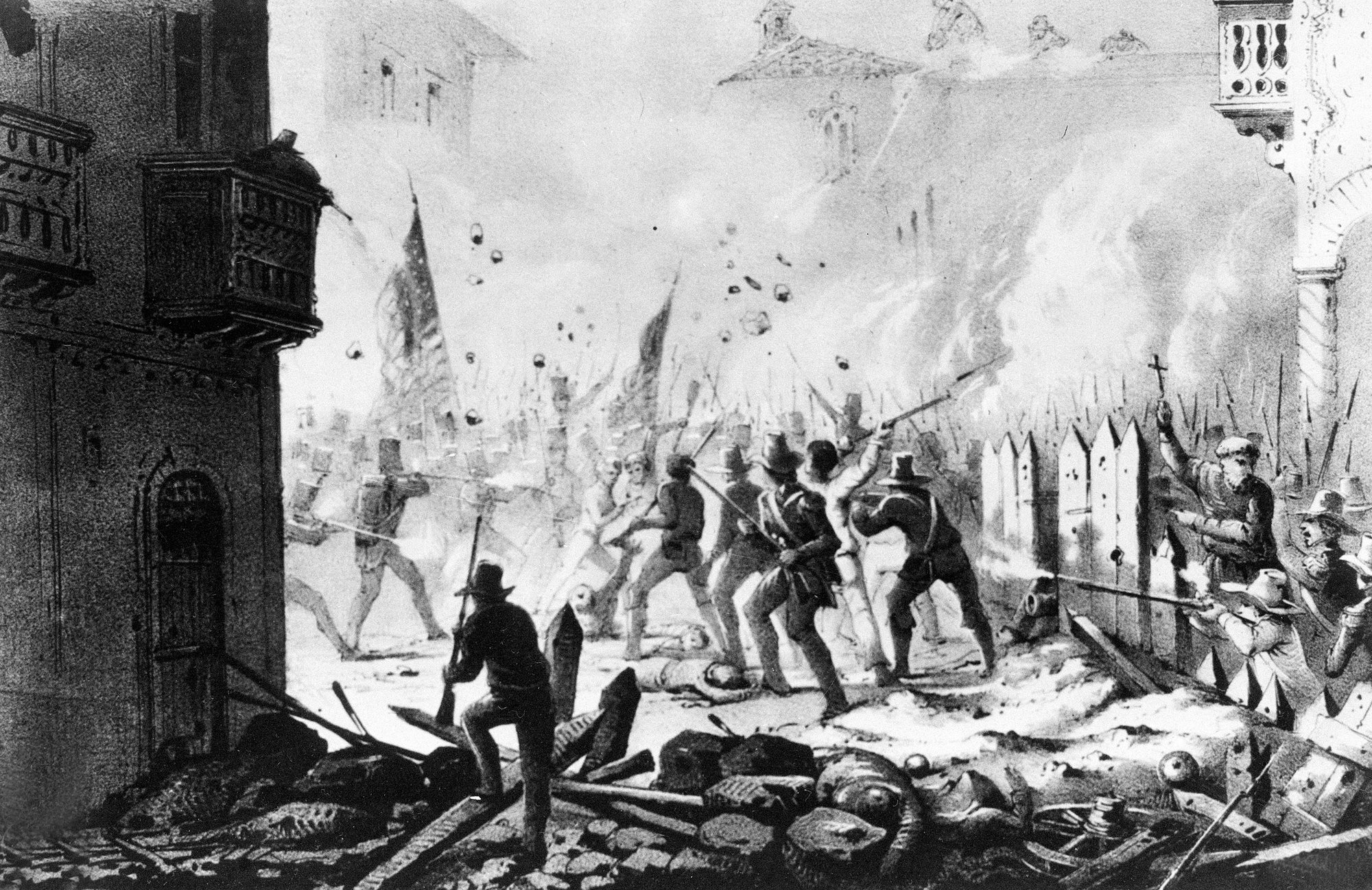
The U.S. gradually began to adopt a more interventionist approach, particularly in the Caribbean and Central America. One of the most notable examples of this was the U.S. involvement in the Panama Canal. The U.S. wanted to build a canal to connect the Atlantic and Pacific Oceans, and the Panama region, which was then part of Colombia, became a focal point of American diplomacy. After a series of failed negotiations, the U.S. supported Panama’s independence from Colombia in 1903, ensuring the construction of the canal.
The U.S. also used the Monroe Doctrine as a pretext for military interventions in countries like Cuba, Nicaragua, and Haiti. For example, the U.S. intervened in Cuba during the Spanish-American War (1898), securing the island’s independence but also establishing a long-term American presence. Similarly, in the early 20th century, the U.S. invoked the Monroe Doctrine to justify its military interventions in Nicaragua and the Dominican Republic under the Roosevelt Corollary, which stated that the U.S. had the right to intervene in Latin American countries to stabilize them if they were unable to maintain order themselves.
The Roosevelt Corollary and the Expansion of U.S. Influence
In 1904, President Theodore Roosevelt expanded the Monroe Doctrine with what became known as the Roosevelt Corollary. This added a more aggressive element to the original doctrine, asserting that the U.S. had the right to intervene in Latin American countries to maintain order and prevent European powers from using financial instability as an excuse to reassert control.
The Roosevelt Corollary effectively transformed the Monroe Doctrine from a shield against European colonization into a justification for U.S. interventionism in Latin America. It led to a series of military interventions by the U.S. in countries like the Dominican Republic, Haiti, and Cuba, which many Latin Americans viewed as imperialistic and paternalistic.
This period marked the beginning of the so-called “Banana Wars,” where U.S. corporations, particularly those involved in agriculture, also played a significant role in shaping the region’s political landscape. American companies like the United Fruit Company had a vested interest in maintaining political stability in the region to protect their economic interests. This corporate involvement further deepened U.S. influence in Latin America and created a cycle of dependency that would persist throughout the 20th century.
The Cold War and the Monroe Doctrine
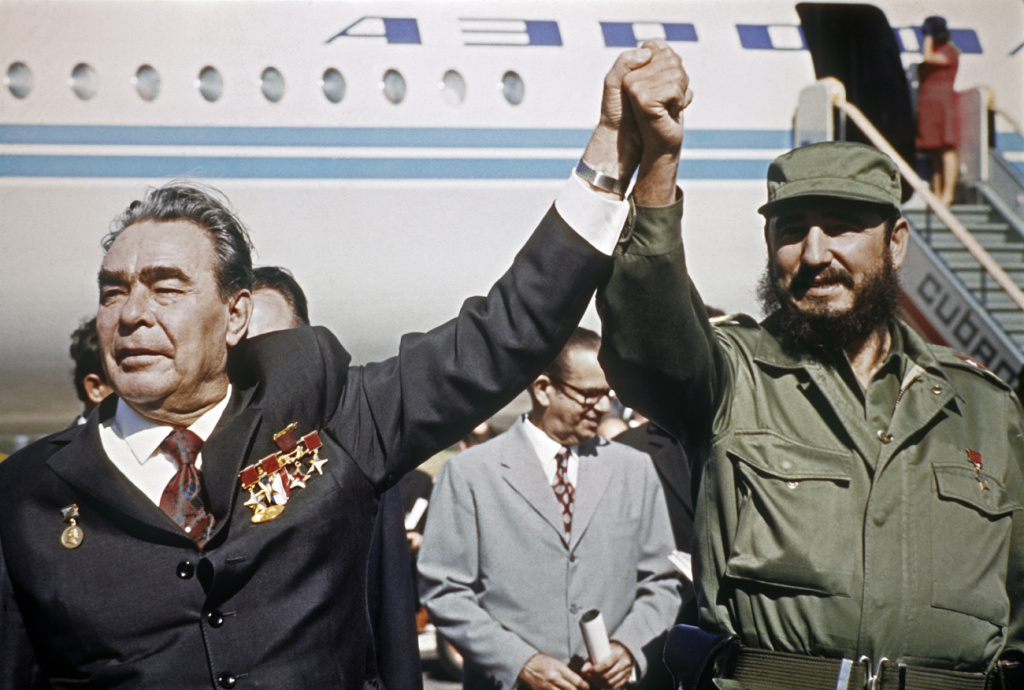
The Monroe Doctrine’s legacy continued to shape U.S.-Latin American relations throughout the 20th century, particularly during the Cold War. In this period, the U.S. saw Latin America as a battleground in the ideological struggle against communism. The Monroe Doctrine, now reinterpreted through the lens of anti-communism, provided the U.S. with a justification for intervening in the region to prevent the spread of Soviet influence.
One of the most dramatic examples of U.S. intervention in Latin America during the Cold War was the Cuban Revolution of 1959. When Fidel Castro overthrew the U.S.-backed dictator Fulgencio Batista, the U.S. quickly moved to isolate Cuba, fearing the spread of communism in the Western Hemisphere. The U.S. imposed an economic embargo on Cuba and later attempted to overthrow Castro’s government through the ill-fated Bay of Pigs invasion in 1961.
In the decades that followed, the U.S. intervened in numerous countries, including Guatemala, Chile, Nicaragua, and El Salvador, either through covert operations or direct military involvement. The Monroe Doctrine’s legacy as a tool for justifying U.S. intervention remained intact, though it was increasingly criticized by Latin American nations, who viewed American actions as imperialistic.
Economic Impact on Latin America
While the Monroe Doctrine was primarily a political document, its implications for Latin America were also deeply economic. The U.S. had a strong economic interest in the region, and the Monroe Doctrine helped pave the way for the expansion of American economic dominance in Latin America.
The doctrine was instrumental in protecting American trade interests in the Western Hemisphere. As European powers were discouraged from interfering in the region, the U.S. gained greater access to Latin American markets and resources. Over time, this helped U.S. companies secure valuable contracts in areas such as agriculture, mining, and oil production.
However, this economic influence often came at a cost for Latin American countries. The U.S. promoted a model of economic development that favored American companies and interests, often to the detriment of local industries. Many Latin American nations found themselves locked into a cycle of dependence on U.S. trade and investment, with little room for independent economic growth.
In the case of agricultural exports, for example, U.S. corporations like the United Fruit Company and the Standard Fruit Company came to dominate large portions of the region’s banana, coffee, and other crop production. These companies wielded significant political power and were often seen as exploitative forces that undermined the sovereignty of local governments.
The Monroe Doctrine in the Modern Era
In the 21st century, the Monroe Doctrine’s relevance has been debated, particularly in the context of globalization and the rise of new global powers. Latin America has become more integrated into the global economy, and many countries in the region have sought to diversify their political and economic relationships beyond the United States.
However, the legacy of the Monroe Doctrine still looms large. The U.S. continues to exert significant influence in the region, particularly in economic and security matters. At the same time, countries like China have begun to invest more heavily in Latin America, challenging the traditional dominance of the U.S. in the region.
The Monroe Doctrine’s idealistic vision of hemispheric solidarity has also been tested by growing political and ideological divisions in Latin America. While some countries, such as Brazil and Mexico, have attempted to maintain a more independent foreign policy, others have aligned more closely with the U.S., particularly in the context of the war on drugs and security issues.
Conclusion
The Monroe Doctrine, originally conceived as a means of protecting Latin American nations from European colonial expansion, has had a profound and lasting impact on the region. Its evolution into a tool for U.S. imperialism, particularly during the Roosevelt Corollary and the Cold War, shaped the political and economic trajectory of many Latin American countries. While it provided some degree of protection from European powers, it also opened the door for U.S. interventionism, corporate influence, and political instability.
In the modern era, the Monroe Doctrine’s legacy continues to influence U.S.-Latin American relations, even as the region becomes more integrated into the global economy. While the doctrine’s original aims may seem outdated, its historical impact is undeniable, and its echoes continue to reverberate in the political, economic, and cultural fabric of the Americas.