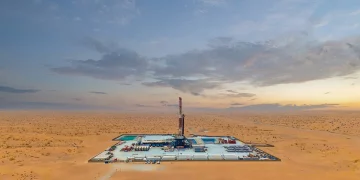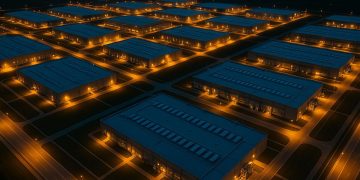










Artificial intelligence, once a distant futurist fantasy, is now one of the Middle East’s most strategically significant forces of change. From the data centers of Riyadh to the autonomous drone labs of Abu Dhabi, from the predictive agriculture platforms in Egypt to the AI-driven fintech ecosystems of Bahrain, the region is undergoing a transformation powered not by oil, but by algorithms.
This shift is not merely technological. It is political, economic, cultural, and even philosophical. It touches national identity, security, diversification, labor markets, and global competitiveness. In the Middle East, AI is more than automation — it is a new strategic asset.
This article explores how Middle Eastern countries are using artificial intelligence across governance, industry, defense, climate, energy, culture, urban design, and future planning. The tone is deliberately dynamic and engaging, but the analysis remains sharply professional.
Let’s step into a region in the midst of digital metamorphosis.
1. Why AI Matters So Much to the Middle East
When examining AI in the Middle East, one must understand the unique context that makes its adoption both urgent and transformative:
1.1 Youthful Digital Populations
The Middle East has one of the youngest populations in the world. Youth are digitally native, hungry for innovation, and eager to participate in high-skill fields. AI is not only an economic tool but a generational opportunity — a pathway to future employment and entrepreneurship in a post-oil world.
1.2 Economic Diversification
Almost every major Middle Eastern economy aims to reduce reliance on hydrocarbons. AI offers:
- New knowledge-intensive industries
- More efficient energy production
- High-value manufacturing
- Automation of resource-heavy sectors
- Data-based optimization for government and infrastructure
In short, AI is a diversification accelerator.
1.3 State-Driven Vision Projects
Unlike many regions where adoption is fragmented, Middle Eastern governments lead from the top. AI is incorporated into long-term national visions:
Saudi Vision 2030, UAE Centennial 2071, Qatar National Vision 2030, Oman Vision 2040, and others. These visions explicitly include digital transformation, smart government, and robotics.
1.4 Global Strategic Position
Situated between Europe, Asia, and Africa, the Middle East seeks not only to adopt AI but to become a global hub for:
- AI regulation
- Digital trade routes
- Cloud infrastructure
- Data centers
- High-performance computing
- AI ethics and innovation frameworks
AI gives regional capitals new geopolitical leverage.
2. The UAE: The Region’s AI Pioneer
If one Middle Eastern country is synonymous with AI leadership, it is the United Arab Emirates.
2.1 Government AI Strategy
The UAE was the first country in the world to appoint a Minister of State for Artificial Intelligence, signaling AI as a national priority rather than a sectoral initiative. Its federal AI strategy emphasizes:
- Health diagnostics
- Transportation automation
- Education modernization
- Smart policing
- AI in space technology
- National data ecosystems
The goal is to integrate AI across government services while fostering world-class research.
2.2 Dubai: The Living Laboratory
Dubai doesn’t simply implement AI — it uses the city itself as a test environment.
Examples include:
- AI-enabled border control (smart gates)
- Predictive traffic systems
- Autonomous vehicle testing zones
- AI-powered logistics at Jebel Ali Port
- Automated municipal inspections using drones and computer vision
Dubai’s governance motto — “build first, iterate fast” — has turned the city into a sandbox for AI entrepreneurship.
2.3 Abu Dhabi’s Deep-Tech Push
Abu Dhabi invests heavily in AI research and computational power, including advanced supercomputers, large-scale cloud networks, and research universities focusing on applied AI.
Its investments aim to position the emirate as a global producer of AI technologies, not merely a consumer.
3. Saudi Arabia: AI as a Cornerstone of National Transformation
Saudi Arabia’s embrace of AI is monumental — in scale, ambition, and geopolitical intent. AI is written into Vision 2030 as a structural tool for national reinvention.
3.1 AI-Driven Smart Cities
Saudi Arabia is building some of the world’s most technologically advanced cities:
NEOM
A giga-project designed as a fully AI-integrated urban ecosystem, where:
- Every building, service, and transportation node feeds data into a citywide cognitive platform.
- Robots assist in logistics, construction, and hospitality.
- AI optimizes everything from energy grids to civil services.
NEOM’s ambition: a city that learns and self-improves.
The Line
A futuristic linear city with no roads or emissions, relying heavily on:
- Autonomous mobility
- AI-regulated resource distribution
- Predictive maintenance
- Intelligent environmental control
Saudi Arabia sees AI as a backbone of next-generation urban design.
3.2 Energy Optimization
Saudi Aramco uses AI for:
- Predictive drilling
- Asset monitoring
- Fuel efficiency modeling
- Hazard detection
- Geological analytics
This improves both profitability and sustainability.
3.3 AI in Governance
Saudi Arabia uses algorithms for:
- E-government portals
- Smart documentation systems
- Public service automation
- Security analytics
- Judicial digitization initiatives
The kingdom aims to become an “AI-first” government by the next decade.
4. Qatar: AI for Infrastructure, Security, and Mega-Events
Qatar’s AI adoption accelerated dramatically due to global events like the World Cup, which required high-risk, high-complexity digital coordination.
4.1 AI in Smart Infrastructure
Qatar invests in AI-enhanced:
- Transportation networks
- Stadium management systems
- Cybersecurity frameworks
- Smart command centers
- Environmental monitoring
During major events, AI helped manage crowd flow, emergency response, and real-time analytics.
4.2 Education and Research
Qatar Foundation’s research ecosystem fosters AI development, focusing on:
- Natural language processing for Arabic dialects
- AI ethics
- Robotics in healthcare
- Computational science
4.3 AI in Financial Services
Qatar’s financial sector uses AI for:
- Compliance automation
- Risk analysis
- Fraud detection
- Real-time trading insights
Its goal: become a financial tech hub bridging Asia and the Middle East.
5. Bahrain: Fintech and Regulatory AI Innovation
Bahrain is smaller in size but highly agile, using AI to boost competitiveness.
5.1 Regional Fintech Pioneer
Bahrain’s AI use includes:
- Automated compliance (“RegTech”)
- Machine-learning-enhanced banking services
- Digital identity verification frameworks
- Smart insurance algorithms
5.2 Cloud-First National Strategy
Bahrain was one of the first in the region to adopt a cloud-first policy, making it an attractive destination for:
- AI startups
- Data engineering teams
- Blockchain-AI hybrid applications
5.3 Government Adoption
The Bahraini government uses AI tools for:
- Taxation support
- Licensing automation
- Real-time economic dashboards
- Smart public-service feedback analysis
Its strength lies in flexible regulation and speed of implementation.

6. Oman: AI for Sustainable Development and Industry
Oman’s AI strategy focuses strongly on environmental management, logistics efficiency, and industrial transformation.
6.1 Environmental AI
Oman uses AI to monitor:
- Marine ecosystems
- Oil spill risks
- Water resource levels
- Desertification progress
- Fisheries optimization
Given Oman’s biodiversity and long coastline, sustainability-focused AI is both urgent and strategic.
6.2 Industrial Modernization
AI supports:
- Mining analytics
- Smart logistics at ports
- Manufacturing automation
- Predictive machinery maintenance
6.3 Education and Upskilling
Oman invests in AI training programs tied directly to local industries, ensuring digital skills match workforce needs.
7. Kuwait: AI for Healthcare, Security, and Resource Management
Kuwait uses AI primarily for sectors with direct human impact.
7.1 Healthcare AI Expansion
Applications include:
- Predictive diagnostics
- Radiology automation
- Hospital-wide patient-flow optimization
- Health-record analytics
7.2 Smart Security Systems
Safe-city initiatives include:
- Video analytics
- License-plate recognition
- Crowd detection algorithms
- Threat modeling
7.3 Energy and Infrastructure
Kuwait uses AI to enhance:
- Electricity distribution
- Pipeline safety
- Water desalination efficiency
Its AI trajectory aligns closely with modernization goals and public-sector digitization.
8. Egypt: AI for Agriculture, Transportation, and Education
Egypt has a large population and substantial infrastructure demands, making AI adoption especially impactful.
8.1 AI for Agriculture
AI technologies support:
- Soil monitoring
- Crop prediction models
- Irrigation automation
- Pest detection systems
These improvements help modernize a traditionally manual sector.
8.2 Transportation and Urban Services
Egypt uses AI for:
- Smart traffic control
- Metro and railway optimization
- Digital ticketing
- Transportation safety analytics
8.3 Education and Public-Sector Modernization
Egypt’s AI programs include:
- Digital-curriculum design
- Remote learning platforms
- Automated administrative systems
AI aids Egypt’s continuing transformation into a more digitized state.
9. Israel: AI as a Security and Deep-Tech Powerhouse
Israel is a global leader in certain AI fields, especially cybersecurity, autonomous systems, and defense technologies.
9.1 National Defense and Intelligence AI
AI use includes:
- Autonomous drones
- Real-time surveillance analytics
- Cyber defense algorithms
- Border-security automation
- Military logistics AI
9.2 Startup Ecosystem
Israel’s AI startups are major players in:
- Robotic process automation
- Computer vision
- Medical AI devices
- Agricultural tech
- Autonomous mobility
9.3 Scientific Research
Israel invests heavily in applied research at the intersection of:
- AI and physics
- AI and medicine
- AI and climate science
Its innovation ecosystem contributes significantly to regional technology leadership.
10. Cross-Regional AI Trends in the Middle East
To understand the region’s AI landscape fully, it’s useful to identify broader themes.
10.1 Smart Government Everywhere
Middle Eastern countries are pushing quickly toward:
- Digital IDs
- AI-enhanced service portals
- Automated decision support
- National digital twins
- Predictive resource planning
10.2 Massive Investment in Data Centers
The region is positioning itself as a global cloud hub, with expanding:
- Hyperscale cloud zones
- Edge-AI networks
- High-performance computing clusters
This infrastructure underpins AI growth.

10.3 AI in Climate and Water Management
Given the region’s environmental challenges, AI supports:
- Water desalination efficiency
- Climate modeling
- Renewable energy forecasting
- Extreme-weather predictions
AI is essential for long-term sustainability.
10.4 Robotics and Automation
Robots are increasingly used in:
- Logistics
- Warehousing
- Hospitality
- Construction
- Medical care
Automation addresses labor shortages and expands productivity.
10.5 AI Ethics and Regulation Initiatives
Middle Eastern states are drafting frameworks for:
- Responsible data usage
- AI governance
- Cybersecurity standards
- Ethical automation policies
This regulatory clarity attracts global investment.
11. Sector-by-Sector Breakdown: How AI Is Applied Across the Region
Let’s dive deeper into the most significant sectors where AI is transforming Middle Eastern economies.
11.1 Healthcare and Medicine
AI in Middle Eastern healthcare includes:
- Remote diagnostics for remote regions
- Automated radiology and pathology
- Predictive patient management in hospitals
- AI-assisted surgery
- Virtual nursing systems
- Medical robotics
These improvements enhance clinical outcomes and reduce system strain.
11.2 Oil, Gas, and Energy
Energy remains foundational in much of the region. AI boosts efficiency in:
- Reservoir modeling
- Pipeline integrity checks
- Predictive maintenance of drilling equipment
- Real-time emissions monitoring
- Smart refining processes
- Workforce safety
AI also supports renewable energy planning, a fast-growing segment.
11.3 Transportation and Mobility
The Middle East sees AI as the future of mobility:
- Drone-based deliveries
- AI-driven traffic systems
- Autonomous taxis
- Smart ports and shipping routes
- Predictive public-transport analytics
The region aims to leapfrog legacy systems into autonomous networks.
11.4 Finance and Banking
AI transforms Middle Eastern finance through:
- Algorithmic credit scoring
- Fraud detection
- Automated compliance
- Financial advisory chatbots
- Predictive investment models
Fintech hubs, especially in Bahrain and the UAE, thrive on AI innovation.
11.5 Tourism and Hospitality
AI enhances the visitor experience via:
- Smart hotel assistants
- Real-time language translation
- AI trip-planning tools
- Emotion-recognition systems for service quality
- Robot-assisted concierge services
Tourism-dependent economies benefit enormously from such upgrades.
11.6 Education and Workforce Development
AI helps create:
- Customized learning paths
- Automated grading systems
- Virtual STEM labs
- Remote learning platforms
- Skill-gap analytics for national workforce planning
This is central to preparing citizens for a digital future.
11.7 Defense, Security, and Cyber Intelligence
AI technologies include:
- Drone swarms
- Border surveillance platforms
- AI-assisted intelligence analysis
- Automated cyber defense
- Threat-prediction models
Security remains a major driver of regional AI innovation.
11.8 Environment and Agriculture
AI supports the region’s environmental goals by enabling:
- Water conservation systems
- Smart irrigation
- Soil and crop data platforms
- Marine biodiversity monitoring
- Climate-resilience modeling
This aligns directly with sustainability agendas.
12. Challenges Facing AI Adoption in the Middle East
Despite rapid progress, the region faces challenges.
12.1 Talent Shortages
Demand for AI specialists far outpaces supply, leading to:
- Intense global recruitment
- Large investment in education and upskilling
- Reliance on international expertise
12.2 Data Fragmentation
National data ecosystems are still developing; organizations often keep data siloed.
12.3 Cybersecurity Risks
As digital infrastructure expands, so do cybersecurity vulnerabilities.
12.4 Regulatory Coordination
Harmonizing AI laws and standards across countries remains complex.
12.5 Cultural and Workforce Adjustments
Automation shifts job roles, requiring cultural and economic adaptation.
13. The Future of AI in the Middle East
What’s next? The region is heading toward:
13.1 Fully Automated Smart Cities
AI will orchestrate everything from energy use to emergency response.
13.2 AI Sovereignty
States will develop their own AI models and national data clouds.
13.3 Autonomous Mobility Networks
Driverless taxis, drone delivery highways, and smart freight corridors.
13.4 AI-First Government Services
Governments where most administrative processes are automated.
13.5 Regional AI Research Alliances
Collaborative innovation across Middle Eastern universities and labs.
13.6 AI in Space Programs
Middle Eastern countries are entering the space-tech arena using AI for:
- Satellite analytics
- Planetary imaging
- Deep-space navigation
13.7 The Middle East as a Global AI Hub
With its geography, investment power, and young population, the region is positioned to become one of the world’s leading centers for AI innovation.
Conclusion
Artificial intelligence is reshaping the Middle East on every level — economic, governmental, environmental, cultural, and strategic. The region’s unique combination of youthful demographics, powerful investment capacities, and forward-looking national visions makes it one of the world’s most dynamic AI frontiers.
From smart megacities in Saudi Arabia to fintech innovation in Bahrain, from health-tech advances in Kuwait to autonomous systems in Israel, the Middle East is not simply adopting AI — it is redefining how nations integrate AI into their core identity and future trajectory.
The Middle East stands not on the edge of the AI revolution, but at the center of it.