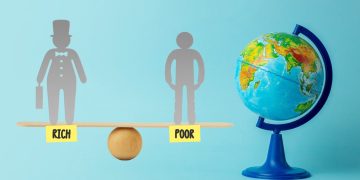









In a world that boasts unprecedented economic growth and technological advancement, it is both perplexing and disheartening to witness global inequalities continuing to widen. Despite the remarkable progress achieved in many areas, the gap between the rich and poor, both within nations and across borders, continues to grow at an alarming rate. The reasons for this persistent inequality are multifaceted and complex, with factors ranging from historical exploitation to contemporary economic policies, technological divides, and even environmental challenges.
Understanding Global Inequality
Global inequality refers to the uneven distribution of resources, wealth, and opportunities among individuals, communities, and nations. These disparities manifest not only in financial terms but also in access to education, healthcare, and even political power. The factors contributing to this inequality are deeply rooted in historical events, systemic structures, and ongoing global trends.
Historical Context: Colonialism and Exploitation
One of the key reasons global inequalities persist today can be traced back to the colonial era. During the colonial period, European powers systematically exploited the resources and labor of countries in Africa, Asia, and Latin America, creating economic structures that favored the colonizers while impoverishing the colonized. This extraction of wealth, combined with the imposition of foreign governance systems, left many countries with weak economic and political institutions that have proven difficult to overcome.
After the colonial powers withdrew, many of these newly independent nations struggled to build stable economies and institutions. The lingering effects of colonialism, including the arbitrary borders drawn by European powers and the loss of human capital, have had a lasting impact on global inequality. Moreover, post-colonial nations often faced unfavorable trade conditions, with the global economic system structured to benefit wealthier nations.
The Role of Globalization
In recent decades, globalization has been touted as a force for economic development and prosperity. The theory behind globalization is simple: as markets open up, trade increases, and nations specialize in what they do best, everyone benefits. However, the reality is much more complicated.
Globalization has undoubtedly led to significant economic growth in certain regions, particularly in East Asia and parts of the Middle East. However, it has also deepened inequalities, both within and between countries. Large multinational corporations have taken advantage of deregulated markets and cheaper labor in developing countries, often to the detriment of local communities and workers. While some individuals in these countries have benefited from increased employment opportunities, many others have seen their wages stagnate or even decline as their labor is exploited by powerful global entities.
In wealthier nations, globalization has led to job losses in industries such as manufacturing, as companies move production to countries with lower labor costs. This shift has created a growing divide between highly skilled workers, who can thrive in the global economy, and those whose skills have become obsolete. The loss of manufacturing jobs, combined with the increasing automation of labor, has exacerbated income inequality in many developed nations.
Technological Divide: The New Frontier of Inequality
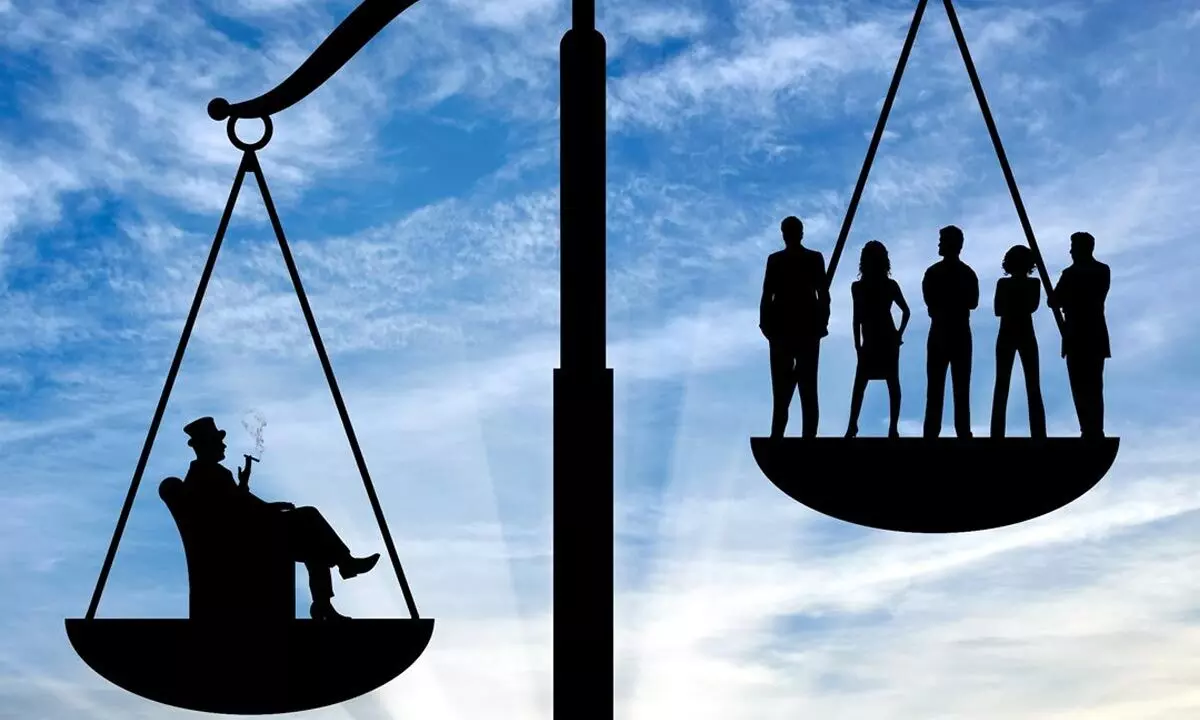
Technological advancements have been a double-edged sword in the fight against global inequality. On one hand, innovations in fields like medicine, agriculture, and information technology have transformed the lives of millions, providing new opportunities for growth and development. However, these advancements have also contributed to the widening gap between the rich and the poor.
The digital divide is one of the most glaring examples of this phenomenon. While wealthier nations and individuals have easy access to cutting-edge technology, many people in developing countries still lack basic infrastructure, such as reliable internet access or electricity. This technological gap limits the ability of individuals and nations to participate in the global economy, further entrenching their marginalization.
Moreover, as technology continues to advance, there is a growing concentration of wealth and power in the hands of a few tech giants, such as Google, Amazon, and Microsoft. These companies have accumulated vast fortunes by exploiting the digital economy, often without providing adequate compensation for the workers who make their products and services possible. The wealth generated by these tech companies has not been equally distributed, with a small group of executives and investors reaping the lion’s share of the profits while the majority of workers remain underpaid or face job insecurity due to automation.
Economic Policies: Aiding the Rich, Neglecting the Poor
Economic policies, both within individual nations and on a global scale, play a critical role in perpetuating inequality. In many countries, the wealthy are able to exert significant influence over policy decisions, shaping laws and regulations to protect their interests. Tax policies, for example, often favor the rich, with loopholes that allow corporations and wealthy individuals to avoid paying their fair share of taxes. This lack of tax revenue means that governments have less funding for public services such as education, healthcare, and social welfare programs, which disproportionately affects the poorest members of society.
On a global scale, international institutions like the World Bank and the International Monetary Fund (IMF) have often imposed austerity measures and structural adjustment programs on developing nations. These policies, which are meant to reduce government debt, frequently result in cuts to essential services and public investments, further exacerbating poverty and inequality. The global financial system is also structured in a way that favors wealthy nations, with developing countries often facing high interest rates on loans and limited access to capital.
The rise of neoliberal economic policies in the 1980s, which advocated for reduced government intervention in the economy and the promotion of free markets, has further contributed to the widening inequality gap. While neoliberalism has spurred economic growth in some regions, it has also led to rising income inequality, as wealth has become increasingly concentrated in the hands of a few. In many cases, this economic ideology has prioritized the interests of multinational corporations over the needs of local communities, leading to job insecurity, stagnant wages, and environmental degradation.

Climate Change: The New Inequality Crisis
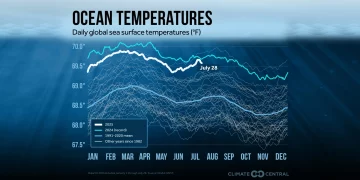
In recent years, climate change has emerged as a major driver of global inequality. The effects of climate change, including rising sea levels, extreme weather events, and droughts, are disproportionately felt by the poorest and most vulnerable populations. In many developing countries, the people who are least responsible for greenhouse gas emissions are suffering the most from the consequences of global warming.
The environmental crisis is also exacerbating existing inequalities. As climate change intensifies, many countries face increasing challenges in terms of food security, water access, and displacement. In some cases, entire communities are being forced to migrate due to environmental changes, creating a new class of climate refugees. These migrants often face discrimination and limited access to resources, further entrenching their marginalization.
Wealthier nations, on the other hand, have the resources to adapt to climate change, whether through technological innovations, better infrastructure, or financial support. The wealth gap between nations, in this case, is further amplified, as rich countries continue to thrive while poor countries struggle to cope with the devastating effects of climate change.
Education and Healthcare: The Building Blocks of Inequality
Education and healthcare are two fundamental areas where inequality is perpetuated. Access to quality education is a key factor in determining an individual’s opportunities in life. In many parts of the world, however, access to education is limited by factors such as poverty, gender, and geography. Children in low-income families are often unable to attend school due to the cost of tuition, uniforms, or transportation, while others may drop out of school to work and help support their families. This lack of education limits their future prospects and keeps them trapped in a cycle of poverty.
Similarly, access to healthcare is another area where inequality is stark. In wealthy nations, individuals have access to world-class healthcare, while in poorer countries, access to basic medical services is limited or nonexistent. The consequences of this disparity are devastating, as preventable diseases continue to claim lives in the Global South, while people in the Global North benefit from advanced treatments and preventative care.
Education and healthcare are not just individual challenges—they are also societal ones. Nations with well-developed education and healthcare systems tend to have more equal societies overall, while those with underfunded or poorly structured systems experience higher levels of inequality.
The Future of Inequality: Will It Continue to Widen?
As we look to the future, it is clear that global inequalities are unlikely to narrow without significant intervention. The forces driving inequality—historical exploitation, economic policies, technological divides, and environmental changes—are deeply entrenched and complex. Addressing these issues will require coordinated global action and a willingness to challenge the systems that perpetuate inequality.
The future of global inequality hinges on several key factors:
- Political Will: Governments must enact policies that prioritize the welfare of the most vulnerable members of society, including progressive tax systems, social safety nets, and investments in education and healthcare.
- International Cooperation: The global nature of inequality means that solutions must be international. Wealthier nations must take responsibility for their role in perpetuating inequality and work to create a fairer global economic system.
- Technological Access: Bridging the digital divide will be crucial in ensuring that everyone has an opportunity to participate in the global economy. Investments in infrastructure, education, and skills training will help ensure that people in developing countries can benefit from technological advancements.
- Climate Justice: Addressing climate change will require wealthy nations to take the lead in reducing emissions and providing support to vulnerable countries affected by environmental changes.
In conclusion, while the reasons for widening global inequality are complex and multifaceted, they are not insurmountable. By addressing the root causes of inequality and working together on a global scale, we can begin to create a more equitable world for future generations.