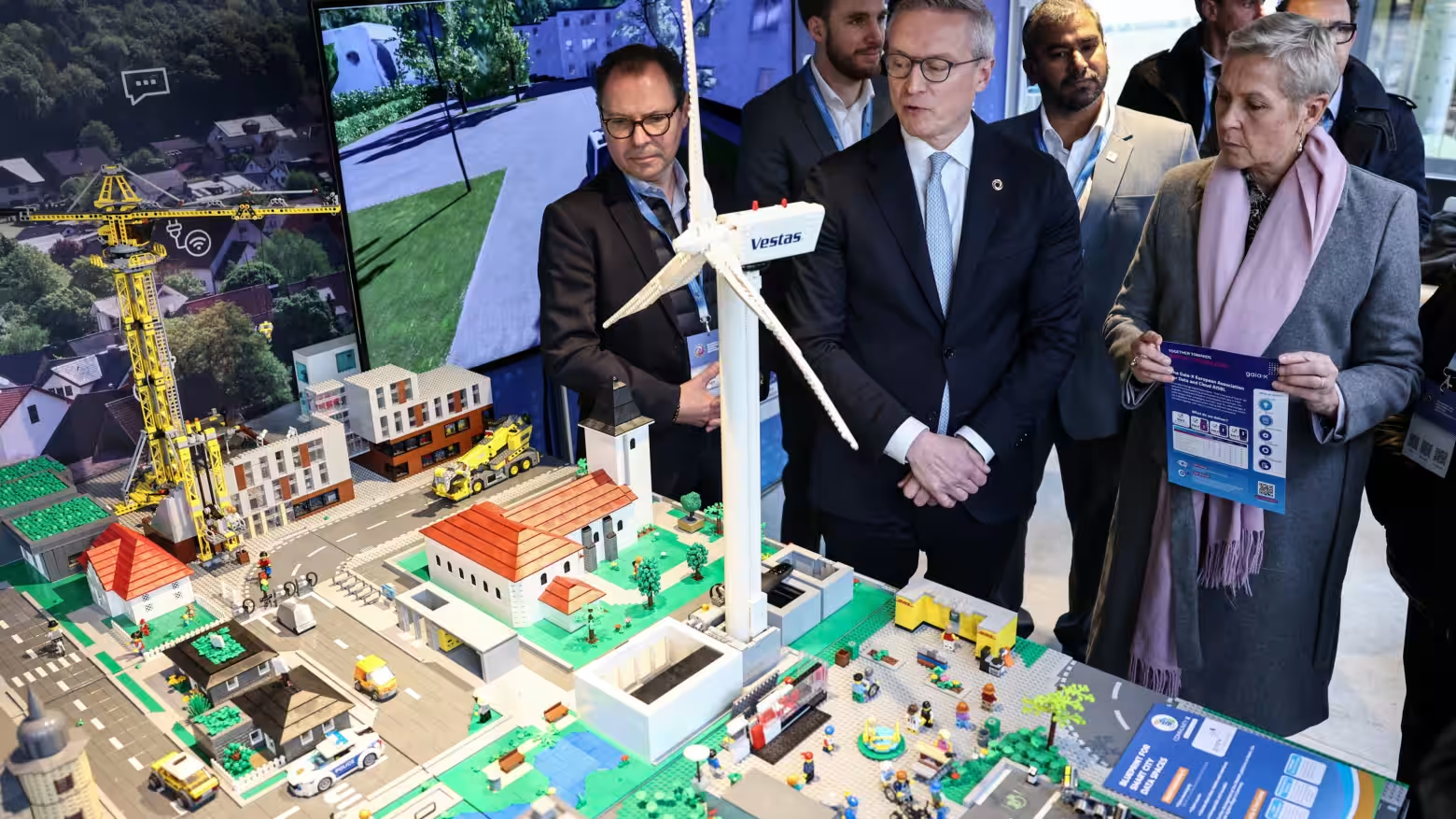










The Asia Pacific region, a kaleidoscope of cultures, economies, and urban landscapes, is witnessing a transformative wave of smart city initiatives. From the bustling metropolises of Tokyo and Singapore to emerging urban hubs in India and Southeast Asia, cities are harnessing technology to redefine urban life. But what does it really mean for a city to be “smart”? And how are countries in this diverse region turning visions of connected, efficient, and sustainable urban spaces into reality?
At its core, a smart city leverages information and communication technology (ICT), the Internet of Things (IoT), big data analytics, and artificial intelligence (AI) to improve the quality of urban living. This encompasses public safety, transportation, energy management, healthcare, governance, and environmental sustainability. The aim is to enhance efficiency, reduce resource consumption, and ultimately create cities that are more livable, resilient, and adaptive to the needs of their citizens.
1. Asia Pacific’s Smart City Landscape: An Overview
The Asia Pacific region is home to some of the world’s largest and fastest-growing urban populations. According to projections, over 50% of the region’s population will reside in cities by 2030. Rapid urbanization brings challenges such as traffic congestion, pollution, energy demands, and strain on public services. Smart city technology is emerging as a solution to these pressing urban challenges.
Countries like Singapore, Japan, South Korea, and China are leading the charge. Singapore’s Smart Nation initiative, launched in 2014, emphasizes a comprehensive approach that integrates urban mobility, e-governance, digital infrastructure, and citizen-centric services. Tokyo has invested heavily in AI-powered disaster management systems, reflecting Japan’s focus on resilience in the face of natural hazards. Meanwhile, South Korea has focused on integrating smart technologies in urban planning, with cities like Songdo offering a glimpse of fully connected urban ecosystems.
Emerging economies, including India, Indonesia, and the Philippines, are increasingly adopting smart city concepts to tackle urban sprawl and infrastructure challenges. India’s Smart Cities Mission, for instance, targets the development of 100 cities with improved infrastructure, digital governance, and sustainable urban solutions.
2. Transportation and Mobility: Smart Roads Ahead
Transportation is one of the most visible areas where smart city technology is making a difference. Congested roads, long commutes, and air pollution are common issues in Asia Pacific cities. Smart mobility solutions, leveraging AI, IoT sensors, and real-time data analytics, are addressing these problems with remarkable results.
Singapore has implemented an intelligent transport system that monitors traffic flow, optimizes traffic signals, and provides commuters with real-time travel information. In Tokyo, smart traffic management platforms use predictive algorithms to prevent congestion, particularly during peak hours and major events. Meanwhile, Chinese cities like Hangzhou have pioneered app-based mobility solutions, integrating bike-sharing, ride-hailing, and public transit under one digital platform.
Electric vehicles (EVs) and autonomous vehicles (AVs) are also becoming integral to Asia Pacific smart city strategies. South Korea and China are heavily investing in EV infrastructure, while Japan is experimenting with autonomous buses and taxis to serve aging urban populations. Smart transportation doesn’t only mean smoother commutes—it also reduces carbon emissions, a critical factor in the fight against climate change.
3. Urban Governance and E-Government
A smart city is incomplete without smart governance. Asia Pacific countries are leveraging digital platforms to make governance more transparent, efficient, and responsive. E-governance initiatives reduce bureaucratic delays, allow citizens to access public services online, and improve decision-making through data-driven insights.
Singapore’s GovTech platform exemplifies this approach, offering digital services ranging from e-payments to citizen feedback systems. In South Korea, the city of Seoul uses a “Data Hub” to monitor urban conditions in real time, guiding policy interventions in areas like air quality, public safety, and traffic management. India’s digital governance initiatives include online portals for utility payments, healthcare services, and citizen complaints, integrating smart solutions into everyday life.
The fusion of governance and technology also enhances disaster response. Japan’s earthquake early-warning systems, which rely on a network of sensors and AI predictions, demonstrate how smart cities can protect lives and property. Across the region, predictive analytics and AI-driven decision support systems are being deployed to improve the speed, accuracy, and effectiveness of urban governance.

4. Energy Management and Sustainability
Energy efficiency and environmental sustainability are central to the Asia Pacific smart city vision. Cities consume more than 70% of global energy, making energy management systems crucial for reducing carbon footprints and lowering operational costs.
Singapore’s energy initiatives focus on smart grids and intelligent building systems that adjust power consumption in real time based on usage patterns. In South Korea, Songdo integrates energy-efficient buildings with a centralized monitoring system, optimizing electricity, heating, and water consumption. China is developing “eco-cities” like Tianjin, designed with renewable energy sources, water recycling systems, and sustainable urban planning.
Renewable energy adoption is also on the rise. Solar and wind power are being integrated with smart grids to provide reliable, sustainable energy. Advanced analytics predict peak usage periods, allowing cities to balance supply and demand efficiently. Moreover, cities are using IoT-enabled sensors to monitor environmental conditions, identify pollution hotspots, and guide green policy interventions.
5. Healthcare and Public Safety
Smart cities are redefining healthcare and public safety in Asia Pacific. AI and IoT-enabled health monitoring devices allow for remote patient care, predictive health analytics, and improved emergency response. In Singapore, telemedicine platforms and AI-driven health apps enhance citizen access to healthcare services. Tokyo employs sensor networks in hospitals to monitor patient conditions, optimize staffing, and manage resources efficiently.
Public safety is another domain benefiting from smart technology. Surveillance systems integrated with AI can detect unusual activities, monitor traffic accidents, and coordinate rapid emergency responses. South Korea has implemented intelligent CCTV networks in urban areas, enabling real-time crime prevention and disaster management. Predictive policing, crowd management analytics, and disaster simulations are increasingly common in Asia Pacific cities.
6. The Role of Data and Connectivity
At the heart of smart cities lies data. Sensors, IoT devices, and digital platforms generate massive amounts of information. Collecting, analyzing, and leveraging this data is crucial to improving urban efficiency. High-speed connectivity, including 5G networks, is enabling real-time monitoring and faster decision-making.
China, South Korea, and Japan are at the forefront of 5G adoption, which supports IoT devices, autonomous vehicles, and AI-driven city management systems. Singapore’s Smart Nation initiative emphasizes ubiquitous connectivity, allowing seamless integration of services from healthcare to transportation. Data-driven decision-making enables predictive maintenance of infrastructure, efficient allocation of resources, and rapid adaptation to changing urban needs.
However, data management also raises concerns regarding privacy and cybersecurity. Asia Pacific countries are increasingly establishing regulatory frameworks to protect citizen data, prevent cyberattacks, and ensure ethical AI deployment in urban governance.
7. Citizen-Centric Urban Design
Technology alone does not make a city smart; citizen engagement and human-centered design are equally important. Smart city initiatives increasingly involve communities in planning, decision-making, and service design. Mobile applications, interactive platforms, and public consultation systems empower citizens to contribute ideas, report issues, and participate in shaping their urban environment.
Singapore has implemented platforms where citizens can propose new initiatives and provide feedback on city policies. In Japan, participatory urban planning programs invite residents to co-design public spaces. India’s smart city projects emphasize inclusive development, ensuring that technological advancements benefit all socio-economic groups.
Urban design in smart cities also focuses on livability—green spaces, walkable streets, accessible public transport, and mixed-use developments. Cities are becoming more than just functional spaces; they are evolving into vibrant ecosystems that balance technology, sustainability, and human well-being.

8. Challenges in Smart City Implementation
Despite rapid progress, Asia Pacific countries face several challenges in realizing their smart city visions. Infrastructure gaps, high costs, and technological complexity can hinder adoption. Emerging economies may struggle with limited budgets, inadequate connectivity, and a shortage of skilled professionals.
Interoperability is another challenge. Integrating diverse systems—from transportation to healthcare—requires standardized protocols and collaborative governance structures. Privacy and security concerns also loom large, as smart cities collect unprecedented amounts of personal and operational data.
Additionally, the digital divide can exacerbate social inequality. Ensuring equitable access to smart city benefits is critical, particularly in regions with significant socio-economic disparities. Citizen education and engagement are key to overcoming these barriers.
9. Regional Collaboration and Knowledge Sharing
Collaboration within the Asia Pacific region is accelerating smart city development. Governments, private sector companies, and academic institutions are sharing knowledge, best practices, and technological innovations. Regional forums and initiatives facilitate cross-border partnerships, enabling cities to learn from successful projects and avoid common pitfalls.
For example, Singapore actively collaborates with neighboring countries to pilot urban solutions, while Japan provides technical expertise on disaster-resilient urban planning. China’s Belt and Road Initiative includes smart city components, fostering regional connectivity and infrastructure development.
International cooperation also extends to standard-setting and research. Universities and think tanks across the region conduct studies on urban data management, AI ethics, and sustainable infrastructure, supporting evidence-based policymaking.
10. The Future of Smart Cities in Asia Pacific
The Asia Pacific region is on the cusp of a technological renaissance in urban living. Emerging trends such as AI-driven city management, autonomous public transport, blockchain-based governance, and immersive digital experiences promise to reshape the urban landscape.
Cities will increasingly function as intelligent ecosystems where infrastructure, services, and citizens interact seamlessly. Predictive analytics will anticipate urban challenges, while AI and IoT will enable real-time solutions. Urban spaces will become more adaptive, resilient, and environmentally sustainable.
The next frontier may involve integrating smart cities with smart regions—interconnected urban clusters that optimize resources, transport, and services across multiple cities. This regional approach could further enhance efficiency, economic growth, and quality of life.
Conclusion
Asia Pacific countries are embracing smart city technology with remarkable vigor and ingenuity. From cutting-edge transportation systems in Singapore and Tokyo to sustainable urban planning in South Korea and China, the region demonstrates diverse approaches to integrating technology into city life. Emerging economies are rapidly catching up, leveraging digital solutions to overcome urban challenges and improve citizen welfare.
Smart cities in Asia Pacific are not just about technology—they are about creating urban environments that are sustainable, resilient, and responsive to human needs. Through citizen-centric design, data-driven governance, and regional collaboration, the region is setting new benchmarks for urban innovation worldwide.
The journey toward smart cities is ongoing, but the vision is clear: cities that are efficient, inclusive, and vibrant, where technology serves the people, not the other way around. For Asia Pacific, embracing smart cities is more than an initiative—it’s a transformation that will define the future of urban life.