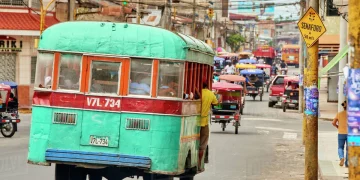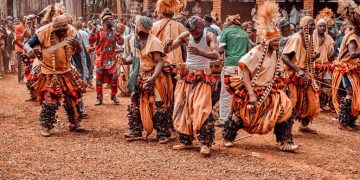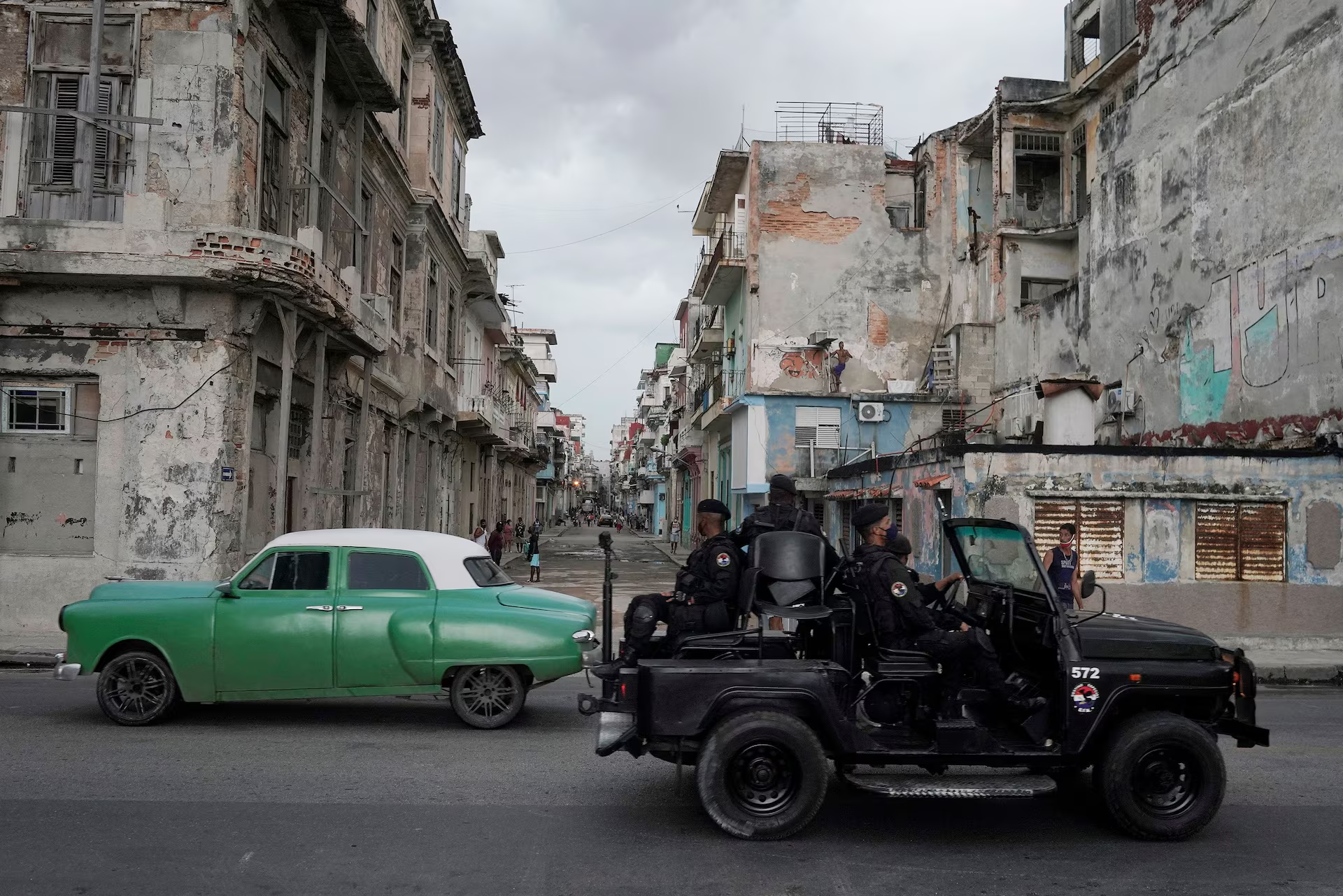


Introduction: A Single Label, Millions of Stories
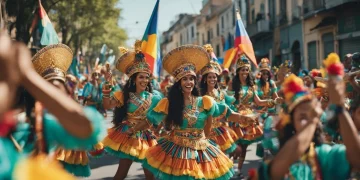
Walk into any U.S. city—Los Angeles, Miami, Chicago, Houston, New York—and you’ll quickly realize that the word Latino (or Hispanic, or Latine, depending on preference) doesn’t describe one single culture, ethnicity, language practice, or racial category. It describes a vast, kaleidoscopic constellation of histories, peoples, migrations, and identities.
The U.S. Latino community is one of the most diverse demographic groups in the entire country—and arguably in the world. What we call “Latino” includes people who trace their origins to more than 20 countries, spanning two continents, two hemispheres, thousands of miles, dozens of Indigenous civilizations, multiple European colonial systems, African diasporas, Asian diasporas, Middle Eastern diasporas, and countless waves of migration.
This article explores why the U.S. Latino community is so extraordinarily diverse—from the deep historical roots of Latin America’s mixed societies to the modern migration patterns that bring millions of people to the United States. We’ll dig into the linguistic richness, the racial complexity, the cultural pluralism, and even the political diversity that shape the Latino experience today.
Get ready: the label may be just one word, but the world inside it is massive.
1. The Word “Latino” Is a Social Umbrella, Not a Biological Category
First, let’s address the elephant in the room: “Latino” is not a race, not a nationality, not a single ethnicity, and not a homogeneous cultural identity.
Instead, it is a pan-ethnic category—a broad umbrella created mostly for bureaucratic, political, and demographic purposes. The U.S. government began using “Hispanic” in the 1970s as a census label. “Latino” grew through community usage, academia, and activism. Neither term implies sameness.
You can find Latino people who identify as:
- Indigenous
- Black
- White
- Asian
- Middle Eastern
- Mixed-race (in dozens of combinations)
- Afro-Indigenous
- Mulatto, mestizo, pardo, moreno, criollo—labels inherited from local histories
You also find:
- Spanish speakers
- Portuguese speakers (e.g., Brazilians, who fit under some definitions)
- Indigenous language speakers (Quechua, K’iche’, Nahuatl, Guaraní)
- People who speak only English
- People who speak both, alongside Spanglish and regional hybrids
The diversity is built into the very concept. It is almost impossible for the category not to be diverse.
2. Latin America Itself Is One of the Most Diverse Regions on Earth
To understand why the U.S. Latino community is so varied, you have to look at Latin America, whose history created some of the most mixed and plural societies in the world.
A. Indigenous Civilizations Shaped the Foundation
Before Europeans arrived, Latin America was home to sophisticated and distinct Indigenous cultures:
- Maya
- Aztec
- Taíno
- Inca
- Mapuche
- Quechua peoples
- Arawak peoples
- Guaraní peoples
- Nahua peoples
And hundreds more. Their languages, foods, agricultural methods, and cosmologies still shape national cultures today.
Mexicans, for example, have Indigenous influences in tortilla-making, music forms, place names (like Oaxaca, Yucatán, and Mexico itself), and linguistic features embedded in everyday Spanish.
B. European Colonization Added Multiple Layers
Though Spain and Portugal dominated colonization, their influences weren’t uniform. Different waves of colonizers arrived from:
- Spain’s Andalusia, Galicia, Basque Country, Canary Islands
- Portugal’s Algarve, Minho, Azores, Madeira
Additionally, other Europeans settled or exerted influence:
- Italians (Argentina, Brazil, Uruguay)
- Germans (Brazil, Chile, Mexico)
- French (Argentina, Haiti, Dominican Republic)
- Irish (Chile, Mexico)
- The Dutch and British in Caribbean zones
This fusion varied region by region.
C. The African Diaspora Transformed Latin America
Millions of enslaved Africans were forcibly brought to Latin America—more than to the U.S.—shaping cultures profoundly:
- Afro-Caribbean cultures in Cuba, Puerto Rico, Dominican Republic
- Afro-Brazilian traditions (Candomblé, capoeira, samba)
- Afro-Colombian communities like Palenque
- Afro-Mexican communities in Guerrero and Oaxaca
African rhythms, foods, religions, and languages deeply influence Latino identities.
D. Asian and Middle Eastern Immigration Added New Threads
In the 19th and 20th centuries, Latin America received immigrants from:
- Japan (especially in Brazil and Peru)
- China (Mexico, Peru, Cuba)
- Lebanon and Syria (Mexico, Colombia, Brazil, Argentina)
- South Asia (Guyana, Trinidad, Suriname)
This created mixed communities like:
- Japanese-Peruvians (Nikkei)
- Lebanese-Mexicans (a major influence on Mexican cuisine—hello, tacos al pastor!)
Latin America is a cultural supercollider. Any community derived from it was destined to be diverse.
3. The U.S. Hosts Latino Communities From Over 20 Countries
The Latino population in the U.S. includes people with roots in:
- Mexico
- Puerto Rico
- Cuba
- Dominican Republic
- Costa Rica
- Panama
- El Salvador
- Guatemala
- Honduras
- Nicaragua
- Colombia
- Venezuela
- Ecuador
- Peru
- Bolivia
- Argentina
- Chile
- Uruguay
- Paraguay
- Brazil (depending on classification)
Each country has distinct:
- histories
- dialects
- cuisines
- racial compositions
- migration patterns
- political realities
- cultural expressions
When all of these communities live side by side in the U.S., diversity is inevitable.
4. Migration Waves Arrived at Different Times and for Different Reasons
Latinos did not come to the U.S. in one migration wave. They arrived over centuries, in layers, each shaped by different global and regional forces.
A. Early Migration (1800s–1930s)
Some of the earliest Latino presences in the U.S. weren’t immigrants—they were absorbed populations. Much of the Southwest used to be Mexico. Therefore, Mexican-American communities in places like Texas and New Mexico have roots deeper than the country itself.
Additionally, early Cuban and Puerto Rican migration formed long-standing communities in New York and Florida.
B. Mid-20th Century Labor Migrations
Programs like the Bracero Program brought millions of Mexican workers to the U.S. between 1942 and 1964.
Caribbean and Central American workers also migrated for agricultural, railroad, and industrial work.
C. Cold War Refugees
Political upheaval created waves of migration:
- Cubans fleeing Castro’s regime
- Dominicans fleeing the Trujillo dictatorship
- Central Americans escaping civil wars and violence
- Chileans, Argentines, and Uruguayans escaping military juntas
These migrants often had different class backgrounds, education levels, and political ideologies.
D. Late 20th–Early 21st Century Economic Migration
More recent immigrants come from:
- Venezuela’s ongoing crisis
- Central America’s economic instability
- Mexico’s evolving labor patterns
Different reasons for migration produce different community profiles.
5. Geography Shapes Latino Cultures—Even Inside the U.S.
Latino communities are not evenly distributed. Regional concentrations produce distinct local cultures.
A. The Southwest: Mexican-American Traditions
California, Arizona, New Mexico, Texas, and Nevada host strong Mexican roots. This produces unique cultural features:
- Chicano identity
- Tex-Mex and Cal-Mex cuisines
- Spanglish dialects
- A continuous cultural exchange across the border
B. The East Coast: Caribbean Latino Strongholds
New York, New Jersey, Florida, and Massachusetts host:
- Puerto Ricans
- Dominicans
- Cubans
- Colombians
These communities bring different rhythms—literally (salsa, merengue, bachata)—and different social dynamics.
C. The Midwest: Emerging Latino Hubs
Chicago’s Mexican and Puerto Rican communities are political and cultural powerhouses. Other cities have rapidly growing communities:
- Milwaukee (Mexican)
- Detroit (Latino auto industry workers)
- Minneapolis (Ecuadorian, Mexican)
D. The South: Recent Growth
States like Georgia, North Carolina, and Tennessee have seen explosive growth in Mexican, Central American, and South American populations.
Different regions shape different hybrid identities.
6. Language Adds Another Layer of Diversity
Not all Latinos speak Spanish—and those who do speak it differently.
A. Dialect Variety
Spanish dialects vary widely:
- Mexican: uses ustedes for plural “you,” strong Indigenous vocabulary
- Caribbean: rapid speech, dropped consonants, African phonetic influences
- Andean: Quechua-influenced intonation
- Rioplatense (Argentina/Uruguay): uses vos, Italian-influenced melody
In the U.S., these differences create a rich linguistic ecosystem.
B. Spanglish, Code-Switching, and English-Only Communities
U.S.-born Latinos may:
- speak perfect Spanish
- speak limited Spanish
- not speak Spanish at all
- prefer English
- mix both in creative blends
- create hybrid dialects unique to U.S. cities
Language itself becomes a marker of diversity.
7. Racial Diversity Within the Latino Community Is Enormous
Latin America’s centuries of mixing produced a racial spectrum. The U.S. Latino community includes:

- Afro-Latinos
- Indigenous Latinos
- White Latinos
- Asian Latinos
- Mixed-race Latinos of every combination
This racial diversity creates:
- different lived experiences
- different relationships with U.S. racial categories
- different social and economic outcomes
A Dominican in New York might experience American racial dynamics very differently from a Uruguayan in Chicago or a Bolivian in Virginia.
8. Cultural Traditions Vary Widely Across Latino Groups
The richness is endless. Consider just a few categories:
A. Music
- Mexican mariachi vs. reggaeton vs. tango vs. bachata vs. salsa
- Afro-Cuban percussion vs. Andean panpipe melodies
B. Food
- Peruvian ceviche vs. Salvadoran pupusas vs. Mexican mole
- Dominican mangú vs. Argentine empanadas vs. Puerto Rican lechón
C. Religion
While many Latinos are Catholic, you also find:
- Evangelical Christians
- Santería
- Candomblé
- Indigenous spiritual practices
- Jewish, Muslim, atheist, and syncretic traditions
D. Family Structures and Social Norms
Cultural norms around gender, family, humor, and etiquette vary by region.
Latino culture is not one thing—it’s a mosaic.
9. Social Class Diversity Adds Further Complexity
Latino immigrants and U.S.-born Latinos span the entire socioeconomic spectrum:
- farmworkers
- professors
- tech workers
- politicians
- medical professionals
- small-business owners
- actors and musicians
- people experiencing poverty
- people from wealthy families in Latin America
Class shapes:
- migration experiences
- educational opportunities
- political attitudes
- cultural practices
- regional settlement patterns
Two Latinos from the same country can have completely different lives.
10. Political Diversity Reflects Many Histories
Not all Latinos vote the same or think the same. Differences arise from:
- country of origin
- class
- religion
- U.S. region
- personal migration story
- generational status
For example:
- Cuban Americans in Florida often differ politically from Mexican Americans in California.
- Puerto Ricans in New York differ politically from Dominicans in New Jersey.
- Venezuelans in Florida often differ from Central Americans in Texas.
The idea of a monolithic “Latino vote” is a myth.
11. Generational Differences Create New Forms of Diversity
A first-generation immigrant and a third-generation U.S.-born Latino may share heritage but differ deeply in:
- language use
- identity
- social values
- political preferences
- cultural participation
Second- and third-generation Latinos often create hybrid identities that blend U.S. culture and ancestral cultures in new ways.
Examples:
- Chicano identity
- Nuyorican identity
- Dominican-American identity
- Tejano identity
Each new generation adds more diversity.
12. Pop Culture, Media, and Hybrid Identities Evolve Constantly
Latino identity isn’t fixed—it evolves with:
- new music genres (reggaeton, Latin trap)
- new media integration
- bilingual comedy
- social media communities
- cross-border transnationalism
Latinos often live culturally in two countries at once, or in a hybrid culture that exists nowhere except in U.S. Latino communities.
13. The U.S. Latino Community Is Unified by Experience, Not Homogeneity
Despite all the diversity, many Latinos feel connected through:
- shared migration experiences
- shared languages or linguistic features
- shared exposure to U.S. racialization
- shared values around family, food, or community
- shared pop culture references
- shared political issues (e.g., immigration policy)
The unity is not about sameness—it’s about interconnected histories.
14. Why This Diversity Is a Strength
The Latino community’s diversity is a source of:
- creativity
- resilience
- cultural innovation
- economic dynamism
- multilingual capacity
- political evolution
- global connectedness
The group is not a monolith; it is an engine of cultural fusion.
Conclusion: One Name, Infinite Identities
Why is there so much diversity within the U.S. Latino community?
Because the term captures an entire hemisphere of cultures, hundreds of years of mixing, dozens of migration waves, multiple racial identities, many languages, and a vast array of political histories.
Latinos are not one story—they are millions of stories. The diversity is not an accident; it is the essence of the community. It is what makes it powerful, complex, and endlessly interesting.
One word. A whole world.