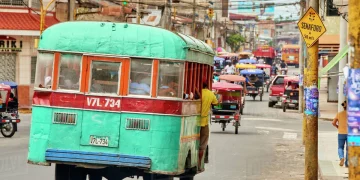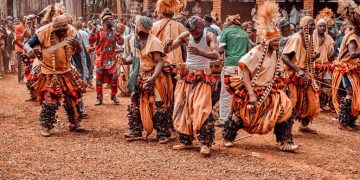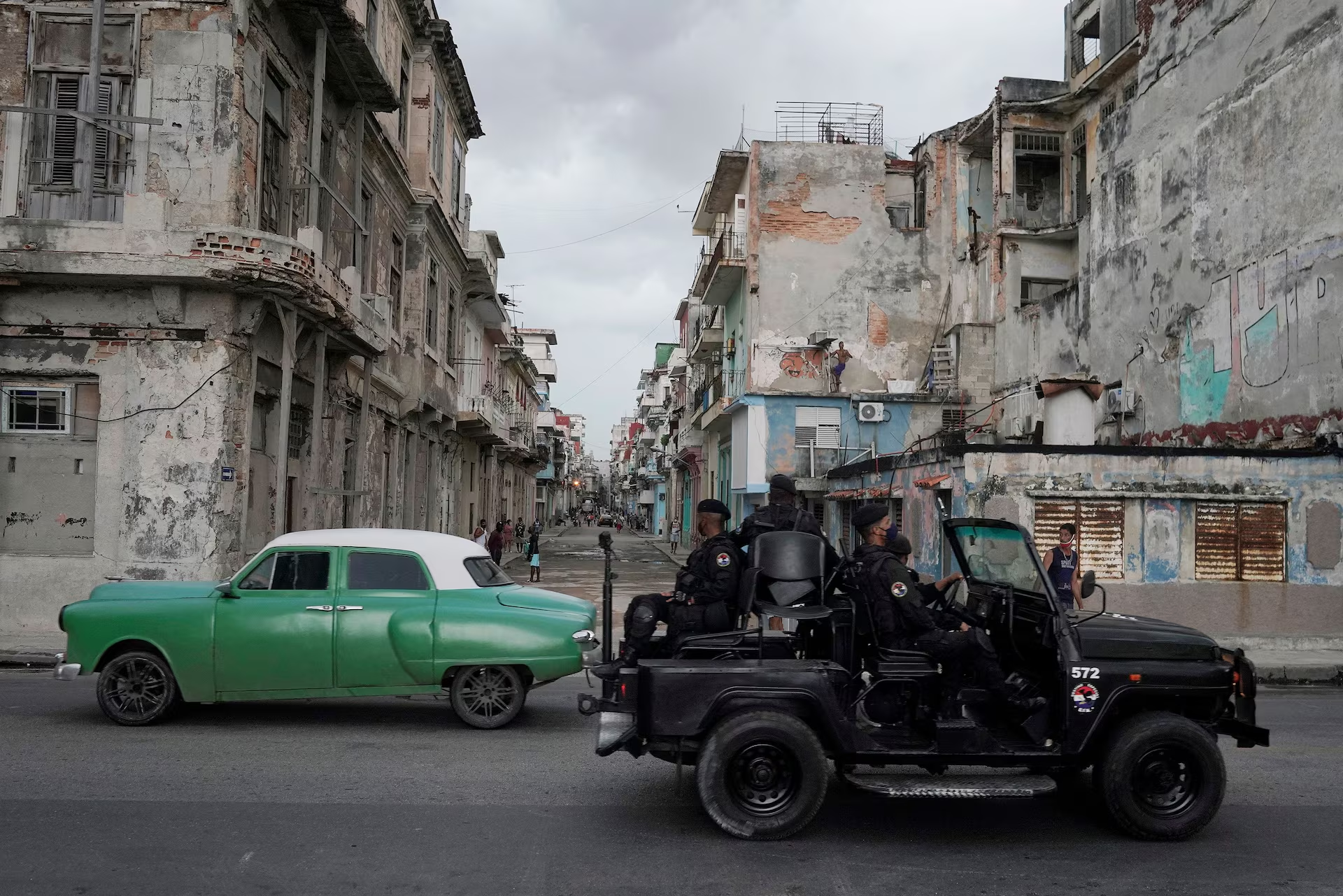





The Atlantic Ocean stretches like an endless blue canvas between Africa and the Americas. Yet, beneath this watery expanse lies a tapestry of human connections that transcend geography, politics, and history. The idea of a “hidden cultural bond” between these continents is more than a poetic notion—it is a tangible reality, woven from centuries of migration, trade, music, religion, language, and culinary traditions. What many fail to realize is that despite the ocean’s imposing width, Africa and the Americas have always shared a subtle, often invisible, network of cultural exchanges that continue to shape identity, art, and daily life on both sides of the Atlantic.
1. The Origins of Transatlantic Connections
The story of African influence in the Americas is inseparable from the history of the transatlantic slave trade. Between the 16th and 19th centuries, millions of Africans were forcibly transported across the Atlantic, primarily to the Caribbean, Brazil, and the southern United States. While the brutality of slavery is undeniable, its cultural ramifications were profound. Enslaved Africans did not simply transplant labor; they carried languages, spiritual beliefs, culinary practices, music, and social structures that left indelible imprints on the New World.
Even before the mass transatlantic exchanges, Africa had already been a nexus of trade networks connecting the Mediterranean, the Indian Ocean, and eventually the Atlantic. These interactions created a resilient cultural infrastructure that could survive displacement and trauma, allowing African traditions to adapt and flourish in the Americas.
2. Language: Echoes Across Oceans
Language is perhaps one of the most subtle yet enduring cultural bridges. In the Caribbean, for instance, creole languages—such as Haitian Creole, Jamaican Patois, and Cape Verdean Kriolu—emerged from the intermingling of African languages with European tongues. Linguists have traced words, phonetic patterns, and grammatical structures in these creoles to West African languages such as Yoruba, Igbo, and Fon.
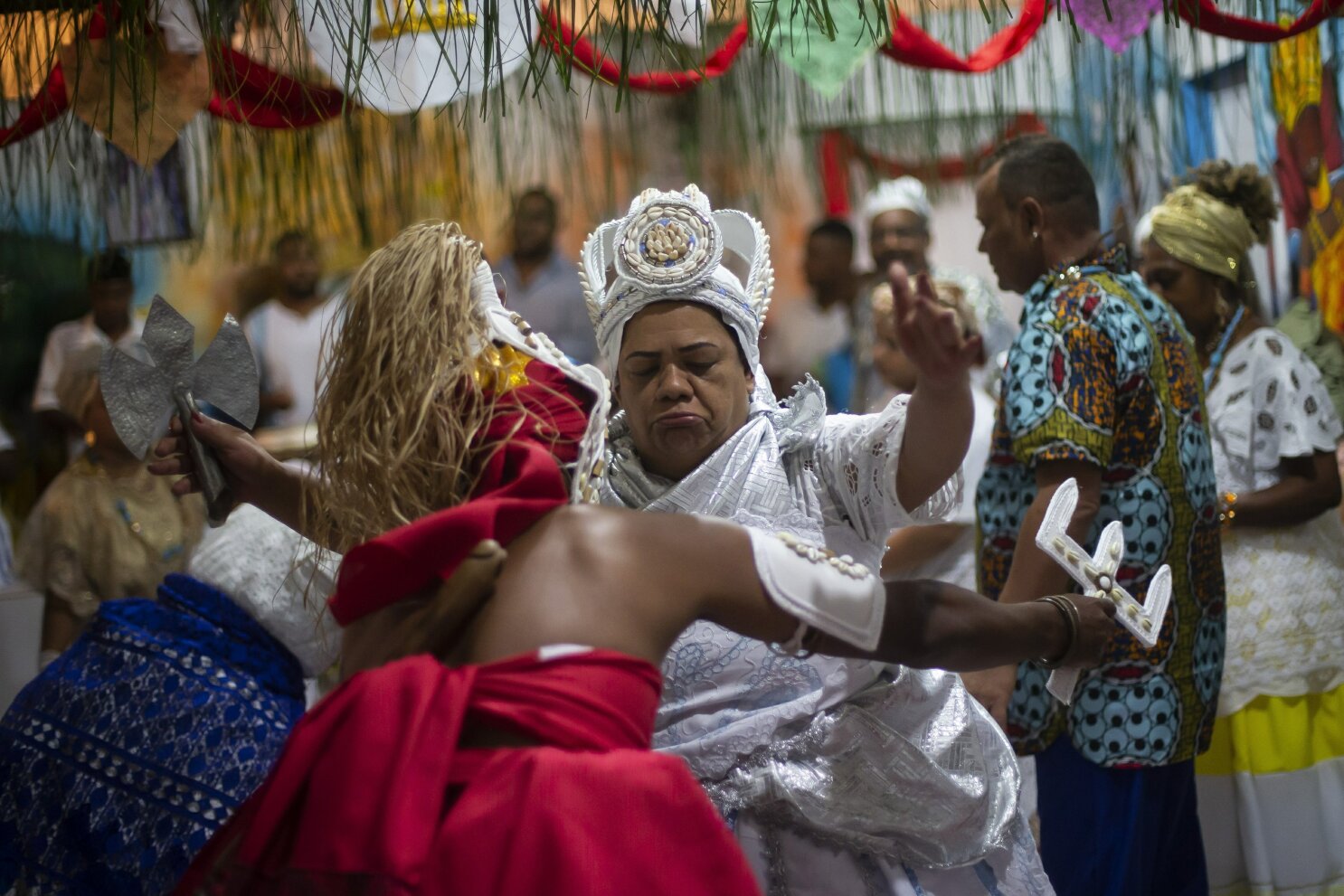
In Brazil, the Afro-Brazilian religion of Candomblé preserves African lexicons and ritual languages that remain largely unintelligible to outsiders but are linguistically alive in their original African forms. These languages are not static relics; they evolve, yet they act as living vessels of memory, carrying African sounds and meanings across continents and generations.
3. Music: A Universal Dialect
If language is subtle, music is overt—a heartbeat of cultural continuity. The rhythms of West Africa—complex polyrhythms, call-and-response structures, and percussion-heavy compositions—became the foundation of much of the music that emerged in the Americas. Genres like samba, rumba, salsa, and jazz bear African fingerprints, even if the origins are sometimes obscured by centuries of syncretism.
Consider the blues, born in the Mississippi Delta. Its emotional depth, its rhythmic patterns, and its use of the pentatonic scale reflect the musical DNA of enslaved Africans. Jazz, hip-hop, reggaeton, and Afrobeat fusion all trace their ancestry back to these initial African rhythms, demonstrating that the Atlantic was less a barrier than a conduit for cultural transmission.
4. Religion and Spiritual Practices
Religious traditions offer some of the clearest evidence of hidden bonds. Across the Americas, African-derived religions have flourished, often blending with Christianity to form syncretic systems. Candomblé in Brazil, Santería in Cuba, Vodou in Haiti, and Hoodoo in the southern United States each represent a hybrid of African spiritual cosmology and European religious forms.
In these practices, African deities—Orishas, Loa, and spirits—persist in both name and function, providing continuity in ritual, ethics, and cosmology. These religions not only survived the brutality of slavery but also adapted creatively to new environments, creating resilient communities of belief that retain a profound African identity while simultaneously shaping the spiritual landscape of the Americas.
5. Culinary Bridges: Food as Memory

Food is another profound yet often overlooked link. Ingredients such as okra, black-eyed peas, yams, and palm oil traveled with enslaved Africans and became staples in the Americas. Dishes like gumbo, feijoada, callaloo, and jerk chicken demonstrate the survival and transformation of African culinary traditions in new soils and climates.
These foods are not mere recipes—they are edible narratives of migration, adaptation, and survival. Every bite tells a story of oceans crossed, climates endured, and cultures merged. The act of cooking African-inspired dishes in the Americas is a ritual of remembrance, a delicious homage to ancestral ingenuity.
6. Visual Arts and Aesthetic Influence
African influence extends to visual arts, textiles, and aesthetics. The geometric patterns and symbolic motifs seen in African sculpture, textiles, and body art resonate in Afro-Caribbean and Afro-Latin American crafts. Beaded jewelry, carved wooden masks, and woven fabrics serve as conduits of memory, reminding communities of their African heritage even centuries after displacement.
In the Americas, these visual traditions are evident in Carnival costumes, murals, and contemporary art. The interplay of color, pattern, and symbolism is a testament to a deep, ongoing conversation between Africa and the New World, a conversation that speaks without words but with striking visual clarity.
7. Social Structures and Community Practices
Beyond art and ritual, African social structures left an imprint on the Americas. Concepts of communal responsibility, extended kinship networks, and collective decision-making shaped African American, Afro-Brazilian, and Afro-Caribbean communities. The Gullah culture of South Carolina and Georgia exemplifies this: through language, storytelling, farming techniques, and music, it preserves West African traditions in remarkably intact forms.
Similarly, in Afro-Latin communities, capoeira—a martial art that blends dance, music, and ritual—demonstrates how African social principles were creatively adapted for survival and community cohesion. These practices are living testaments to resilience and adaptability, hidden yet powerful bonds linking continents.
8. Literature and Oral Tradition
African oral traditions, including storytelling, proverbs, and epic poems, profoundly shaped literary expression in the Americas. Folktales collected in the Caribbean, the southern United States, and Brazil carry African moral frameworks and archetypes. Characters such as Br’er Rabbit echo African trickster figures like Anansi, illustrating how narrative structures and ethical teachings survived transatlantic displacement.
In contemporary literature, African diasporic writers often draw consciously on these hidden connections, weaving themes of memory, migration, and cultural hybridity into novels, poetry, and essays that resonate across continents.
9. Modern Cultural Revivals
In recent decades, there has been a deliberate effort to reconnect with African roots in the Americas. Festivals celebrating African heritage, music collaborations across the Atlantic, and educational initiatives emphasize shared ancestry and cultural exchange. Movements in fashion, music, and spirituality actively trace their lineages to Africa, highlighting that this hidden bond is not merely historical—it is actively alive and evolving.
Globalization and digital communication amplify these exchanges. Social media platforms, virtual communities, and international collaborations allow African and American artists, chefs, writers, and spiritual leaders to engage in dialogues that reinforce this long-standing cultural relationship.
10. Challenges in Recognizing the Bond
Despite this rich tapestry, the hidden cultural bond is often underrecognized. Historical erasure, systemic racism, and the tendency to compartmentalize cultures obscure the connections that traverse oceans. Understanding these bonds requires more than surface-level acknowledgment; it demands attentive listening to music, participation in rituals, reading literature, tasting traditional foods, and recognizing social practices that have African origins.
Only by immersing oneself in these cultural currents can one appreciate the subtle yet profound ways in which Africa and the Americas remain intertwined.
11. The Bond in Everyday Life
This hidden connection manifests in everyday life, sometimes in ways so familiar that they are taken for granted. The syncopation in popular music, the use of African ingredients in mainstream cooking, community-oriented celebrations, and the storytelling traditions in neighborhoods from New Orleans to Salvador—all these examples demonstrate a continuous, living link.
Even sports and games can carry African legacies. For instance, capoeira-inspired movements are present in modern dance, martial arts techniques, and performance art. These threads reveal that cultural bonds are not just relics—they are dynamic, constantly evolving in response to changing social and environmental contexts.
12. A Shared Future
The hidden cultural bond between Africa and the Americas is a story of resilience, creativity, and continuity. It challenges simplistic narratives of slavery as solely destructive by highlighting the agency of enslaved peoples in preserving and transforming culture. Understanding these bonds provides a richer, more nuanced appreciation of identity, art, and community in both continents.
Looking forward, this bond offers opportunities for cross-cultural collaboration, education, and artistic innovation. Recognizing and celebrating it fosters mutual respect and shared understanding, emphasizing that despite the ocean that separates them, Africa and the Americas are interconnected by invisible threads of culture, memory, and creativity.
Conclusion
From music and language to religion, food, art, and social structures, the hidden cultural bond between Africa and the Americas is omnipresent, even when invisible to the casual observer. It is a bond forged through survival, creativity, and continuity, surviving centuries of displacement and oppression. This bond is not static—it grows, adapts, and thrives in the modern era, reminding us that culture transcends borders, oceans, and time.
The Atlantic may separate continents physically, but it has long served as a channel for cultural exchange, carrying African traditions to the Americas and influencing the evolution of societies, arts, and identities. Exploring this hidden bond is not just an academic exercise—it is a celebration of human resilience, creativity, and shared history.