




Introduction: A Region at a Turning Point
For much of modern economic history, the Middle East has been viewed through a narrow economic lens—an energy powerhouse, a strategic geopolitical chessboard, a region defined less by capital flows and more by the commodity that generated them. Yet over the past two decades, this paradigm has shifted with astonishing speed. Today, the question is no longer whether the Middle East can diversify away from hydrocarbons; the question is whether it can—or perhaps already is—emerging as a potential global financial hub.
To many observers, the idea that the world’s next major financial center might arise not from New York or London, nor from Singapore or Hong Kong, but from the Gulf, may sound ambitious. But ambition is exactly what the region has embraced. Visionary state strategies, sovereign wealth funds of unprecedented scale, rapid demographic transformation, and a hunger for global relevance are converging to form a singular narrative: that the Middle East could indeed be the world’s next financial center.
This article explores that possibility in depth—its foundations, opportunities, and challenges—and evaluates how credible the region’s bid truly is. And while the region is vast, much of the financial activity revolves around a few dynamic nodes: Riyadh, Dubai, Abu Dhabi, Doha, and increasingly Manama. Together, they are crafting a new regional economic identity—one driven not only by oil but by capital markets, fintech, asset management, and global investment flows.
Let’s examine the story, the strategy, and the stakes.
1. The Legacy of Oil Wealth—and How It Fuels Future Finance
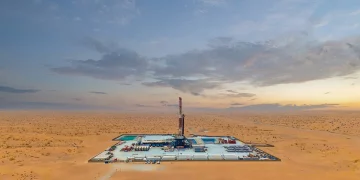
The Middle East’s financial transformation cannot be understood without acknowledging the foundational economic engine: hydrocarbons. Oil and natural gas revenues have not only shaped national budgets but have provided the initial pools of capital that now underpin ambitious financial-sector development.
1.1 Sovereign Wealth Funds: Giants in the Global Arena
The Middle East is home to some of the largest sovereign wealth funds (SWFs) on Earth—massive vehicles designed to invest surplus wealth and secure long-term national prosperity. These include:
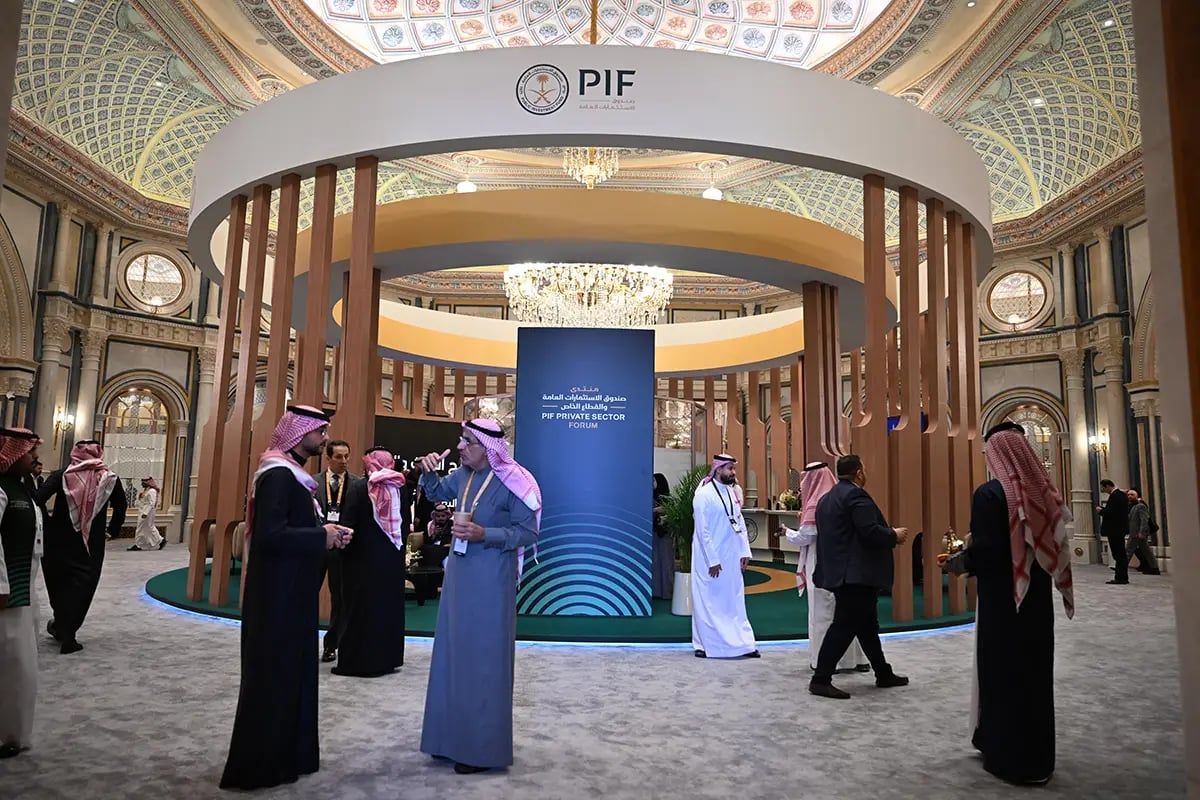
- Saudi Arabia’s Public Investment Fund (PIF)
- Abu Dhabi Investment Authority (ADIA)
- Qatar Investment Authority (QIA)
- Kuwait Investment Authority (KIA)
- Mubadala Investment Company
These funds together manage trillions of dollars in assets. But what’s more important than their size is their strategy. Increasingly, Middle Eastern SWFs are becoming:
- More transparent
- More global
- More aggressive in deal-making
- More oriented toward future technologies
- More active in venture capital and alternative investments
Their presence in global markets—from Silicon Valley to European infrastructure—is reshaping international investment dynamics. The world’s biggest banks, asset managers, and private equity firms now see the Gulf not just as a source of capital, but as a strategic financial partner.
1.2 From Energy Exporters to Capital Exporters
Historically, Gulf revenues flowed outward in the search for safe assets—U.S. Treasuries, global real estate, blue-chip equities. But a new trend is emerging: the Middle East is no longer just exporting capital—it is recapturing capital flows by building domestic markets vibrant enough to keep wealth at home.
This shift is crucial. It represents a change from passive investment to active financial leadership. And it is one of the strongest indicators that the region could indeed evolve into a global financial hub.
2. The Cities Leading the Charge
While “the Middle East” is often spoken of as a unit, the financial ambitions of the region are concentrated in a handful of cities—each with a distinct identity and strategy.
2.1 Dubai: The Pioneer
Dubai remains the region’s most globally connected financial ecosystem. From the early 2000s onward, it positioned itself as a bridge between East and West—offering free zones, flexible regulations, world-class infrastructure, and a lifestyle attractive to global professionals.
Its success is undeniable:
- A strong multinational presence
- A thriving fintech and startup ecosystem
- Robust real estate and tourism sectors
- A globally respected airline and logistics network
- The Dubai International Financial Centre (DIFC), one of the region’s strongest financial regulators
Dubai’s formula is simple but powerful: openness + infrastructure + lifestyle = magnet for capital and talent.
2.2 Abu Dhabi: The Institutional Powerhouse
Where Dubai excels in attraction and agility, Abu Dhabi excels in institutional might. Home to some of the world’s largest sovereign wealth funds, Abu Dhabi has quietly and steadily positioned itself as a serious global financial center. Its focus is more institutional and long-term, with a strategy grounded in:
- High-quality regulation
- Large-scale capital pools
- Government-backed financial initiatives
- Growth of advanced industries and digital sectors
Abu Dhabi is not competing to be the flashiest hub—it is building gravitas.
2.3 Riyadh: The Rising Titan
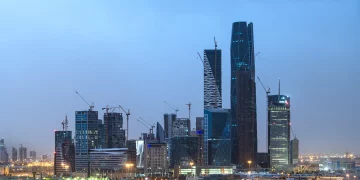
If there is a single city driving the narrative that the Middle East could be the next major financial center, it is Riyadh. Saudi Arabia’s Vision 2030 is a sweeping transformation plan reshaping not just the Saudi economy, but potentially the global financial landscape. Riyadh’s strategy includes:
- Becoming a global headquarters hub for multinational companies
- Scaling its capital markets to rival emerging global players
- Building megaprojects that draw global investment attention
- Rapid liberalization of business regulations
- Attracting global financial firms with powerful incentives
Saudi Arabia’s demographic scale—over 30 million people—makes it uniquely capable of building a domestic financial ecosystem that is sustainable and deep.
2.4 Doha and Manama: Compact but Competitive
Doha, powered by the Qatar Investment Authority, has built significant financial credibility. Its strategy focuses on:
- High-end asset management
- Strategic international investments
- Sports finance and event-driven economics
Manama, Bahrain’s capital, remains a long-time financial hub with a strong banking sector and more liberal regulatory environment. Though smaller in scale, both cities add depth to the region’s financial landscape.
3. Why the Middle East Has Momentum
The emergence of a new financial center requires more than ambition—it requires structural advantages. The Middle East has several.
3.1 Strategic Geography—A Timeless Advantage Reinvented
Located between Europe, Asia, and Africa, the Middle East sits at a crossroads of global trade and increasingly global finance. Financial transactions, investment flows, and business operations benefit from overlapping global time zones. This geographic advantage:
- Facilitates seamless trading cycles
- Supports global banking operations
- Attracts multinational headquarters
- Expands connectivity between continents
In the digital age, geography still matters—and the Middle East sits in a sweet spot.
3.2 Massive Capital Bases
Few regions can match the Middle East’s combination of liquidity, sovereign wealth, and government-backed investment programs. This liquidity offers:
- Stability for capital markets
- Ample funding for startups
- Strong buffers against global shocks
- The ability to attract global asset managers
Capital speaks—and the Middle East has it.
3.3 Ambitious National Visions
Across the Gulf, long-term economic transformation plans are not abstract wish lists; they are funded blueprints with real timelines, real budgets, and real political backing. These visions prioritize:
- Financial sector liberalization
- Non-oil economic diversification
- Technology-driven growth
- Global integration
The consistency of this commitment is a major advantage.
3.4 Young, Globalized Talent Pools
With populations skewing young and globally connected, the region has a workforce eager to participate in modern financial and digital industries. Combined with active policies to attract foreign talent, this creates a skills ecosystem that can support ambitious financial growth.
4. The Sectors Driving the Middle East’s Financial Ascent
To become a global financial center, a region needs not only banks but ecosystems—and the Middle East is building them quickly.
4.1 Capital Markets: From Quiet to Rising
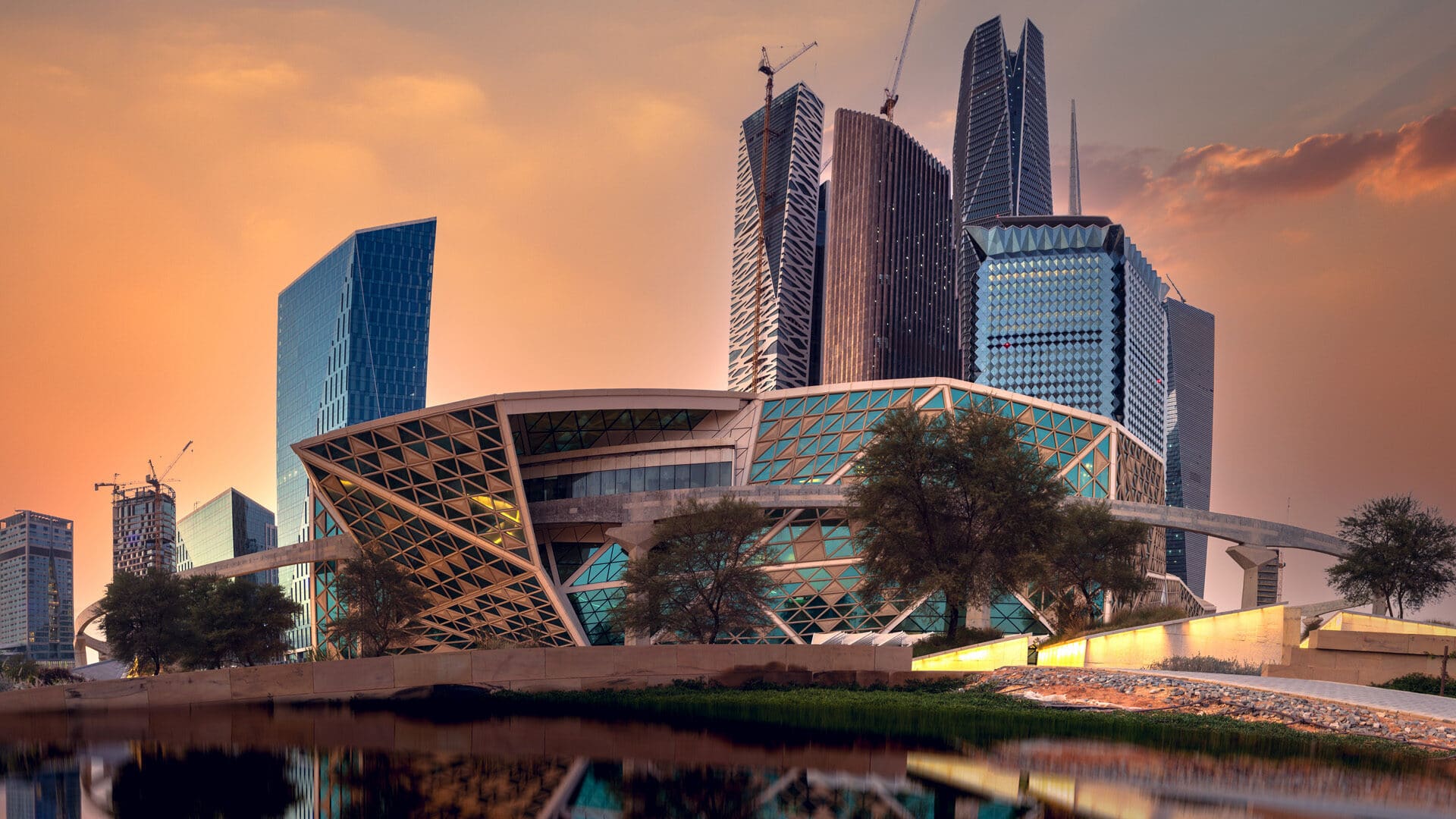
Saudi Arabia’s Tadawul has transformed from a relatively closed local exchange into one of the world’s most dynamic emerging markets. Key milestones include:
- Massive IPO activity
- MSCI and FTSE index inclusion
- Growing foreign investor participation
- Increasing regional integration
The region’s stock exchanges are increasingly liquid, increasingly open, and increasingly connected to global markets.
4.2 Fintech: The New Frontier
Fintech growth is exploding across the region, supported by:
- Sandbox regulatory environments
- Government funding
- Rising consumer adoption of digital payments
- An emerging startup culture
Areas of particular momentum include:
- Digital banks
- Blockchain applications
- Insurtech
- Wealthtech
- Islamic fintech
Fintech is helping the region leapfrog traditional financial systems and build modern infrastructure from the ground up.
4.3 Venture Capital and Startups
The Middle East’s venture capital (VC) ecosystem is expanding rapidly. What was once a niche space is now attracting:
- International VC funds
- Corporate venture arms
- Government-backed funds of funds
- Angel investor networks
Dubai and Riyadh are front-runners, but Abu Dhabi is becoming a heavyweight, especially with its focus on deep tech and advanced industries.
4.4 Real Estate, Infrastructure, and Mega-Projects
Finance hubs grow not only from institutional development but from physical environments that attract global capital and talent. The Middle East is investing heavily in:
- Smart cities
- Mega-tourism destinations
- Logistics infrastructure
- Financial free zones
- Business districts
These developments are not decorative—they are economic engines.
5. Comparative Analysis: How the Middle East Stacks Up
To evaluate whether the Middle East could become the world’s next financial center, it must be compared with existing hubs: New York, London, Singapore, Hong Kong, and Shanghai.
5.1 Advantages Over Traditional Western Centers
The Middle East benefits from:
- Lower taxation
- Faster regulatory decisions
- More flexible labor policies
- Higher growth potential
- Greater capital availability
- Political will for economic transformation
Many global financial firms now find the Gulf operationally and financially more efficient than established Western hubs.
5.2 Advantages Over Asian Hubs
Compared to Hong Kong, Singapore, and Shanghai:
- The Middle East offers deeper pools of instant liquidity
- It is developing strong lifestyle and talent ecosystems
- It occupies a more neutral geopolitical position
- It is aggressively pursuing global corporate relocations
The region cannot yet rival Asia’s scale in trade finance, but its growth trajectory is steeper.
6. The Barriers and Challenges
No rise is without friction. The Middle East faces several real challenges that will determine how far it can go.
6.1 Regulatory Divergence
While impressive progress has been made, regulatory systems still vary greatly between countries—and sometimes even within countries. Harmonization remains partial.
6.2 Talent Competition
Attracting, training, and retaining high-end financial talent is essential. Lifestyle improvements and legal reforms help, but competition with New York, London, and Singapore is fierce.
6.3 Geopolitical Complexity
The region’s geopolitical landscape can affect investor sentiment. Stability has improved, but caution remains in international markets.
6.4 Economic Concentration
While diversification is accelerating, the region is still somewhat dependent on energy revenues. Sustained diversification is crucial.
7. The Future Trajectory: Could the Middle East Actually Become a Global Financial Center?
The idea is no longer hypothetical. Many indicators suggest it is already happening.
7.1 Headquarters Migration
Major global companies are moving regional—and sometimes global—headquarters to Riyadh, Dubai, and Abu Dhabi. This shift is not symbolic; it represents corporate recognition of the region’s emerging centrality.
7.2 Growing Role in Global Capital Markets
The Middle East is increasingly visible in global financial flows:
- Major IPOs
- Strong M&A activity
- International investment partnerships
- Venture capital influence
- Energy transition financing
Its presence is no longer peripheral—it is structural.
7.3 Technology as a Force Multiplier
Where older financial hubs face legacy constraints, the Middle East is building much of its infrastructure from scratch—digital-first, cloud-native, and innovation-driven. This allows rapid adaptation and scalability.
7.4 The Shift from Oil Power to Financial Power
As the world transitions toward new energy systems, Gulf economies are using their current wealth to build diversified, future-oriented financial sectors. This transition positions the region to play an increasingly central role in global financial systems.
Conclusion: The Middle East’s Moment
So, could the Middle East be the world’s next financial center?
The evidence suggests a strong possibility. The region is building the necessary components: liquidity, talent, infrastructure, regulatory frameworks, and global connectivity. Its cities are transforming into vibrant hubs that rival the world’s most established financial centers. And above all, it has something that competitors often lack: a coherent vision backed by political determination and immense financial resources.
Is the journey complete? Certainly not. Challenges remain, and global finance is a fiercely competitive arena. But the Middle East is no longer merely aspiring—it is actively shaping global financial dynamics.
The rise of the region as a major financial center is not a matter of “if” but “when”—and how far it will go.
In the coming decades, the world may look back on this era as the moment when Riyadh, Dubai, Abu Dhabi, and their neighbors redefined what a global financial hub looks like—dynamic, ambitious, and unmistakably Middle Eastern.