








The story of Iran’s nuclear program is one that intertwines science, geopolitics, history, and global security concerns in a highly combustible mix. At first glance, the idea of a nation pursuing nuclear energy for electricity might seem mundane, almost technical. But dig a little deeper, and the stakes become glaringly apparent: the potential for nuclear weapons proliferation, regional instability, and a recalibration of global power dynamics. Understanding why the world watches Iran’s nuclear ambitions so closely requires a multi-layered exploration of history, technology, politics, and strategy.
A Historical Backdrop
Iran’s nuclear aspirations are not new. They trace back to the 1950s, during the era of the Atoms for Peace program, when the United States provided technical assistance to developing nuclear energy programs worldwide. For Iran, the initial goal was largely civilian: building a modern energy infrastructure. However, political upheavals, most notably the 1979 Iranian Revolution, transformed the landscape. The new Islamic Republic viewed nuclear technology not just as energy, but as a symbol of sovereignty and a strategic hedge against regional threats.
During the 1980s, Iran’s focus shifted toward defense and self-reliance, largely in response to the Iran-Iraq War. External sanctions, technological embargoes, and isolation drove Iran to cultivate a domestic nuclear program capable of advancing its scientific and military independence. By the 2000s, suspicions arose internationally that Iran’s nuclear ambitions were no longer confined to peaceful purposes. These suspicions would later catalyze a global diplomatic effort to monitor, constrain, and negotiate limits on Iran’s nuclear activities.
The Science Behind the Concern
At the heart of the anxiety lies uranium enrichment. Nuclear energy programs often rely on uranium, which must be enriched to certain levels to serve as fuel for power reactors. However, the same process can be taken further to produce highly enriched uranium suitable for weapons. This dual-use nature of nuclear technology is why Iran’s enrichment levels are under the microscope of the International Atomic Energy Agency (IAEA) and other global actors.
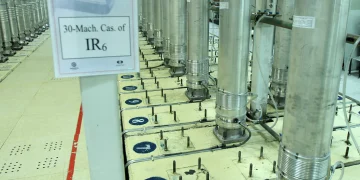
Centrifuges, the machines Iran uses to enrich uranium, are deceptively simple in concept but extremely challenging in practice. They spin uranium hexafluoride gas at extraordinary speeds, separating isotopes with slightly different weights. While enriching uranium to 3-5% is standard for power generation, enrichment to 90% or more produces weapons-grade material. This narrow technical difference magnifies the global risk perception: the same technology used for peaceful energy can, with incremental steps, produce a nuclear bomb.
Regional Implications
The Middle East is already a tinderbox of geopolitical tension, sectarian divides, and historic rivalries. Iran sits at the center of this complex mosaic. Its nuclear program is viewed differently depending on whom you ask. For Tehran, it represents sovereignty, deterrence, and national pride. For neighboring states, particularly Israel and Saudi Arabia, it represents an existential threat.
Israel, a declared nuclear power, has repeatedly expressed concerns that a nuclear-capable Iran would destabilize the balance of power in the region. Saudi Arabia and the Gulf States, traditionally reliant on U.S. security guarantees, fear that Iran’s potential nuclear weapons capability could trigger a regional arms race. In such a scenario, the proliferation of nuclear technology could extend beyond Iran, threatening broader Middle Eastern stability.
The strategic calculus is complicated by Iran’s role in proxy conflicts across the region, including in Yemen, Syria, and Iraq. A nuclear-armed Iran, combined with its regional influence, could embolden hardline factions and make diplomatic resolutions more difficult, further heightening the stakes for global powers.
International Diplomatic Efforts

The global reaction to Iran’s nuclear program has been a mix of diplomacy, sanctions, and cautious engagement. The most notable example is the Joint Comprehensive Plan of Action (JCPOA), signed in 2015 between Iran and the P5+1 countries (the United States, United Kingdom, France, Russia, China, plus Germany). The agreement imposed limits on Iran’s uranium enrichment, capped its stockpile, and allowed rigorous inspections in exchange for sanctions relief.
However, the JCPOA was never universally embraced. Critics argued that it merely delayed, rather than prevented, Iran from developing nuclear weapons. In 2018, the U.S. withdrawal under President Trump and the re-imposition of sanctions reignited tensions. Iran responded by gradually breaching the enrichment limits set by the deal, moving closer to weapons-grade levels. This back-and-forth has kept the international community on high alert and underscored the fragility of nuclear diplomacy.
The Security Dilemma
Iran’s nuclear program illustrates a classic security dilemma: every defensive move perceived by one state as protective is interpreted by another as threatening. Tehran insists that its nuclear ambitions are peaceful, a claim supported by parts of the IAEA inspections. Yet, given Iran’s track record of secretive development in the past, skepticism persists.
For the United States and Europe, the concern is not merely about weapons development but also about credibility and deterrence. If Iran were allowed to develop nuclear weapons unchecked, it could embolden other states with contentious nuclear ambitions, potentially triggering a domino effect. For Israel, it is existential: even a single nuclear strike could have catastrophic consequences. The stakes are profoundly asymmetric but universally compelling.
Technological and Strategic Complexity
Iran’s nuclear program is not just about uranium. Heavy water reactors, plutonium production, missile delivery systems, and advanced centrifuge technologies all contribute to the global concern. Each technological component has dual-use potential: civilian applications on one side, military implications on the other.
Ballistic missile development, in particular, complicates the issue. A nuclear-capable missile gives a state second-strike capability, meaning it could retaliate even after a preemptive strike. This significantly raises the strategic stakes and intensifies global anxieties about miscalculation or preemptive military action.
Economic and Sanctions Dynamics
Economic pressure has been a primary tool for influencing Iran’s nuclear policy. Decades of sanctions targeting oil exports, banking, and trade have had a substantial impact on the Iranian economy. Yet, sanctions are a double-edged sword: while they create pressure, they also reinforce nationalist sentiment and encourage self-reliance in nuclear and missile technologies.
The economic aspect underscores a fundamental paradox: the more isolated Iran becomes, the more incentive it has to push forward with domestic technological programs, including nuclear enrichment. Conversely, diplomacy and engagement offer opportunities to curb the nuclear trajectory without military escalation.
The Global Stakes
The concern over Iran’s nuclear program extends beyond the Middle East. It touches on fundamental principles of non-proliferation, international law, and global security architecture. The Treaty on the Non-Proliferation of Nuclear Weapons (NPT), signed by nearly every country in the world, aims to prevent the spread of nuclear weapons while promoting peaceful nuclear energy. Iran, as a signatory, is legally obliged to comply, yet the technical loopholes and enforcement challenges make compliance a gray area.
A nuclear-capable Iran could embolden other non-compliant states, weaken the NPT regime, and force a recalibration of global alliances. The United Nations, NATO, and other international bodies face the complex task of balancing deterrence, diplomacy, and containment in an increasingly multipolar world.
Potential Scenarios
Analysts often outline several potential outcomes for Iran’s nuclear trajectory:
- Diplomatic Resolution: Renewed negotiations could bring Iran back into compliance, limiting enrichment and increasing transparency.
- Gradual Weaponization: Iran could slowly approach weapons capability without overtly producing a bomb, maintaining plausible deniability.
- Full Nuclear Capability: Though unlikely without a major geopolitical shift, a fully nuclear-armed Iran would dramatically alter regional and global security calculations.
- Military Intervention: Preemptive strikes or covert sabotage, while risky, are considered by some states as potential contingencies if diplomatic efforts fail.
Each scenario carries enormous risk, making the world’s attention to Iran’s nuclear program not just justified, but imperative.
The Role of Public Perception
Public perception, both within Iran and globally, shapes policy in subtle but significant ways. In Iran, nuclear technology is a source of national pride, a testament to scientific advancement against external pressure. Internationally, fear of proliferation, combined with media coverage of potential threats, exerts pressure on governments to act decisively.
Misinformation and propaganda can amplify tensions, creating a feedback loop where perception drives policy, which in turn reinforces perception. This psychological dimension is often overlooked but is crucial to understanding why the Iranian nuclear issue is never purely technical.
Lessons for Global Security
The Iranian nuclear issue highlights several broader lessons for global security:
- Dual-use Technology Challenges: Scientific advancements can serve both peaceful and military purposes. Monitoring and verification are essential.
- Diplomacy Over Military Action: Sanctions, agreements, and inspections are preferable to conflict, which could have catastrophic consequences.
- Regional Dynamics Matter: Local rivalries, alliances, and perceptions profoundly affect global strategic calculations.
- Economic Levers Influence Behavior: Pressure and incentives must be carefully calibrated to avoid counterproductive outcomes.
The world’s focus on Iran is a reminder that nuclear technology, while a symbol of progress, carries enormous responsibility and risk.
Conclusion
Iran’s nuclear program is more than a regional concern; it is a global issue that touches on technology, diplomacy, security, and economics. The complexity of the situation arises from the interplay of technical capability, political ambition, historical grievances, and strategic calculations. As long as uranium enrichment, missile development, and regional rivalries continue, Iran will remain a focal point of international scrutiny.
The global community faces a delicate balancing act: deterring nuclear weapon development while respecting sovereignty, using diplomacy without appearing weak, and preventing escalation in a highly volatile region. Watching Iran’s nuclear trajectory is not just about following one country’s ambitions—it is about safeguarding the fragile architecture of global peace and security in the 21st century.