










The Middle East is often regarded as the cradle of civilization, but it is also the birthplace of many of the world’s major religions, making it one of the most religiously diverse regions on Earth. From Judaism and Christianity to Islam, Zoroastrianism, and even various indigenous belief systems, the region has long been a melting pot of religious thought and practice. But why is the Middle East so diverse in religion? To answer this question, we must explore a combination of historical, cultural, geographical, and sociopolitical factors that have shaped the religious landscape of this region over thousands of years.
1. Geographic and Cultural Crossroads
The Middle East’s strategic location at the crossroads of Africa, Asia, and Europe has played a pivotal role in shaping its religious diversity. This geographical positioning made the region a center of trade, migration, and cultural exchange. Ancient civilizations like Mesopotamia, Egypt, Persia, and the Levant thrived in this region, and they brought with them their own spiritual practices and beliefs. As traders, nomads, and conquerors from different parts of the world crossed paths, ideas about gods, rituals, and morality began to merge, leading to the emergence of new religious traditions.
Additionally, the Middle East’s diverse landscapes—from the deserts of Arabia to the fertile plains of Mesopotamia—have created a wide array of environments where different cultures could thrive. This diversity of environments encouraged the development of distinct religious practices, as people adapted their beliefs to the unique challenges and opportunities provided by the land they inhabited.
2. The Birthplaces of Major World Religions
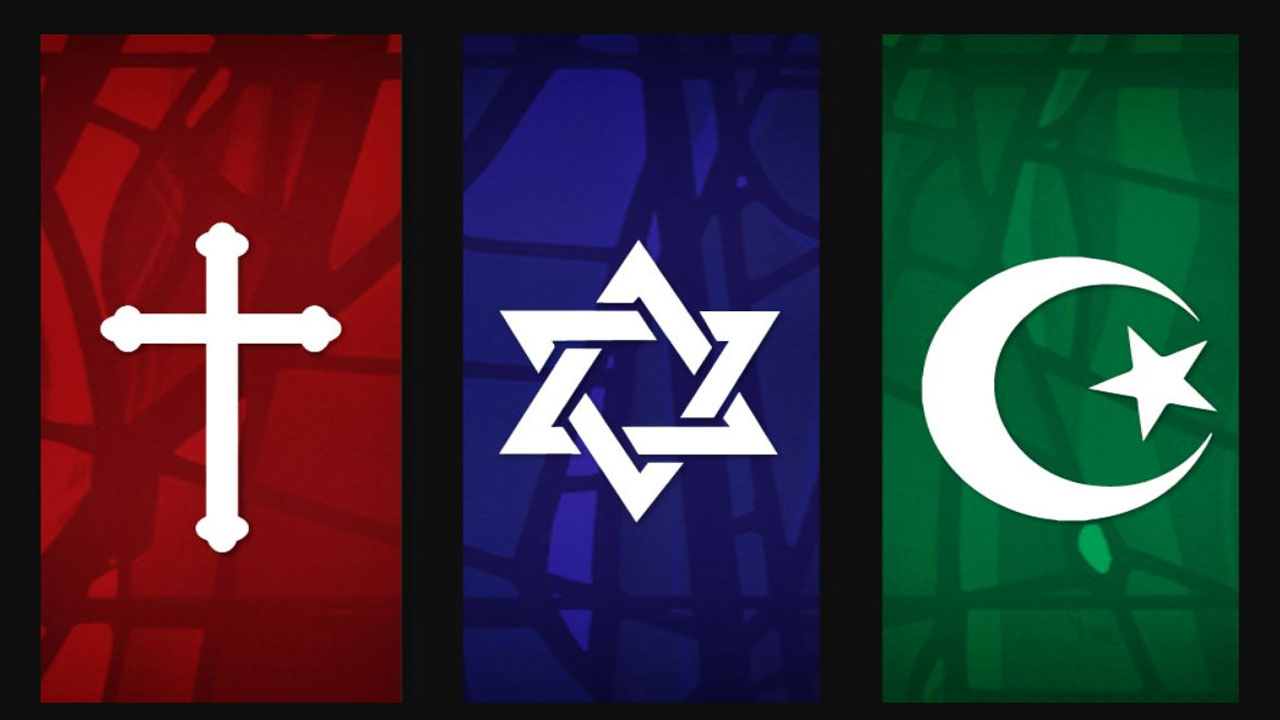
The Middle East is the birthplace of three of the world’s largest monotheistic religions: Judaism, Christianity, and Islam. Each of these religions has its roots deeply embedded in the history and culture of the region, and their development has been shaped by the complex social and political dynamics of the Middle East.
Judaism
Judaism emerged in the ancient kingdom of Israel, around 4,000 years ago, and is considered one of the oldest monotheistic religions in the world. The Jewish faith was revolutionary in its rejection of polytheism, which was prevalent in ancient Mesopotamia and Egypt. The covenant between God and the patriarch Abraham, as described in the Hebrew Bible, laid the foundation for the religion’s theological and ethical principles. Over time, the Jewish people spread throughout the Middle East and beyond, establishing communities in Persia, Egypt, and later in Europe and North Africa.
Christianity
Christianity emerged in the 1st century CE in the Roman province of Judea, a region in the eastern part of the Roman Empire (modern-day Israel/Palestine). It began as a Jewish sect but quickly spread across the Roman Empire, partly due to the missionary work of figures like Saint Paul. Christianity’s early development was heavily influenced by the Hellenistic and Roman cultures in the Middle East. The spread of Christianity was also facilitated by the use of Greek as a common language in the eastern Mediterranean, helping the faith spread across various ethnic and linguistic groups.
Islam
Islam, which emerged in the 7th century CE in the Arabian Peninsula, is the most recent of the major monotheistic religions to have originated in the Middle East. Founded by the Prophet Muhammad, Islam built upon the monotheistic traditions of Judaism and Christianity but introduced its own revelations as recorded in the Quran. Within a few centuries, Islam spread across the entire Middle East and North Africa, eventually becoming a dominant force in the region. The theological and cultural influence of Islam has shaped the political and social structures of the Middle East for more than 1,400 years.
3. Pre-Islamic Religions and Indigenous Beliefs
Before the rise of Islam, the Middle East was home to a wide variety of religious traditions. Many of these were polytheistic and centered around local deities, nature spirits, and ancestor worship. The ancient Egyptians, Sumerians, Babylonians, and Persians all had their own unique pantheons and religious rituals.
In Mesopotamia, for example, religion was intricately connected to the governance of city-states. Each city had its own patron deity, and the king was often seen as the divine representative on Earth. Similarly, the ancient Egyptians had a complex pantheon that included gods such as Ra, Osiris, and Isis, each representing different aspects of the natural world and human experience.
Zoroastrianism, founded by the prophet Zoroaster in the 6th century BCE in ancient Persia, was another significant pre-Islamic religion. Zoroastrianism is one of the oldest known monotheistic religions, and it had a profound influence on the development of other religious systems, including Judaism, Christianity, and Islam. Zoroastrianism’s focus on the duality of good and evil, the importance of moral choice, and the concept of an afterlife resonated across the region.
4. Conquests, Empires, and Religious Diffusion
The Middle East has been the site of numerous empires and conquests, each of which contributed to the spread of different religions across the region. The spread of Islam after the 7th century is perhaps the most well-known example of how empire-building influenced religious diffusion. However, earlier empires such as the Persians, Greeks, and Romans also played key roles in spreading their religious beliefs.
The Persian Empire
The Persian Empire, which stretched from the Indus Valley to the Mediterranean, was home to Zoroastrianism. The Achaemenid dynasty (circa 550–330 BCE) promoted Zoroastrianism as the state religion, which spread through Persia and influenced surrounding regions. This religious and cultural exchange laid the groundwork for later interactions between Persia and the Hellenistic world, and later the Islamic world.
Alexander the Great and the Hellenistic Period
Alexander the Great’s conquest of the Persian Empire in the 4th century BCE resulted in the spread of Greek culture and ideas across the Middle East. Hellenism influenced religious thought, including the development of early Christian theology, which incorporated elements of Greek philosophy and religious syncretism. The Hellenistic period also saw the fusion of local deities with Greek gods, a process known as syncretism, which further diversified religious practices in the region.
The Roman Empire
The Roman Empire, which dominated the Mediterranean and the Near East for centuries, was responsible for the widespread dissemination of Christianity, especially after Emperor Constantine’s conversion in the 4th century CE. Roman roads, infrastructure, and institutions allowed Christianity to spread rapidly through the Middle East, Europe, and North Africa. The religious tolerance exhibited by the Romans in the early centuries of the empire also enabled other faiths to coexist, contributing to the region’s religious diversity.
5. The Role of Trade and Migration

Trade routes have long been a vehicle for the exchange of not only goods but also ideas, including religious beliefs. The Middle East has been home to some of the world’s most significant trade routes, such as the Silk Road, the Incense Route, and the Spice Route. These trade networks connected the Middle East to Asia, Africa, and Europe, facilitating the flow of religious ideas and practices.
For instance, traders from India and Central Asia brought Buddhist and Hindu ideas to the region, though these did not take root as deeply as Christianity, Judaism, or Islam. However, the impact of trade on religious diversity is not limited to exotic beliefs. The spread of Islam along trade routes helped to establish the religion as a dominant force in regions far beyond the Arabian Peninsula, including Sub-Saharan Africa, Central Asia, and Southeast Asia.
Similarly, the migrations of various peoples—such as the Arabs, Turks, Persians, and Kurds—over the centuries have contributed to the complex religious landscape of the region. As these groups settled in new areas, they often brought their religious practices with them, resulting in new forms of religious expression and coexistence.
6. Religious Toleration and Conflict
One of the defining features of the Middle East’s religious diversity is the coexistence of multiple religious traditions, often in close proximity. Throughout much of history, the region has witnessed periods of religious toleration, as well as intense religious conflict.
Periods of Toleration
In certain periods of history, the Middle East has been a relatively tolerant place for religious diversity. The Islamic caliphates, particularly during the early centuries of Islam, allowed for the coexistence of Jews, Christians, and other religious minorities. The concept of “dhimmi” granted religious minorities certain protections under Islamic rule, allowing them to practice their faith in exchange for paying a tax. This system enabled the flourishing of Jewish and Christian communities in cities like Baghdad, Cairo, and Jerusalem.
In the medieval period, the Byzantine Empire, despite its Christian dominance, was relatively tolerant of other religious traditions, as long as they did not challenge the authority of the emperor. Similarly, under the Ottomans, non-Muslims were granted a degree of autonomy, allowing religious communities to govern themselves according to their own laws and customs.
Periods of Conflict
However, religious toleration has not always been the case. The Middle East has also been marked by religious conflict, particularly in more recent centuries. The Crusades, the Sunni-Shia divide, and the rise of radical religious movements have all contributed to the tensions that exist today. Additionally, the modern political landscape of the Middle East, with the establishment of the state of Israel and the subsequent Arab-Israeli conflict, has added another layer of religious and political complexity to the region.
7. Modern Religious Diversity in the Middle East
Today, the Middle East continues to be a region of religious diversity, albeit one that is facing significant challenges. Despite the rise of secularism in some parts of the region, religion still plays a central role in the daily lives of many people. The region remains home to not only the Abrahamic religions of Judaism, Christianity, and Islam but also to a variety of smaller religious communities, including Yazidis, Druze, Zoroastrians, and Baha’is.
The rise of extremist movements, religious intolerance, and political instability, however, has led to the persecution and displacement of many religious minorities in the region. In particular, the Christian population in the Middle East has been steadily declining due to emigration and violence, while the Shia-Sunni divide remains a source of tension in countries like Iraq, Syria, and Yemen.
Conclusion
The Middle East’s remarkable religious diversity is the result of millennia of cultural exchanges, religious innovation, conquest, and migration. From the ancient polytheistic practices to the rise of Judaism, Christianity, and Islam, the region has been a crucible of religious thought. Today, despite political tensions and religious conflict, the Middle East remains a mosaic of beliefs, practices, and identities that reflect its long and complex history.