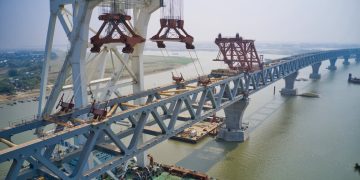










In recent years, China’s Belt and Road Initiative (BRI) has emerged as one of the most ambitious infrastructure and economic projects of the 21st century. Spanning continents and touching regions from Europe to Asia, Africa, and beyond, the BRI aims to foster a new era of trade, investment, and connectivity. Its impact on the Asia-Pacific (APAC) region, a hotbed of economic activity and global geopolitical tension, is particularly significant. But is the BRI truly a game-changer for Asia-Pacific? The answer is not simple, but the initiative’s scope, ambitions, and challenges make it one of the most transformative forces in contemporary global affairs.
1. The Essence of the Belt and Road Initiative
The BRI, launched by Chinese President Xi Jinping in 2013, is an ambitious plan to revive the ancient Silk Road trade routes. It aims to create an interconnected network of roads, railways, ports, and digital infrastructure that spans over 140 countries. The two main components of the initiative are the Silk Road Economic Belt, which focuses on land-based trade routes, and the 21st Century Maritime Silk Road, which emphasizes sea-based connectivity.
In the Asia-Pacific region, the BRI focuses on improving physical infrastructure, such as roads, bridges, ports, and railways, but also incorporates digital infrastructure, including high-speed internet and e-commerce platforms. China sees the BRI as a vehicle for promoting economic growth, easing the burden of overcapacity in certain industries, and asserting its global influence.
1.1. Why the Asia-Pacific?
The Asia-Pacific region is particularly crucial for the BRI due to its dynamic economic growth and strategic importance. Home to more than half of the world’s population and a major center of global trade, APAC is the nexus where the world’s economies converge. Major players such as India, Japan, and the ASEAN countries, along with emerging economies like Indonesia and Vietnam, are essential to the success of the BRI.
In addition to economic drivers, Asia-Pacific offers geographic advantages: it serves as a vital link between Europe, Africa, and the Pacific, making it a natural focal point for China’s expansionist strategy. By enhancing connectivity within the region, China envisions strengthening its trade routes and cementing itself as the dominant power in the area.
2. Economic Impacts: Growth and Opportunity
The BRI’s potential to stimulate economic growth in the Asia-Pacific region is profound. Investment in infrastructure can alleviate some of the bottlenecks that have historically hampered regional development. By improving connectivity, countries can expect smoother trade flows, faster logistics, and more efficient supply chains. This is especially important for smaller and less developed nations, which often lack the resources to build the necessary infrastructure for growth.
2.1. Investment in Infrastructure
Infrastructure is the backbone of any economy, and the BRI promises to address critical gaps in the region. For example, Southeast Asia is a region with significant infrastructure needs. Countries like Cambodia, Laos, and Myanmar have long struggled with inadequate transportation networks and outdated port facilities. The BRI promises to modernize these infrastructures, which could significantly boost their trade capacities. The China-Laos Railway, for instance, is expected to reduce transportation time and cost for goods, improving regional supply chains.

2.2. Regional Trade and Economic Integration
With improved infrastructure, trade within the region can expand rapidly. The BRI promotes regional economic integration by reducing trade barriers and enhancing access to markets. The China-Pakistan Economic Corridor (CPEC) is a prime example of this; it links Pakistan to China through a series of highways, railways, and pipelines. The corridor not only facilitates trade between the two countries but also connects the broader South Asian region with China’s vast market.
Through the BRI, countries that were once isolated can access global markets, especially through China’s vast consumer base. This could provide a much-needed boost for developing economies. Additionally, BRI projects have led to the creation of new trade routes and greater diversification of trade partners.
2.3. Boost to Local Economies
Many countries in the Asia-Pacific region stand to benefit from the influx of Chinese investments. These investments can create jobs, stimulate local industries, and boost overall economic growth. In particular, construction and manufacturing sectors benefit from the capital and expertise provided by Chinese companies.
However, there are also concerns that these benefits may not be equitably distributed. Large Chinese firms, often with ties to the government, tend to dominate BRI projects. This can create issues of dependency, as recipient countries might become overly reliant on Chinese investment and labor. In some cases, local businesses and workers may not reap the full benefits of the projects.
3. Geopolitical and Strategic Implications
While the BRI promises economic growth, its geopolitical implications are more contentious. The initiative’s large-scale investments raise important questions about China’s long-term objectives in the region. Critics argue that the BRI could be used as a tool for China to extend its political influence and control over key countries in Asia.
3.1. Strategic Control and Debt Trap Diplomacy
One of the most prominent criticisms of the BRI is its potential to create “debt traps” for participating countries. Some critics argue that China’s lending practices, particularly for large-scale infrastructure projects, may lead to unsustainable debt burdens for smaller economies. If these countries are unable to repay their loans, China could seize strategic assets. This concern is most evident in Sri Lanka, where the government was forced to lease the Hambantota Port to a Chinese company for 99 years after failing to repay Chinese loans. Similar scenarios have raised alarm in countries like Pakistan, Myanmar, and Nepal.
Furthermore, the BRI has been seen by some as an attempt by China to solidify its geopolitical dominance in the Asia-Pacific. Through infrastructure projects, China can gain access to vital resources, ports, and energy corridors, increasing its regional influence. For example, the Chinese-run Gwadar Port in Pakistan gives China strategic access to the Arabian Sea, which could potentially challenge the influence of regional powers like India.
3.2. Challenges from Regional Powers
The BRI is not without opposition in the region. India, a major player in the Asia-Pacific, has been critical of China’s growing influence, especially in countries such as Pakistan and Sri Lanka. India sees the BRI as part of China’s strategy to isolate it regionally and undermine its influence.
Similarly, Japan has been cautious about the BRI, viewing it as an attempt by China to increase its political leverage through economic means. Japan has instead sought to counterbalance China’s influence by promoting its own infrastructure initiatives, such as the Partnership for Quality Infrastructure.
Additionally, the United States, while not a part of the BRI, has voiced concerns over the project’s potential to increase China’s global influence. As a result, the BRI has become a focal point in the broader geopolitical struggle between China and the West, especially in the context of the US-China rivalry.
4. Social and Environmental Concerns
The BRI’s massive scale also raises significant environmental and social concerns. Many infrastructure projects, especially large-scale construction projects like dams, roads, and railways, can have negative impacts on local communities and ecosystems. Indigenous populations may be displaced, and local ecosystems could be disrupted. The construction of the China-Myanmar Oil and Gas Pipeline, for example, has faced protests due to its potential environmental damage and the displacement of communities along its route.
Environmental sustainability has been a topic of growing importance in the context of the BRI. While China has promised to adhere to more stringent environmental standards, critics argue that the push for rapid development might override these concerns. Moreover, the focus on infrastructure development may overshadow more sustainable long-term solutions, such as renewable energy and green technology.
4.1. Human Rights and Labor Issues
Another critical issue is labor rights. Chinese companies involved in BRI projects often bring in workers from China rather than hiring locally, which can limit job opportunities for local populations and may lead to tensions. Moreover, there are concerns about the treatment of workers on BRI construction sites, where labor laws may be less stringent.
5. Looking Ahead: Is the BRI a True Game-Changer?
The BRI undeniably holds immense potential to reshape the Asia-Pacific region in significant ways. It promises economic development, enhanced connectivity, and new opportunities for trade and investment. At the same time, the initiative presents numerous challenges—both in terms of its geopolitical implications and its environmental and social consequences.
Whether the BRI becomes a true game-changer for the Asia-Pacific depends on how these challenges are addressed. Will China succeed in its ambition to build a new economic Silk Road that benefits both China and its partners, or will it become mired in debt, dependency, and political tension?
The answer is still unfolding, but one thing is clear: the Belt and Road Initiative will be a defining force in the Asia-Pacific region for years to come. Its long-term impact on trade, politics, and development will shape the future of the region—and indeed, the world.