









Introduction: A Region at the Edge of a Cinematic Breakthrough
For decades, conversations about global cinema were dominated by a handful of familiar powerhouses: Hollywood, Bollywood, European arthouse circles, and the booming East Asian industries. Meanwhile, the Middle East—despite its ancient storytelling heritage—was often framed as a periphery player, a region whose films were praised at festivals but rarely positioned as a mainstream global force.
But the 21st century is reshaping the cinematic map. Streaming platforms are collapsing geographic boundaries, film funds are proliferating across the Gulf, and regional directors are breaking into international awards ceremonies with surprising regularity. Middle Eastern cinema, once considered niche, is increasingly visible, ambitious, and strategically poised.
So the question—Can Middle Eastern cinema compete globally?—is no longer theoretical. It’s topical. It’s pressing. And it’s layered, involving cultural dynamics, industry structures, market economics, creative boldness, censorship tensions, audience demographics, and technological shifts.
This article dives deeply into each of these elements with a single goal: to offer a clear, lively, and professional exploration of the Middle East’s cinematic ascent—and whether it can truly rival global industries in reach, influence, and economic power.
1. A Cinematic Landscape of Astonishing Diversity
Not One Cinema—But Many
When people say “Middle Eastern cinema,” they often refer to a monolithic idea. In reality, the region is one of the most culturally cinematic diverse on Earth. Consider just a few examples:
- Iran produces some of the world’s most celebrated arthouse films, known for minimalist realism, philosophical depth, and moral inquiry.
- Lebanon fosters auteur-driven, emotionally charged works that reflect its complex social fabric.
- Egypt stands as the historical giant—its film industry, founded in the 1920s, was once called “the Hollywood of the Middle East.”
- Saudi Arabia, after decades of restrictions, is currently undergoing the fastest cinematic expansion in the world.
- The UAE and Qatar are increasingly recognized as production and financing hubs, strategically investing in global co-productions.
These differences can be so profound that speaking about “Middle Eastern cinema” becomes similar to lumping together all of European cinema—technically possible, but not very precise.
A Shared Narrative Backbone
Despite the region’s diversity, several common factors do unite its filmmaking ecosystem:
- A deep storytelling tradition found in poetry, theater, and oral history
- A youth-heavy population hungry for self-expression
- A political landscape that often fuels cinematic urgency
- A religious and cultural heritage that inspires both creative tension and symbolism
- A long history of censorship shaping narrative innovation
- A new wave of government-backed cultural investments
These shared tensions and inspirations give Middle Eastern films a distinctive emotional density—an ability to balance metaphor with realism, intimacy with scale, and political subtext with human drama.
2. The Rise of Regional Infrastructure and the New Production Ecosystem
For any film industry to compete globally, it needs more than talent—it needs infrastructure. And in the last fifteen years, the Middle East has experienced a dramatic cinematic transformation.
Gulf Investments: Ambition Backed by Capital
Saudi Arabia’s massive cultural overhaul has led to:
- Dozens of new production companies
- International partnerships
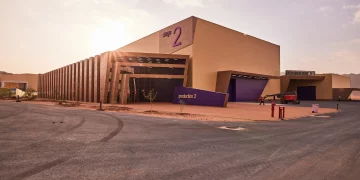
- A surge of cinema construction (hundreds of screens opened in just a few years)
- Significant government-backed film funds
- A national plan to become a global filming hub
The UAE has also cemented itself as a major filming destination, with world-class studios, tax incentives, and an environment hospitable to international productions—from Mission: Impossible to Bollywood blockbusters.
Qatar’s Doha Film Institute continues to be a global player, funding both regional voices and internationally acclaimed arthouse films.
Egypt’s Enduring Legacy
While Egypt’s cinematic golden age has passed, the infrastructure remains extensive: studios, actors, production know-how, and a long-established local audience. Coupled with new attempts to modernize the industry, Egypt remains vital not only as a creative partner but also as a cultural engine for Arabic-language content.
Iran: Talent Over Resources
Despite economic pressures and political constraints, Iran consistently produces globally recognized films. The strength of its cinema lies not in infrastructure, but in:
- Highly disciplined artistic training
- A tradition of metaphorical storytelling
- Directors who have mastered working within limited budgets
This combination makes Iran one of the world’s most admired sources of auteur cinema.
3. The Creative Wave: What Makes Middle Eastern Cinema Distinct?
A Blend of Raw Realism and Symbolic Storytelling
Middle Eastern narratives often interweave:
- Social commentary
- Personal drama
- Political undertones
- Poetic metaphors
- Historical memory
- Religious and cultural symbolism
This blend creates films that feel emotionally thick, layered, and resonant.
Characters Rooted in Reality
The protagonists of Middle Eastern films are often:
- Marginalized individuals navigating systemic pressure
- Women confronting social boundaries
- Youth torn between tradition and modernity
- Ordinary people caught in political or moral conflict
These character arcs carry global relatability but also convey distinctly regional themes.
The Global Appeal
The appeal of these films on the world stage comes from their tension: they are rooted in specific cultures but comment on universal human dilemmas—identity, justice, family, survival, hope.
This duality is one reason the region frequently wins festival awards. Yet winning globally is one thing; competing commercially is another.
4. The Streaming Revolution: A Turning Point for Middle Eastern Cinema
Before streaming, Middle Eastern films had limited distribution. Now, digital platforms have become game-changers.
Why Streaming Platforms Matter
Streaming removes geographic barriers and reduces dependence on cinema exhibition, which is uneven across the region. It gives Middle Eastern films immediate access to international viewers who might otherwise never encounter them.

Local Platforms Rising
Platforms like:
- Shahid
- OSN+
- Netflix MENA originals
…are investing in Arabic-language content at levels previously unseen.
Global Cross-Pollination
Series like AlRawabi School for Girls, Finding Ola, and The Writer have demonstrated that Middle Eastern stories can trend globally when packaged with strong production values and compelling narratives.
This success signals something larger: the world is ready to watch Middle Eastern stories—if they’re marketed well and meet global technical standards.
5. Obstacles: The Barriers Between Middle Eastern Cinema and Global Dominance
Despite its growth, the region faces structural and cultural challenges.
1. Censorship and Creative Restrictions
Filmmakers often navigate strict guidelines concerning:
- Gender roles
- Religion
- Political critique
- Romance
- Social taboos
This can lead to self-censorship, affecting narrative experimentation and genre diversity.
2. Uneven Funding Distribution
While the Gulf enjoys abundant investment, other countries—Lebanon, Iraq, Yemen—struggle with:
- Economic crises
- Infrastructure breakdown
- Political instability
- Limited access to funding
This creates an uneven cinematic landscape where talent does not always meet opportunity.
3. Limited Regional Box Office Power
Many Middle Eastern audiences still favor Hollywood or Bollywood productions. Local films often struggle to compete domestically, let alone globally.
4. Global Market Penetration
Even acclaimed regional films face distribution challenges:
- Limited marketing budgets
- Stereotypical expectations from Western audiences
- Linguistic barriers
- Competition with global giants
5. Lack of Genre Diversity
While dramas and social-realist films flourish, there are fewer regional examples of:
- Science fiction
- High-budget action
- Animated features
- Epic fantasies
- Global-level comedy franchises
Genres with worldwide commercial potential require major budgets and long-term industrial development—still emerging in the Middle East.
6. Success Stories: Proof That Global Competition Is Possible
Middle Eastern cinema has already produced global success on multiple fronts.
Iranian Masters
Directors like Asghar Farhadi, Abbas Kiarostami, and Jafar Panahi have not only won international awards—they have influenced global filmmaking techniques.
Lebanese Breakthroughs
Films such as Capernaum and The Insult achieved Oscar nominations and significant global box office traction.
Palestinian Cinema
A consistent festival presence, Palestinian films showcase remarkable narrative courage and poetic power.
Saudi Arabia’s Fast Rise
New Saudi productions—documentaries, dramas, and comedies—have begun to enter international festivals and streaming platforms with surprising speed.

Egyptian Icons
From classic cinema to contemporary hits, Egyptian filmmakers continue to exert major cultural influence, increasingly connecting to global audiences through streaming.
These successes demonstrate a simple truth: Middle Eastern cinema can win globally when conditions align.
7. Audience Power: The Region’s Biggest Advantage
A Young, Media-Hungry Population
In many Middle Eastern countries, over half the population is under 30. This creates an enormous audience base eager for:
- original content
- relatable stories
- regional representation
- local heroes
- modern narratives
This is a demographic superpower.
Diaspora Viewership
Tens of millions of Middle Easterners living abroad actively seek content from their home region. This diaspora audience acts as a built-in global distribution network—an advantage many other regions do not have.
Cultural Curiosity from Global Audiences
As global filmgoers become more adventurous, Middle Eastern cinema offers:
- fresh perspectives
- unexplored worlds
- artistic credibility
- emotional depth
For many viewers in Europe, North America, and Asia, the region represents new territory—narratively rich and stylistically distinct.
8. Collaboration and Co-Productions: The Global Bridge
Co-productions are essential for any regional cinema seeking international relevance.
Europe–Middle East Partnership
European film funds increasingly support Middle Eastern films, especially from Lebanon, Palestine, and Jordan. These partnerships provide:
- access to equipment
- international distribution
- post-production support
- festival connections
- professional training
The Gulf as a Financial Engine
Qatar, the UAE, and Saudi Arabia have become key investors in global cinema. This financial role allows the region to build influence beyond its borders.
Cross-Regional Collaboration
Directors from Egypt work with Gulf producers. Jordan hosts Hollywood blockbusters. Lebanon supplies actors and creative talent. Palestinian films attract European co-production. Persian cinema continues to inspire global auteurs.
These interlinked networks form a dynamic ecosystem capable of producing films that meet global standards.
9. The Next Frontier: Genre Expansion and Technological Innovation
For the Middle East to fully compete with global industries, genre diversity must expand.
Emerging Genres
There is a budding interest in:
- psychological thrillers
- prestige television dramas
- historical epics
- horror
- sci-fi shorts
- action-comedy hybrids
Young filmmakers are experimenting with genres once considered commercially or politically difficult.
Technological Upgrades
Across the region:
- VFX studios are improving
- post-production facilities are expanding
- sound engineering is modernizing
- digital cinematography is accessible
- virtual production technologies are beginning to appear
These innovations lower barriers to globally competitive filmmaking.
10. Can Middle Eastern Cinema Compete Globally? A Balanced Verdict
The Case for “Yes”
Middle Eastern cinema can compete globally—creatively, artistically, and increasingly commercially. Evidence already exists:
- International awards
- Festival acclaim
- Global streaming hits
- Daring filmmakers
- Rapid Gulf-backed expansion
- Youth-driven content demand
The region brings something the global market craves: original perspectives rooted in ancient culture but expressed through modern cinematic language.
The Case for “Not Yet Fully”
To dominate global markets (not just festivals), the region needs:
- stronger domestic box office performance
- diversified genres
- consistent global distribution channels
- reduced censorship pressure
- sustained training ecosystems
- long-term industrial planning
Right now, Middle Eastern cinema wins globally on artistry but lags on global commercial power—though this gap is closing.
The Most Accurate Answer
Middle Eastern cinema is no longer asking, “Can we compete globally?”
It is already competing—but selectively, strategically, and with uneven success.
The future will depend on:
- whether Gulf investments continue
- whether regional audiences embrace local content
- whether filmmakers push genre boundaries
- whether streaming platforms maintain strong partnerships
- whether the industry can unify across borders
- whether governments support creative freedom
If these conditions align, the Middle East might not only compete—it could emerge as one of the world’s most dynamic cinematic regions.
Conclusion: A Region Standing on the Threshold
Middle Eastern cinema is in motion—fast, vibrant, and unpredictable. It represents a collision of ancient storytelling wisdom, modern industrial ambition, youthful creativity, and sociopolitical complexity.
It is not merely trying to imitate global cinema. It is trying to redefine it.
The question is no longer if the region will ascend—it’s how high, how fast, and how impactfully. And if current trajectories hold, the future of global cinema will not be complete without the voices, visions, and boldness of the Middle East.