









Global internet connectivity—once a futuristic ideal—has quietly become the invisible backbone of modern civilization. It powers economies, education, entertainment, diplomacy, warfare, finance, navigation, social relationships, cultural exchange, and even the functioning of the smallest devices humming in our pockets. Yet as indispensable as it has become, its future reliability is neither guaranteed nor straightforward. In fact, the deeper the world’s dependence grows, the more crucial it becomes to examine whether our global connectivity infrastructure can withstand technological, political, environmental, and socio-economic pressures.
This essay explores that question in detail: Can we truly rely on global internet connectivity for the future? And if so, under what conditions, under what risks, and by whose stewardship?
To answer this, we must look beyond the cables, satellites, and servers—and into the complex web of geopolitics, digital inclusion, infrastructure fragility, cybersecurity, and the accelerating evolution of how humans interact with technology.
I. The Internet: From Elite Tool to Global Lifeline
It’s easy to forget that the early internet was not designed to be a planetary nervous system supporting billions of people. It was a small research network built to withstand partial outages—not to feed HD video to every corner of the world or allow remote surgery in real time.
Today, however, around two-thirds of the world’s population is online. In some countries, internet access is now considered a human right, enshrined in law. Children attend classes through screens. Farmers check weather patterns through apps. Doctors diagnose patients across borders. Millions work remotely—from mountaintops, beaches, cafés, and every geography in between.
And yet, with our global connectivity expanding at unprecedented speed, the question grows sharper: Is this infrastructure resilient enough to be trusted as the foundation of future civilization?
To evaluate the reliability of the future internet, we must examine the ecosystems that sustain it.
II. The Physical Backbone: A Surprisingly Fragile Web
When most people imagine the internet, they picture something vaporous and cloud-like—a floating digital ether. But the truth is far more earthly. The internet is made of:
- 1.4 million kilometers of undersea cables
- Tens of thousands of data centers
- Millions of kilometers of fiber optic lines
- Growing constellations of satellites
Each of these components is astonishingly powerful yet surprisingly vulnerable.
1. Undersea Cables: The Hidden Arteries of the Planet
Over 95% of international data traffic flows through undersea cables—thin glass fibers protected by just a few layers of steel and insulation. These cables carry financial transfers, government communications, streaming content, and logistics data for global supply chains.
Yet they can be damaged accidentally or intentionally:
- Fishing nets, anchors, and storms
- Submarine landslides and earthquakes
- Sabotage or covert operations
- Geopolitical tensions in contested waters
Most cables are repaired within days or weeks, but even a short disruption can cripple regions. A damaged cable in a developing country might shut down banking and hospitals. A severed connection between major powers could affect markets or diplomatic communication.
The global map of cables reveals another concern: choke points. For example:
- The South China Sea
- The Suez Canal
- The Taiwan Strait
- The English Channel
A handful of narrow ocean passages hold enormous strategic weight. This concentration is efficient—but it also amplifies risk.
2. Data Centers: The Factories of the Digital World
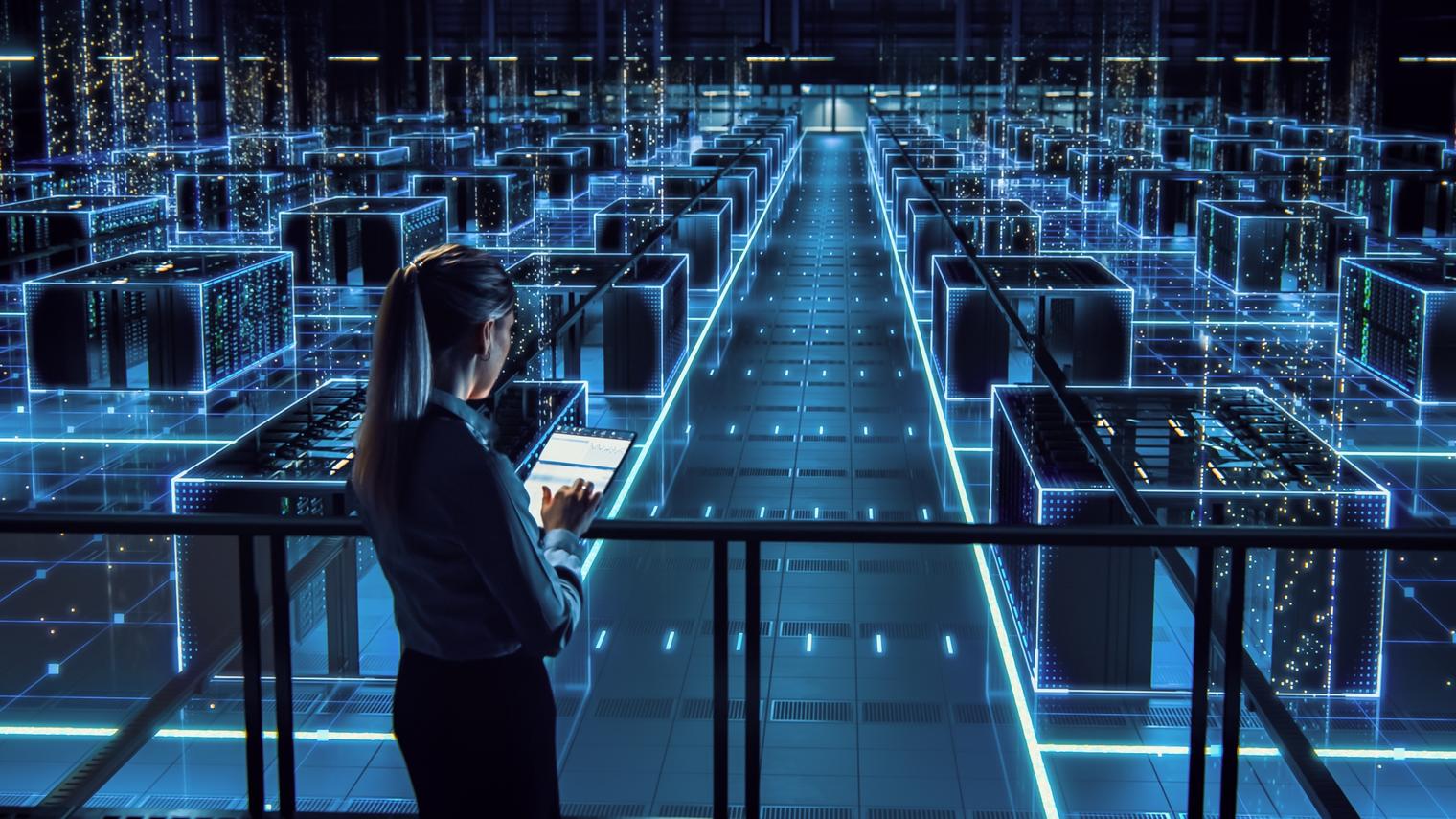
Data centers are massive warehouses of computing power. They require:
- Constant electricity
- Industrial-scale cooling
- Highly controlled environmental conditions
- Physical security
- Redundant connections
While data centers often replicate information across multiple regions, they remain susceptible to:
- Power grid failures
- Heatwaves and extreme weather
- Water shortages
- Physical attacks or intrusions
- Supply chain disruptions for maintenance components
More recently, the enormous energy consumption of data centers—proliferating especially due to AI workloads—has raised questions about sustainability and geopolitical competition for computing resources.
3. Satellites: A Growing but Imperfect Solution
Satellite networks promise global coverage, especially in remote or conflict regions. Low-Earth-orbit (LEO) constellations from major companies are expanding rapidly, offering:
- Faster connectivity
- Lower latency
- Greater coverage
But they face issues:
- Space debris and collision risks
- Solar storms disrupting transmission
- Regulatory disputes over orbital slots
- Vulnerability to anti-satellite weapons
Satellites may boost resilience, but they also introduce new forms of fragility.
III. The Geopolitical Reality: A Fragmenting Internet
The dream of a single, universal, open internet is fading. Instead, the world is drifting toward a “splinternet”—divided by national firewalls, regulatory differences, and geopolitical rivalries.
1. Competing Governance Models
Countries now express three conflicting philosophies:
- The Open Model (EU, parts of Africa, South America):
Emphasizes privacy, rights, and regulated openness. - The Controlled Model (China, Iran, Russia):
Prioritizes national sovereignty and information control. - The Market-Driven Model (U.S., Japan, South Korea):
Innovation-led, commercially oriented, lighter regulation.
The tension between these models creates friction that threatens the dream of seamless global connectivity.
2. National Firewalls and Data Localization
Data localization laws—requiring data to be stored domestically—complicate international systems. They fragment the internet’s underlying architecture and force companies to maintain separate, costly infrastructures.
3. Techno-nationalism and Digital Power Rivalries
Competition for:
- Semiconductor dominance
- Satellite supremacy
- AI leadership
- Undersea cable ownership
- Cyber offense and defense capabilities
…means the internet is increasingly a battleground. Reliability becomes vulnerable to geopolitical storms.
IV. The Cybersecurity Crisis: A Growing Shadow
The more interconnected the world becomes, the larger the attack surface. Cyber threats are now:
- More sophisticated
- More automated
- More state-driven
- More economically damaging
1. Infrastructure Attacks
Critical infrastructure—water, power, hospitals, banking—has become a target for hackers and nation-states. A single breach can disrupt millions of lives.
2. Ransomware and Supply Chain Attacks
Ransomware groups now behave like corporations, offering “malware-as-a-service.” Meanwhile, supply chain attacks—where code injections in widely used software ripple across industries—can be catastrophic.
3. The AI Factor
AI both strengthens defense and amplifies offense:
- AI-generated phishing
- Automated vulnerability scanning
- Deepfake-driven social engineering
The future internet must be resilient against intelligent threats capable of adapting at machine speed.
V. The Social Dimension: Inequality, Access, and Digital Dependence
Even if infrastructure and geopolitics were perfect, the reliability of global internet connectivity depends on human factors too.
1. The Persistent Digital Divide
Despite expanding connectivity, billions still lack:
- High-speed internet
- Affordable devices
- Digital literacy
A globally reliable internet is not just about infrastructure—it requires inclusive participation.

2. Overdependence and Systemic Vulnerability
Digital dependence creates systemic risk:
- A GPS outage could cripple aviation, logistics, and agriculture.
- A cloud service failure could halt corporations globally.
- A social media blackout can disrupt political communication.
- A payment network failure could stall entire economies.
The more we rely on the internet, the more catastrophic its failures become.
3. Misinformation and Trust Erosion
If people cannot trust what they see, the internet becomes unreliable socially—even if it is reliable technologically.
VI. Emerging Technologies: The Future Reinforcements
Despite its vulnerabilities, the future internet has paths toward resilience.
1. Mesh Networks and Decentralized Connectivity
Community-driven mesh networks allow devices to connect without central infrastructure. They can function during disasters, blackouts, or censorship.
2. Quantum Networks
Quantum communication promises theoretically unbreakable security—although still experimental.
3. Satellite Mega-Constellations
As LEO satellite networks expand, they create redundancy and global coverage—an insurance layer against ground-based outages.
4. Terrestrial Innovations
- Next-generation fiber
- Energy-efficient data centers
- AI-driven network optimization
- Self-repairing network protocols
These innovations collectively strengthen the future internet.
VII. Environmental Risks: Climate Stress on Infrastructure
Climate change introduces new threats:
- Rising ocean temperatures affecting cable lifespans
- Storm surges damaging coastal landing stations
- Wildfires melting fiber cables
- Heatwaves straining data center cooling
- Water shortages shutting down facilities
The physical internet is not immune to a warming planet. Future reliability requires sustainable infrastructure adapted to changing environmental conditions.
VIII. The Economic Landscape: The Cost of Staying Connected
Reliability is not just an engineering challenge—it’s also an economic one. Maintaining and upgrading global connectivity demands:
- Massive capital investments
- Stable international cooperation
- Industry-wide standards
- Profitable business models
The costs of deploying 5G/6G, LEO networks, data centers, and fiber infrastructure are vast. Developing countries often struggle to keep pace, which risks widening global inequalities.
IX. The Philosophical Question: Should We Rely on It?
Beyond technical, political, and economic factors lies a deeper question:
Should humanity rely so heavily on a single global system?
Total reliance may be dangerous—but abandoning it is impossible. The internet has become civilization’s circulatory system. Instead of stepping back, we must focus on making it trustworthy, equitable, sustainable, and resilient.
This means:
- Redundancy over centralization
- Openness over isolation
- Innovation over stagnation
- Security over convenience
- Literacy over dependence
Global internet connectivity can be reliable—if we choose to build it that way.
X. Conclusion: A Conditional Yes
So, can we rely on global internet connectivity for the future?
Yes—but not blindly.
The future internet will be shaped by deliberate choices:
- Investment in diverse infrastructure
- Cooperation among nations
- Advancements in cybersecurity
- Climate-resilient engineering
- Inclusive access for all
- Ethical governance
- Redundancy in both physical and digital systems
If we address the vulnerabilities proactively, global internet connectivity can evolve into a resilient, adaptive, and trustworthy foundation for the future.
But if we ignore the risks—geopolitical divisions, cyber threats, infrastructure weakness, and social fractures—the internet could become as fragile as it is essential.
The path forward will be defined by balance: between innovation and safety, openness and sovereignty, expansion and sustainability.
The internet’s future reliability is not guaranteed—
but it is possible, if we build it with intention.