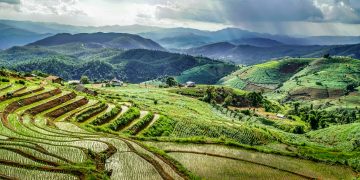










The Asia Pacific region stands at the crossroads of a transformative era in agriculture. With a population exceeding 4.5 billion, the region carries the dual responsibility of feeding the world while safeguarding its natural resources. Sustainable agriculture—farming practices that balance productivity, environmental stewardship, and social equity—is no longer a niche idea; it is a necessity. But can Asia Pacific rise to this challenge and lead the global transition toward sustainable farming?
The Urgency of Sustainability in Asia Pacific
Agriculture has long been the backbone of Asia Pacific economies, from the rice terraces of the Philippines to the vast wheat plains of India. Yet, decades of intensive farming, driven by chemical fertilizers, water overuse, and monoculture practices, have left deep scars on the land. Soil degradation, water scarcity, and biodiversity loss are no longer abstract concepts—they are immediate threats to food security and human livelihoods.
Take water, for example. The region is home to several of the world’s most water-stressed countries. India, China, and Pakistan together account for nearly 40% of global groundwater extraction, much of it for agriculture. If current trends continue, these countries could face severe water shortages within a few decades, threatening crop yields and economic stability. Similarly, pesticide and fertilizer overuse has contributed to declining soil fertility and the contamination of rivers and aquifers, making sustainable practices a matter of survival rather than choice.
Moreover, Asia Pacific is disproportionately vulnerable to climate change. Rising temperatures, erratic rainfall patterns, and extreme weather events increasingly disrupt traditional farming calendars. Rice, wheat, and maize—the staple crops of the region—are all highly sensitive to temperature shifts and water stress. Sustainable agriculture, therefore, is not merely an environmental imperative; it is a strategic approach to climate resilience and food security.
Innovative Agricultural Practices in the Region
Despite the challenges, Asia Pacific is also a hotbed of innovation in sustainable agriculture. Governments, universities, and private enterprises are experimenting with cutting-edge solutions that combine traditional wisdom with modern technology. Here are some notable practices:
1. Precision Agriculture
Precision agriculture leverages satellite imagery, sensors, and AI-driven analytics to optimize inputs like water, fertilizer, and pesticides. Countries such as Japan, South Korea, and Australia are leading in this domain, using drones and IoT devices to monitor crop health and soil conditions in real time. By applying inputs only where needed, precision farming reduces waste, lowers costs, and mitigates environmental impact.
2. Agroecology and Integrated Farming
Agroecology emphasizes the ecological relationships within farming systems, integrating crops, livestock, and natural habitats. In Vietnam and Thailand, integrated rice-fish farming allows farmers to cultivate rice while raising fish in the same paddies. This approach naturally controls pests, improves soil fertility, and diversifies income streams, exemplifying how sustainable methods can be both productive and profitable.
3. Urban and Vertical Farming
Rapid urbanization in Asia Pacific has spurred interest in urban agriculture. Vertical farms in Singapore and Tokyo use hydroponics and aeroponics to grow vegetables and herbs in controlled indoor environments, drastically reducing land use and water consumption. Urban farming also shortens supply chains, lowers food waste, and provides fresh produce in cities where land scarcity limits traditional agriculture.
4. Climate-Smart Crop Varieties
Research institutions in India, China, and the Philippines are developing drought-resistant, salt-tolerant, and pest-resistant crop varieties. These crops are designed to thrive under the increasingly volatile climate conditions of the region. For instance, salt-tolerant rice varieties allow coastal farmers to cultivate land previously affected by seawater intrusion, turning climate challenges into opportunities.
5. Digital Platforms and Knowledge Sharing
Digital tools are revolutionizing knowledge dissemination among smallholder farmers, who make up the majority of Asia Pacific’s agricultural workforce. Mobile apps provide real-time weather forecasts, market prices, pest alerts, and sustainable farming techniques. Platforms such as e-Choupal in India connect farmers to markets, empowering them with data to make better decisions and reduce reliance on intermediaries.
Economic Incentives and Policy Frameworks
Sustainable agriculture cannot thrive without supportive policy frameworks and economic incentives. Many Asia Pacific governments are now recognizing this imperative.

- Subsidies and Grants for Sustainable Inputs: Countries like Japan and South Korea provide financial support for organic fertilizers, renewable energy systems for farms, and water-efficient irrigation technologies.
- Carbon Credits and Ecosystem Payments: Nations such as China and Indonesia are exploring carbon trading schemes and payments for ecosystem services. Farmers who maintain forest cover, protect wetlands, or adopt regenerative practices can monetize their conservation efforts.
- Land Tenure and Smallholder Support: Secure land tenure encourages farmers to invest in long-term soil health and sustainable practices. Several Southeast Asian countries are reforming land laws to provide more stability to smallholders.
- Research and Extension Services: Investment in agricultural research, extension services, and farmer training programs ensures that innovations reach the ground efficiently.
These measures are crucial because sustainable agriculture often involves higher upfront costs or a temporary reduction in yields. Incentives and support systems help bridge this gap while encouraging widespread adoption.
Social and Cultural Dimensions
Sustainability is not purely technological or economic; it is also social. Asia Pacific’s diverse cultural landscape means that farming practices are intertwined with local traditions, diets, and social norms. Recognizing and respecting this diversity is essential for sustainable agriculture to gain traction.
For example, indigenous communities in Indonesia, the Philippines, and Papua New Guinea have long practiced traditional agroforestry, combining tree crops with rice, tubers, and medicinal plants. These systems maintain biodiversity, enhance soil fertility, and support food security. Integrating such indigenous knowledge with modern science can create hybrid models that are both culturally resonant and environmentally effective.
Gender equity is another critical factor. Women constitute a significant portion of the agricultural labor force in Asia Pacific, yet they often lack access to land, credit, and training. Empowering women farmers with resources, knowledge, and decision-making authority can dramatically increase the adoption of sustainable practices and improve community resilience.
Regional Collaboration and Knowledge Networks
Sustainability challenges do not respect national borders. Pests, diseases, water scarcity, and climate shocks often spread across countries. Therefore, regional collaboration is a strategic advantage for Asia Pacific.
Organizations such as the Asia-Pacific Association of Agricultural Research Institutions (APAARI) facilitate knowledge sharing, joint research programs, and policy dialogue. Multilateral agreements on water management, sustainable fisheries, and agro-biodiversity can amplify national efforts and create economies of scale for innovation.
Cross-border cooperation also accelerates technology transfer. For instance, precision irrigation techniques developed in Israel have been adapted in India, while vertical farming systems from Singapore are being piloted in Malaysia. The region’s diversity is a strength: lessons learned in one country can often be tailored to fit another, creating a network of resilience and innovation.
The Role of Private Sector and Finance

Private sector involvement is critical to scaling sustainable agriculture. Agritech startups, venture capital, and impact investors are increasingly funding innovations that combine profitability with sustainability.
- Agri-tech Startups: From drone mapping services in China to automated aquaponics in Thailand, startups are introducing cutting-edge solutions that smallholders can adopt.
- Sustainable Supply Chains: Multinational corporations sourcing commodities such as palm oil, coffee, and soy are committing to zero-deforestation and sustainable sourcing standards. This creates market incentives for farmers to adopt sustainable practices.
- Green Finance: Banks and financial institutions in the region are launching green loans and sustainability-linked credit facilities. These financial instruments reduce the risk for farmers and encourage investments in renewable energy, water-efficient irrigation, and organic inputs.
By aligning profitability with sustainability, the private sector can be a powerful catalyst for change.
Challenges and Barriers
Despite promising developments, several barriers could hinder Asia Pacific’s leadership in sustainable agriculture:
- Fragmented Landholdings: Small and fragmented farms make mechanization and large-scale sustainable interventions difficult.
- High Initial Costs: Technologies such as precision agriculture, vertical farming, and certified organic inputs often require upfront investments that smallholders cannot afford.
- Knowledge Gaps: Many farmers lack access to updated scientific knowledge, extension services, and market information.
- Policy Inconsistency: In some countries, subsidies for chemical fertilizers and conventional farming practices contradict sustainability goals.
- Climate Uncertainty: Extreme weather events can negate gains from sustainable practices, requiring continuous adaptation and risk management.
Overcoming these challenges requires a coordinated approach involving government, private sector, academia, and civil society.
Case Studies of Success
Several countries in the region are already demonstrating that leadership in sustainable agriculture is possible:
- Japan: Japan’s Satoyama landscapes combine biodiversity conservation with agricultural production, providing lessons in landscape-scale sustainability.
- Vietnam: The Mekong Delta’s rice-fish systems reduce chemical inputs and increase farmers’ income.
- Singapore: The city-state’s vertical farming initiatives demonstrate how technology can address land scarcity and urban food security.
- India: Organic farming cooperatives in Sikkim and Himachal Pradesh show that policy-driven approaches can transition an entire region to sustainable practices.
These case studies illustrate that sustainable agriculture is not just a theoretical concept but a practical, scalable solution.
Future Outlook
Looking ahead, Asia Pacific has the ingredients to lead the world in sustainable agriculture: rich biodiversity, strong scientific institutions, entrepreneurial energy, and growing policy awareness. The region’s diverse landscapes—from tropical rainforests to arid plains—serve as living laboratories for innovation.
Key trends likely to shape the next decade include:
- AI and Big Data in Farming: Real-time monitoring of soil, water, and crop health will optimize resource use.
- Regenerative Agriculture: Practices that restore soil health, sequester carbon, and enhance ecosystem services will gain traction.
- Circular Food Systems: Waste reduction, composting, and recycling nutrients will become integral to farm management.
- Consumer-Driven Change: Rising awareness about sustainable diets and ethically sourced food will drive demand for environmentally friendly products.
If Asia Pacific can successfully integrate technology, policy, finance, and culture, it could become a global model for sustainable agriculture, proving that feeding billions and protecting the planet are not mutually exclusive goals.
Conclusion
The Asia Pacific region is uniquely positioned to lead the way in sustainable agriculture. By combining traditional knowledge with cutting-edge innovation, supportive policies, and regional cooperation, it can overcome formidable challenges and set new global standards. Sustainability in this context is not just about the environment; it is about economic opportunity, social equity, and resilience in the face of climate change.
The road ahead will not be easy. Fragmented landholdings, high costs, climate uncertainty, and knowledge gaps are real barriers. Yet, the region’s diversity, entrepreneurial spirit, and growing commitment to sustainability provide a powerful foundation for progress. Asia Pacific has the potential not only to feed its people but also to feed global solutions—demonstrating that agriculture can be productive, profitable, and planet-friendly all at once.
Asia Pacific is at a pivotal moment. The question is not whether it can lead, but whether it will seize this opportunity to transform agriculture for a sustainable future. And if history is any guide, this region has never shied away from ambitious challenges.