





The Middle East is often described as a crossroads of civilizations, a land of deserts and oases, oil-rich landscapes, and bustling markets. But beyond its rich culture and history, the region occupies a pivotal place in global trade. Its importance stretches from ancient caravan routes to modern shipping lanes, and from oil pipelines to air freight corridors. Understanding why the Middle East remains central to global commerce requires a close examination of geography, history, economics, politics, and technological innovation.
1. Strategic Geography: The Heart of East-West Connections
The first and perhaps most obvious reason the Middle East is vital for global trade lies in its geography. Nestled at the junction of three continents—Asia, Africa, and Europe—the region functions as a natural bridge. Ancient traders knew this intuitively: the Silk Road and the Incense Route passed through its deserts, connecting China, India, and Arabia with the Mediterranean world.
Today, this geographical advantage translates into control over critical maritime and overland routes. The Suez Canal in Egypt, a marvel of engineering, links the Mediterranean Sea with the Red Sea, providing the shortest maritime path between Europe and South and East Asia. Ships that would otherwise navigate around Africa save thousands of kilometers, dramatically cutting travel time, fuel costs, and shipping risks. Similarly, the Persian Gulf, bounded by oil-rich nations like Saudi Arabia, Iraq, and the UAE, opens into the Strait of Hormuz, one of the most strategically important chokepoints in the world. Roughly a fifth of the world’s oil passes through this narrow passage, giving the region immense leverage over global energy markets.
The Middle East’s deserts, mountains, and rivers are not obstacles but conduits for trade. The region’s terrain has historically dictated the paths of trade caravans, modern pipelines, and even fiber-optic cables. Geography, in essence, has made the Middle East unavoidable for global commerce.
2. Energy Resources: Fueling the World
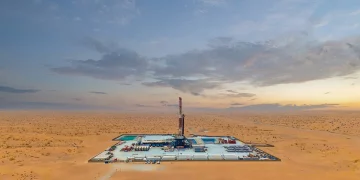
No discussion of Middle Eastern trade is complete without mentioning energy. The region possesses nearly half of the world’s proven oil reserves and a quarter of its natural gas reserves. From Saudi Arabia’s vast oil fields to Qatar’s liquefied natural gas (LNG) exports, the Middle East has become synonymous with global energy supply.
Oil and gas are the lifeblood of modern economies. Industrial production, transportation, and even digital infrastructures indirectly depend on hydrocarbons. Consequently, any disruption in Middle Eastern energy exports can ripple through global markets, affecting prices, supply chains, and geopolitical relations. The region’s energy wealth also fuels investment in ports, shipping infrastructure, and logistics hubs, further cementing its role in global trade.
Moreover, the energy factor isn’t just about raw materials. The Middle East is innovating in energy-based trade as well. For example, petrochemical industries in countries like Saudi Arabia and the UAE convert hydrocarbons into plastics, fertilizers, and industrial chemicals that circulate worldwide. These products, often high-value and lightweight, are ideal for shipping, increasing the region’s influence beyond crude oil alone.
3. Maritime Chokepoints: Gateways and Bottlenecks
The Middle East’s dominance in global trade is amplified by its maritime chokepoints. The Strait of Hormuz, Bab el-Mandeb, and the Suez Canal are linchpins in the world’s shipping network. Disruptions at these chokepoints—whether political, military, or environmental—can halt global trade for weeks.
- Strait of Hormuz: Only 21 miles wide at its narrowest point, it is the conduit for about 18–20 million barrels of oil per day. Any blockade or conflict here would immediately spike global oil prices.
- Bab el-Mandeb: Linking the Red Sea to the Gulf of Aden, this narrow strait is critical for Europe-Asia trade routes. Piracy and political instability have occasionally threatened smooth passage, demonstrating the region’s delicate balance.
- Suez Canal: One of the busiest maritime passages in the world, it handles roughly 12% of global trade. Its importance was starkly highlighted during the 2021 Ever Given incident, when a single stranded ship caused billions in economic disruption.

These chokepoints create both opportunity and vulnerability. Countries controlling these passages wield significant geopolitical influence, and global powers are invested in ensuring their security. From naval patrols to free trade agreements, the Middle East’s control of these gateways translates directly into global trade power.
4. Trade Hubs and Logistics Innovation
Beyond natural geography, the Middle East has leveraged its position to develop world-class trade hubs. Cities like Dubai, Doha, and Jeddah have transformed into international logistics and commerce centers.
- Dubai: Home to Jebel Ali Port, one of the largest man-made harbors in the world, Dubai has become a global transshipment hub. Its airports, free zones, and digital infrastructure make it ideal for both regional and international commerce.
- Doha: Qatar has invested heavily in LNG infrastructure, turning itself into a critical node in the global energy trade network.
- Jeddah: Serving as the main port for Saudi Arabia, it handles billions of dollars in imports and exports, connecting the kingdom to Asia, Europe, and Africa.
These hubs don’t just facilitate the movement of goods—they create ecosystems. Logistics companies, financial institutions, and technological firms cluster around ports and airports, creating synergies that enhance efficiency and reliability. In essence, the Middle East isn’t just a passage for goods—it’s a dynamic marketplace for trade management itself.
5. Political Dynamics: Influence and Risks
Political considerations are inseparable from trade in the Middle East. Regional conflicts, alliances, and economic policies can dramatically impact trade flows. Consider the following dynamics:
- Regional Conflicts: Wars in Iraq, Syria, Yemen, and Libya have periodically disrupted trade routes and created instability around chokepoints.
- Sanctions and Diplomacy: Iran’s geopolitical tensions with the West influence Strait of Hormuz security and shipping patterns. Sanctions can reroute trade, create shortages, and spike global prices.
- Trade Agreements: Gulf Cooperation Council (GCC) initiatives and free trade zones facilitate smoother commerce, reducing customs barriers and fostering cross-border investments.
Political stability—or the lack thereof—can thus be both a risk and an opportunity. Global corporations and governments closely monitor Middle Eastern politics because even minor disruptions can have disproportionate global consequences.
6. Technological Integration and Smart Infrastructure
The Middle East is not relying solely on geography and oil anymore; it’s embracing technology to reinforce its role in global trade. Smart ports, blockchain-based logistics, automated cargo handling, and AI-driven supply chain management are reshaping commerce in the region.

For instance, Dubai has pioneered the use of blockchain in trade documentation, reducing bureaucratic delays and increasing transparency. Similarly, Saudi Arabia is investing in “smart ports” that use AI to optimize ship scheduling, cargo tracking, and customs clearance. These innovations make the Middle East more resilient to disruptions and more attractive as a trade partner.
7. Air Freight and the Rise of Regional Hubs
While maritime trade dominates, air freight is increasingly important. The Middle East’s central location makes it ideal for connecting distant markets. Airlines like Emirates, Qatar Airways, and Etihad have turned cities into global air freight hubs, transporting everything from electronics to perishable goods efficiently.
Air cargo allows companies to bypass long shipping routes, ensuring faster delivery and reduced inventory costs. Combined with traditional maritime and land-based trade, this creates a highly integrated, multimodal logistics network. The Middle East thus serves as a central “switchboard” for global trade, coordinating goods between continents with remarkable speed.
8. Diversification Beyond Oil
Recognizing the risks of overreliance on hydrocarbons, Middle Eastern countries are diversifying their trade portfolios. Investments in manufacturing, tourism, technology, and renewable energy are opening new pathways for commerce.
Saudi Arabia’s Vision 2030 initiative aims to reduce dependence on oil while promoting industries such as mining, entertainment, and renewable energy. The UAE has embraced technology-driven trade, from e-commerce logistics to fintech. Qatar is positioning itself as a center for LNG, hydrogen, and digital infrastructure. These initiatives ensure that the region remains relevant to global trade, even as energy dynamics evolve.
9. Cultural and Historical Trade Legacy
The Middle East’s significance in trade is not purely modern. Historically, the region connected diverse civilizations, fostering exchanges of goods, ideas, and technologies. From Mesopotamian grain exports to Arabian spice caravans, this tradition created a sophisticated understanding of commerce, negotiation, and risk management.
Modern infrastructure may be high-tech, but it is layered upon centuries of experience in moving goods efficiently. Cultural familiarity with trade, hospitality networks, and negotiation practices continues to play a subtle yet important role in maintaining the region’s status as a global trade hub.
10. Global Interdependence and Future Prospects
Today, no part of the world can ignore the Middle East in trade planning. Supply chains for oil, gas, food, electronics, and even luxury goods are intertwined with the region’s ports, pipelines, and airports. Any disruption—whether political, climatic, or technical—can cascade globally.
Looking ahead, the Middle East is likely to deepen its influence in areas like:
- Green energy exports: Hydrogen, solar, and wind-powered commodities
- Digital trade corridors: AI-optimized logistics networks
- Expanded free trade zones: Encouraging global investment and distribution
The region’s blend of strategic geography, energy wealth, maritime control, technological innovation, and historical trade experience ensures that it will remain indispensable for global commerce.
In conclusion, the Middle East’s centrality in global trade is not accidental. It is the product of millennia of geographic advantage, natural resources, strategic chokepoints, political influence, and innovative infrastructure. From ancient caravan routes to smart ports and air freight hubs, the region continues to shape how goods, energy, and ideas move around the world. As global trade evolves, the Middle East will remain a nexus where geography meets opportunity, and history meets modernity.